
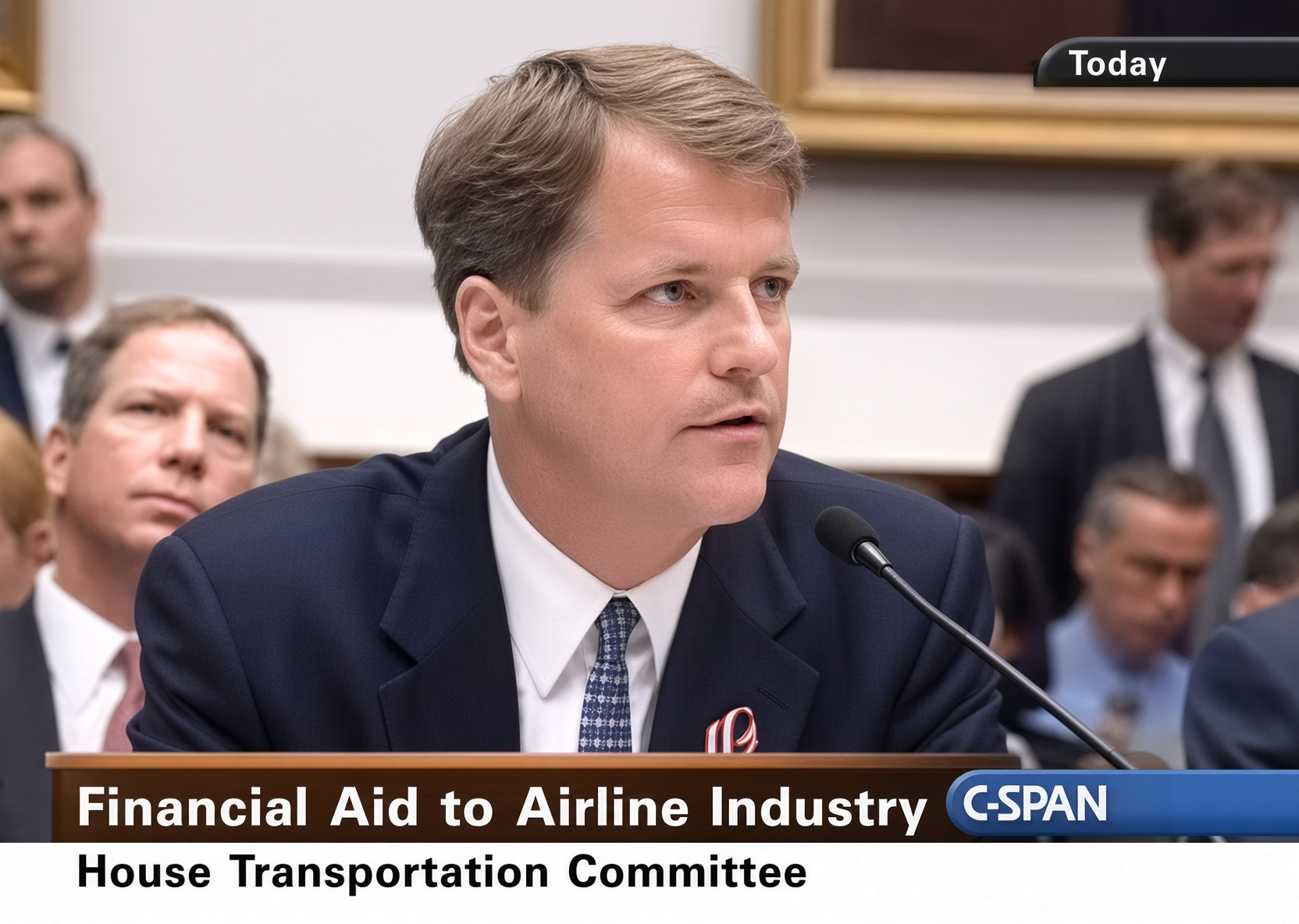
Former American Airlines CEO Doug Parker guest co-hosted this week’s Airlines Confidential and in advance of the 25th anniversary of 9/11, there was a lot of talk about that tragic day. Parker had just become CEO of America West Airlines. It’s striking to me that one of the key things he remembers about 9/11 is… how it unlocked government subsidies and let him pick taxpayer pockets. And the other thing that I remember is how well the industry came together as an industry. Being a new CEO in that room with all these CEOs that I’d admired from afar, like Herb Kelleher, Gordon Bethune, Don Carty, and there I am, 39 years old, sitting there working together on how we’re going to do this, and everybody just pulled together. First on the legislation. I mean, the legislation we needed, the Air Transportation Stabilization Act, had components like war risk that only United and American—war-risk insurance coverage, which only United and American needed. It had loan guarantees that airlines like America West and a couple of others only needed. And everyone—no one fought each other’s provision. No one looked at it and said, “Oh, that’s—we don’t need that. Give me mine.” And they could have. They certainly could have. Those that didn’t need the loan guarantees could have said, “Don’t put that in.” But they didn’t, because we all pulled together and we worked together on that legislation and never fought each other about provisions we wanted versus others, and we got it done. He remembers the ‘industry coming together’ – not fighting each other, working towards the common goal of getting paid. It’s a lesson he’d learn well and draw on for Covid. An example he gives of airlines not squabbling is that they supported all the asks made by any airline. But he seems to have a faulty memory here. He says war risk coverage was something “only United and American” needed, but America West still went along with it. His own 2001 filing with the SEC describes insurance costs as a significant risk factor to the airline coming out of 9/11. Oddly as well, Parker told the story just a year ago how the airline CEOs didn’t come together after 9/11, they tried to use the new security rules being formulated, and the taxes to pay for them, as a pay to put each other out of business (or at least impose costs on other carriers while minimizing costs to their own business). He also suggests that “a month later our loads were 20%.” In fact, American West appears to have had a 68.2% load factor in October 2001. And he says that “there was no nofly list” before 9/11. That is not true. It was just a much smaller list, according to the 9/11 Commission report. Doug Parker sees his legacy inextricably linked to 9/11 and subsidies. Initially the federal government declined America West’s requests for subsidies. They re-applied and got approved. The narrative he tells himself is that 9/11 made his goal to protect employees, and that’s why he first merged with US Airways (which had also been bailed out by the government after 9/11) and then American Airlines – he was looking for safe harbor. Of course he tried merging with just about everyone, United’s unwillingness to make him CEO of a merged company appeared to have been what scuttled that deal, and he wound up furloughing more employees than any other CEO in airline history. Covid was his big play. He’d almost been ousted as CEO after losing American’s joint venture to LATAM. The pandemic hit and he began spending all his time in D.C. lobbying for a bailout. He partnered with AFA-CWA union head Sara Nelson, without whose cover with the narrative about saving worker jobs, and bringing along Democratic leadership (and in one telling ordering around Democratic leadership), it would never have worked. Together, they took the American people for $54 billion in cash, $25 billion in subsidized loans, plus money for airline contractors and tax subsidies as well. It was mostly money for shareholders, not workers. To see this, just look at the second and third round of subsidies (“PSP 2” and “PSP 3”) which were passed when we knew the worst of what was happening in the industry, and they were already bringing back workers. The total number of furloughs happened and was known. And the combined $29 billion from those two bailouts at most involved 15% going to cover the costs of those employees, and 85% going straight to the airlines. At American that meant taxpayers taking a haircut instead of shareholders. The money was supposed to go to keep workers attached to airlines so airlines were ready to fly when customers returned. That did not happen. American shed 30% of non-union staff, threatening them with the end of the first round of subsidies (that they’d get a better deal on health care and travel if they left ‘voluntarily’ rather than sticking around). When future funds were authorized American told non-union workers that if they had found new work elsewhere they could not come back and get paid. The airline kept employees separated rather than connected, and kept more of the cash. And Parker’s American didn’t keep pilots current, so lacked the pilots to fly when rebuilding schedules to sell to passengers. The argument for subsidies was that ‘airlines would be ready to fly when passengers returned’ but instead of spending the money that way, they suffered operational meltdowns. The money even went to Delta and Southwest that had pledged not to furlough workers. American took about $10 billion in direct subsidies plus subsidized loans. Consider that the company’s entire market cap is now about $8.5 billion in total. What turned Parker from an obscure and likely short-lived leader at America West, whom we might never have heard from again, into the man probably most responsible for the race to the bottom in U.S. commercial aviation was his persistence in obtaining government subsidies after 9/11. Without that, he never would have led American Airlines into the challenges it’s digging itself out from today. Topics on this page
Former American Airlines CEO Recalls How Airlines United After 9/11—To Secure A Government Bailout
Full Article
Original Source
Read the full article at Viewfromthewing →KhanList aggregates and links to publicly available news content. We do not host full articles from third-party sources. Always verify important information with original sources.