
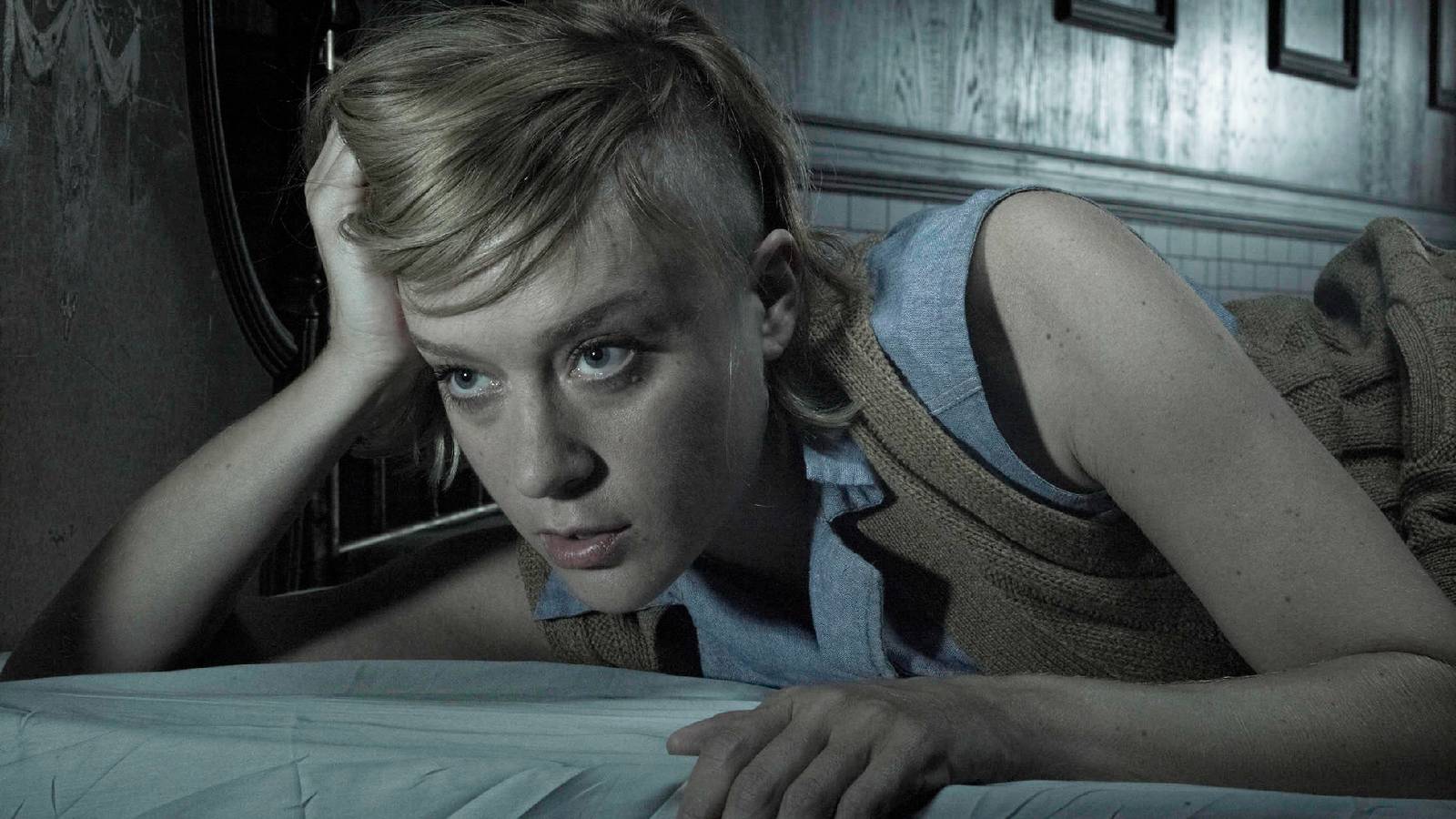
Image courtesy of MovieStillsDb Published Sep 7, 2026, 7:30 PM EDT Cathal Gunning has been writing about movies, television, culture, and politics online and in print since 2017. He worked as a Senior Editor in Adbusters Media Foundation from 2018-2019 and wrote for WhatCulture in early 2020. He has been a Senior Features Writer for ScreenRant since 2020. Sign in to your ScreenRant account While there are plenty of great horror shows on streaming services and television right now, one anthology from Shudder deserved to be as big as American Horror Story throughout its four-season run. It is a historically great time to be a fan of fantasy TV, as proven by everything from Prime Video’s Lord of the Rings prequel The Rings of Power to the Game of Thrones spinoffs House of the Dragon and A Knight of the Seven Kingdoms. There is no shortage of critically acclaimed, big-budget fantasy shows for adult audiences, and the sci-fi genre is quickly catching up. From Apple TV’s Asimov adaptation Foundation and its dystopian thriller Silo to the underrated sci-fi spy thriller The Copenhagen Test, the genre is filled with exciting, experimental titles. This leaves horror as the most underserved genre on streaming, despite some hit shows like American Horror Story and The Walking Dead franchise. While there are a lot of great horror shows out there, like Mike Flanagan’s Netflix series, the genre hasn’t enjoyed the same massive mainstream success as fantasy and sci-fi in recent years. This means that a lot of iconic shows have undeservedly gone under the radar, such as Shudder’s criminally underrated anthology Creepshow. Based on the 1982 anthology movie by Stephen King and George A. Romero, this scary, funny anthology perfectly recaptures the original cult classic’s balance of camp and authentically creepy horror. Shudder’s Creepshow Is The Best Anthology Horror Show of the 2020s Image courtesy of Everett Collection Creepshow sources its short storylines from iconic horror writers like Bird Box’s Josh Malerman and Bubba Ho-Tep writer Joe R. Lansdale, alongside adaptations of King stories like “Gray Matter” and the infamously grisly “Survivor Type.” Since the show also adapts original stories by creators like Greg Nicotero and Rick and Morty writer Heather Anne Campbell, viewers never know what type of plot they’ll get with each new episode of the Shudder anthology. With plenty of classic monsters like werewolves, ghosts, and vampires, Creepshow also boasted plenty of far less familiar supernatural villains and creatures. The show also had a superb ensemble cast, with stars like Giancarlo Esposito, Jeffrey Combs, and Kid Cudi appearing in season 1, while season 2 boasted Scream 7’s Anna Camp, Keith David, and Ashley Laurence. Season 3 introduced Michael Rooker and Camp’s Scream 7 co-star Ethan Embry, among others. While Shudder’s anthology Slasher is admittedly more gory and brutal than Creepshow, and every other TV show ever made, the Stephen King anthology has a secret weapon up its sleeve. With the arrival of 2011’s American Horror Story, many horror anthology shows abandoned the traditional approach of the genre. Instead of telling one story per episode of the series, shows following American Horror Story instead focused on one story per season. Shudder’s Creepshow Avoided American Horror Story’s Biggest Mistake Michael Courtney / ©Shudder/AMC / Courtesy Everett Collection This approach yielded mixed returns for The Terror, MTV’s Scream, Slasher, and even American Horror Story itself, which has never earned consistent acclaim across its long 12-season run. In contrast, Creepshow made the clever choice to stick with shorter stories that lasted only one episode each. Like Tales from the Crypt and The Twilight Zone, the show was a one-story-per-episode anthology, not a story per season one, and this made a massive difference. Even though The Twilight Zone pioneered the story per episode format way back in the 60s, American Horror Story’s approach had essentially replaced this style by the time Creepshow debuted in 2019. This meant the show felt like a throwback not only to the original Creepshow movies of the ‘80s, but also to the anthology horror shows of the ‘80s, ‘90s, and 2000s, such as Monsters, Tales from the Dark Side, Tales from the Crypt, Masters of Horror, and Fear Itself. Reviving this old-fashioned, underrated single-episode storytelling style allowed Creepshow to feel both unique in the cluttered landscape of 2020s horror TV and like a welcome throwback. It didn’t hurt that the single-season format was the biggest problem that a lot of its competitors faced, as shows like American Horror Story and Slasher often lost viewers who couldn’t bring themselves to care about characters who were almost certainly going to die before the season ended. While some shows, like HBO’s Lovecraft Country, could craft a compelling season-length horror story without sacrificing scares, many shows were left in a tricky double bind when it came to character development. Since shows like The Terror, American Horror Story, and Slasher introduced new casts and settings every season, viewers knew there was no reason to get too attached to a single season’s characters. Still, the audience was expected to spend eight to twelve hours in their company. Shudder’s Creepshow Success Highlights American Horror Story’s Spinoff Failure The fleet-footed runtime of Shudder’s Creepshow demolished this issue, as viewers knew even the most annoying, odious, or amoral characters would be forgotten by the next episode. This allowed Creepshow to tell darker, stranger, and sillier stories, since the series didn’t have to build a season-long story arc, unlike recent horror shows such as Netflix’s Revival. Creepshow took full advantage of this with chaotic plots and wild twists that would have felt cartoonish or excessively absurd if they were granted more screen time. In the process, the show also proved its superiority to American Horror Story’s story-per-episode spinoff American Horror Stories, which debuted two short years after Creepshow. American Horror Stories also has 25 episodes to date, but the show has a mere 66% on Rotten Tomatoes compared to Creepshow’s 97% rating. It is easy to see why, since American Horror Stories has an open contempt for its characters and many of its episodes end with pointlessly cruel twist endings that feel ironically dull thanks to their transparently obvious desire to shock. In contrast, Creepshow features plenty of nastiness, but unlike American Horror Story’s spinoff, the show never inures viewers to its twists. Plenty of Creepshow episodes end with the heroes prevailing, which makes it a harsh, scary surprise when this isn’t the case. In contrast, unlike Shudder’s Creepshow, American Horror Story’s follow-up feels paradoxically dull precisely because the anthology series tries so hard to horrify. Release Date 2019 - 2023-00-00 Network Shudder Showrunner David Bruckner, Stephen King Cast Andy Daly Clark "Murph" Murphy/Deputy Anton/Old Fella /Local Yokel (voice) Directors Greg Nicotero, Joe Lynch, P.J. Pesce, Rusty Cundieff, Axelle Carolyn, David Bruckner, Roxanne Benjamin, Justin G. Dyck, Jeffrey F. January, Rob Schrab, Tom Savini, Kailey Spear, Sam Spear, Dave Newberg Writers John Esposito, Paul Dini, Stephen Langford, Erik Sandoval, Michael Rousselet, Daniel Kraus, Byron Willinger, Philip de Blasi, Josh Malerman, Zak White, Todd Spence, Melanie Dale, Dana Gould, David J. Schow, Frank Dietz, John Harrison, John Skipp, William Butler, Charles Spano, Claire Carré, Matt Venne, Paul Seetachitt, Jordana Arkin, Mike Scannell Creator(s) Greg Nicotero
Forgotten 25-Episode Horror Anthology Deserves To Be As Big As American Horror Story
Full Article
Original Source
Read the full article at Screenrant →KhanList aggregates and links to publicly available news content. We do not host full articles from third-party sources. Always verify important information with original sources.