
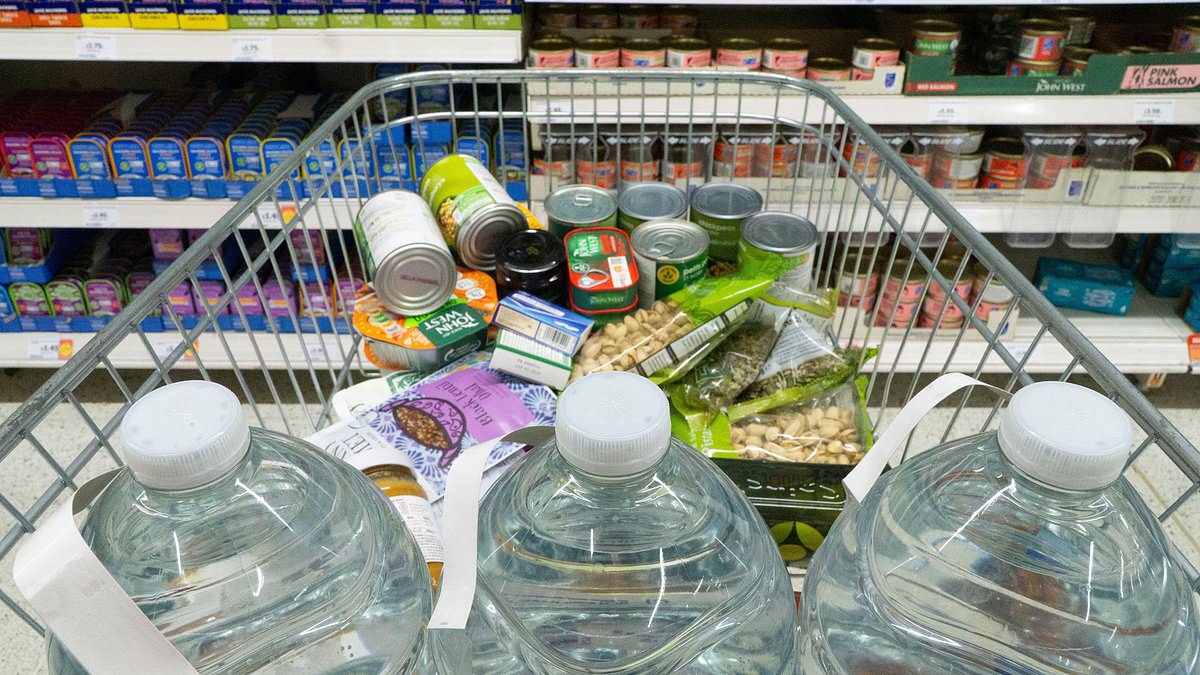
If you think a few tins of baked beans at the back of the cupboard are enough to see you through a disaster, experts say you're dangerously underprepared.While the UK Government advises households to keep three days' worth of supplies on hand, some specialists warn that is nowhere near enough.Instead, they recommend stockpiling enough food, water and other essentials to last for up to two weeks.Doing so could help families weather everything from extreme storms and widespread power outages to terrorist attacks and even a nuclear emergency.'Stockpiling at least two weeks of supplies, for those who can afford it, is much better than three days in order to get through many more types of crises, including helping those around us,' Professor Ilan Kelman, a disaster and climate expert at University College London, told the Daily Mail.'Many scenarios exist with electricity, water, and transport routes unavailable for longer than 72 hours.'A resilient society includes households being able to afford and having at least two weeks of emergency supplies.' When it comes to food, experts recommend keeping a supply of long–life staples that can be eaten with little or no cooking (stock image)Professor Kelman points to advice issued by the American Red Cross, the government of New South Wales and the Washington State Emergency Management Division.All advocate for stocking up on enough essentials to last for 14 days in case of emergency.When it comes to food, they recommend keeping a supply of long–life staples that can be eaten with little or no cooking.Suggested items include canned meat, fish, fruit and vegetables, as well as dried pasta, rice, breakfast cereals, crackers, nuts, long–life milk and shelf–stable juice.Emergency planners also recommend stocking up on foods with a long shelf life that your family already enjoys eating, while making sure to cater for babies, pets and anyone with special dietary requirements.Other useful cupboard essentials include tea, coffee, sugar, peanut butter, canned soups, baked beans and high–energy snacks, which can provide quick calories if power supplies are disrupted. Some Brits have already started stockpiling. Pictured: Mother–of–four Clare Foges in the garden shed she's turned into a fully stocked survival bunkerThey also suggest stockpiling one gallon (3.8 litres) of water per person per day, meaning a couple living on their own should ensure they have 14 gallons (53 litres) at the ready.Other essential items include chargers, a can opener, flashlight, a battery–powered or hand–crank radio, personal hygiene items, toilet roll and medication.Having extra cash, maps of the area, emergency blankets, pet supplies for those who have animals, games and activities for children, surgical masks, rain gear and sleeping bags is also advised.The American Red Cross emergency guidelines read: 'Being prepared means being equipped with the proper supplies you may need in the event of an emergency or disaster.'Keep your supplies in an easy–to–carry emergency preparedness kit that you can use at home or take with you in case you must evacuate.'Meanwhile the Washington State emergency department also recommends making an individual or family disaster plan, and packing a go–bag for you and your family members. Earlier this month, households were warned to 'be ready' for a national crisis as part of a new campaign launched by Andy Burnham's government Professor Kelman recently warned that Britain's recent deadly storms could be just the start of a winter of chaos supercharged by a growing Super El Niño.The powerful weather phenomenon threatens to unleash fierce winds, torrential rain and even snow across the UK over the next few months.These intense storms, plus a cold, potentially snowy winter, could make it difficult for some people to get to work or even leave their homes.He argued that the priority should be ensuring communities are prepared for increasingly extreme weather – especially families who already struggle to make ends meet.'Of course they're going to be in trouble when there's a storm,' he said. 'Of course they're going to have difficulties when there's snow.'Of course they're going to lose income and not be able to feed themselves when they can't get to work because of weather. That is what worries me.'He added: 'The real crisis is that most households in this country cannot afford to stockpile.' Earlier this month, households were warned to 'be ready' for a national crisis as part of a new campaign launched by Andy Burnham's government.Stockpiling three days of food and water and having enough cash to get by if the electronic payments system collapses are among the precautions recommended.The checklist of measures – which people are urged to print out and keep handy – also includes having a wind–up or battery radio, and a power pack to charge devices if the power goes off.Defence Secretary Wes Streeting said the guidance would help people brace for events such as wildfires, flooding and cyber attacks.However, senior officials and military figures have also been highlighting the risk of sabotage or even a strike by Russia.Mr Streeting insisted 'everyone needs to do their bit' – with a radio and social media campaign set to spread the message in the coming weeks. Emergency stockpile list Source: New South Wales government This list should only be used as a guide for items that may assist in an emergency situation and should be customised to meet your individual household needs.It is suggested that households should hold sufficient supply of food, water and essential items to enable a household to be confined at home for up to 14 days.Food supplies should be continually used and replenished.Ensure food is rotated, and use–by dates are checked regularly.Ready to eat canned/bottled food• Meat• Fish• Fruit• Juice• Vegetables• Soup• Pasta sauceDried and long life food• Ready–to–eat meals• Breakfast cereal• Flour/bread• Milk powder/UHT milk• Soup mix• Dried vegetables• Rice and pasta• Long life cheeses• Tea/coffee/drinking chocolate• SugarSnack food• Dried fruits• Nuts• Biscuits• Spreads• Crackers• Snack barsDrinks• Bottled water (3 Litres per person per day)• Water sterilising tablets• Concentrated juices/sports drinksBaby supplies• Baby food/baby formula• Nappies and wipesPet food• Pet food (canned/dry)Toiletries/cleaning products• Toilet rolls• Soap and shampoo• Feminine hygiene products• Rubbish bags• Tissues and paper towels• House and laundry cleaning/disinfectant productsEmergency power supply backup• Batteries• Portable radio• Manual can opener• Torch, candles and matchesHealth supplies• First aid kit• Adult and children analgesics/pain killers• Face masks• Protective gloves• Thermometer• Alcohol based handwash/gels/wipesOther items• Prescribed medications• Other preferred household supplies
Forget three days! Scientist tells Brits to stockpile enough for two WEEKS - here's exactly what you should be buying
Full Article
Original Source
Read the full article at Dailymail →KhanList aggregates and links to publicly available news content. We do not host full articles from third-party sources. Always verify important information with original sources.