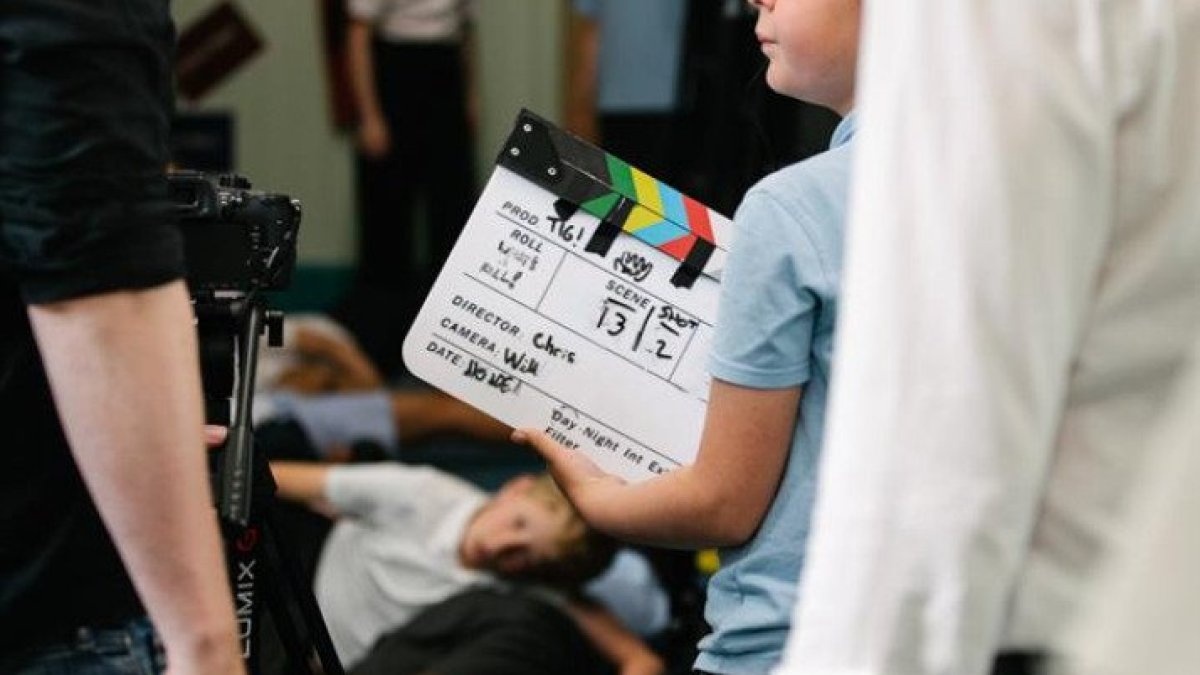
As movie premieres go, this one was pretty low-key. A friendly independent cinema in Lancaster, midweek screening, getting on for teatime. Local writers, local filmmakers, local actors, were gathered there to watch a time-travel comedy on the big screen. Everyone seemed to like it. A lot of people there helped make it. It had all started with my primary school writers’ group, who over several months worked up a story, then with guidance turned it into a screenplay and handed it over to indie collective Lancaster Film Initiative. Then it was tin-rattling time. A crowdfunding campaign was launched. A county council grant was chased, and won. Local businesses pitched in with sponsorship. The school held fundraising events. There were some very generous personal donations, and a tsunami of tenners. We raised nearly £22,000. The finished short film, Angeline, represents a remarkable community enterprise. It’s also, at a time of desperate underfunding for the arts, an act of defiance. Back in pre-austerity 2010, local government arts funding in Britain was £1.19bn. It’s been in freefall ever since, dropping to just £539m last year. The team behind Angeline managed to swerve that trend, using grassroots fundraising and the turbocharged goodwill of parents, teachers and creatives to power through. I can’t help thinking this should be happening all over the country. Thousands of schools would love the chance to get pupils involved in a writing, acting and filming project. Meanwhile, there are loads of moaning, underemployed writers who could get the chance to work with some of the most fearless creators in the world: nine year-olds. I chucked free time at the school just for the craic, but there’s nothing to stop writers working on spec and getting paid when the fundraiser’s successful. The idea of setting up a writers’ room for kids occurred in 2019. Two of my grandchildren went to Dallas Road School, a brilliant state primary in Lancaster. I had experience of writers’ rooms both here in the UK and the US. So why not give it a go? I was keen to do something for the school, which is a properly special, nurturing place. It’s always had a high intake of displaced, refugee, non-white children, and was designated a Sanctuary School for its welcoming atmosphere. Diversity, equity, inclusion – all that dangerously unfashionable stuff. I was helping with their school newspaper at the time, and wondered aloud to the head if we could assemble some writers, get a story together, structure it, tidy it up, call it a shooting script, hand over to some film guys. We gave it a swing. We had a constantly changing roster of writers in the room, which made continuity difficult. The whole process was a bit scrappy, but we got a decent script together, just in time for Covid-19. We’d gone for year 6 kids in the writers’ room too. Not only weren’t they around to see the eventual filming, post-pandemic. They were three feet taller and halfway through secondary school. The group of writers for Angeline started work early in 2025. Three girls, three boys. This group didn’t change at all over the next few months, which gave the writing process a welcome stability. Also, they were all in year 5, which meant that this year they could, along with other kids from the school, be fully engaged with the filming process. Auditions were held for the parts (a couple of teachers got roped in for supporting roles) shooting started earlier this year, and everyone got an end-of-term film to watch. I was never that useful in writers’ rooms. Too slow-thinking. My suggestions were usually too dull or ridiculous to go anywhere. It felt like I never contributed much. So I had a lot of sympathy for the boys in our group, who were much more reticent than the girls during brainstorming sessions. Football talk helped loosen them up. You ask them who their favourite team is, and encourage them to create dialogue about a football match. It always has a commanding brevity: “That GOAL though.” “Intense, bro.” But even the quiet ones have a vote. The girls, meanwhile, fizzed with imagination. What’s exhilarating to witness is their problem-solving. When we were trying to work out an alien invasion story, the problem was: how do they get into the school in order to possess the teachers and children? “Through the WiFi”, one kid shot back instantly. Brilliant. From there, we got to the homeless, harmless aliens inventing a video game (Alien Invasion) that got everyone in school hooked, and zombified. We hit an almost identical story brick wall with Angeline. The kids in the story have been to the library to find a 1912 personal ad in the local paper left by Angeline’s dad, with instructions to get her home via the time machine which (hopefully) still exists in a long-forgotten part of the school. But how do they get back into the building in the evening, after the cleaners have left? The script follows almost word-for-word what happened in the room between two girls. “We could sneak through the car park, see if there was a window open or something?” “Five, three, four, nine.” “What?” “That’s the code to get in.” One of the writers often had to wait for her mum to pick her up, and there’s always a cleaner who’s forgotten the code so someone shouts it out. Angeline’s been hiding out in the school for days, she’d know it by heart. Getting kids so immersed in the writing and filming process can really spark something special. At the premiere I was introduced to this tall, strapping lad who looked vaguely familiar. Turns out he was one of the writers from 2019. He’d done his own first short film and he’s off to university soon to study film. The beat goes on.
Forget The Thick of It, the best writers’ room I’ve been in was full of nine-year-olds
Full Article
Original Source
Read the full article at Inews →KhanList aggregates and links to publicly available news content. We do not host full articles from third-party sources. Always verify important information with original sources.