
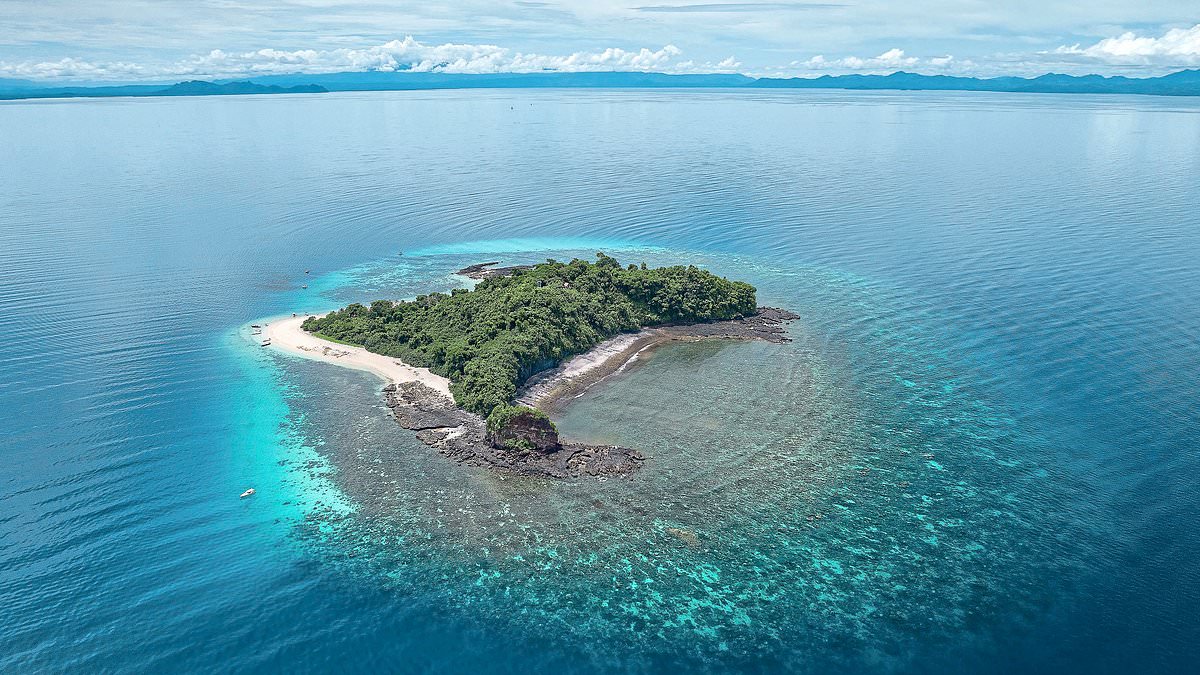
This is Nosy Tanikely, a tropical island neither in the Pacific nor the Caribbean, but somewhere much more beguiling: Madagascar (‘nosy’ being the Malagasy word for island).Snorkel around its tepid shores and a Finding Nemo reef life unfurls. Over there, striped clownfish, nipping those who dare come too close to their host anemone; here, clouds of tiny blue damselfish darting around the coral. And sea turtles? On our hour-long circumnavigation, we hoped to see one or two.Reader, we saw ten.Then again, as Irish travel writer Dervla Murphy wrote in her 1985 memoir Muddling Through In Madagascar, ‘everything about Madagascar is surprising’.We were surprised at its abundance of turtles, its pellucid seas, its organic fruit and vegetables (no cash for pesticides here), its sheer size (two and a half times larger than the UK), at the real possibility of seeing humpback whales breach in this very water from July to December, but, most of all, surprised at its endemic wildlife. This includes 112 lemur species found nowhere else on earth. And should you want to glimpse tufty-eared black lemurs, they just so happen to have made Tanikely their home.We had arrived less than 24 hours earlier, a 14-hour journey via Addis Ababa that ended in a speedboat ride from Nosy Be (Big Island) to nearby Nosy Komba and our hotel, Tsara Komba. All eight thatched villas face seawards, clinging to the side of a forest. Everywhere we looked demanded a picture: the white linen tables on the terrace, traveller’s palms unfolding like giant fans, blush-pink prawn kebabs for supper, a huge equatorial sky, the rapidly setting sun. It felt far from reality (5,343 miles precisely), as if we’d dropped into the land of the Lotus Eaters. Wildlife heaven: Nosy TanikelyManager Nava Rabe, born in the capital Antananarivo, runs a seamless operation. Her skill lies in educating local staff to provide fully managed luxury experiences in a country where up to 80 per cent of the population live below the poverty line. She is supported by owners Time + Tide, a family-owned business that focuses on ‘community, conservation, sustainability and local economies’.As head chef Tina O’Hary told us, if swordfish is all the local fishermen catch for a few days, that will be on the menu, albeit in ingenious guises.Following our turtle encounter, Nava sent us off to Lokobe Nature Special Reserve, a nearby 740-hectare primitive rainforest in search of lemurs. I had been spoilt in this department, having visited Andasibe-Mantadia National Park, east of the capital, with my son the previous year. The singing indri dutifully sang their haunting morning songs, while young sifakas bounced from tree to forest floor and back, just metres from us. Lokobe’s residents were more bashful. No conspiracy of lemurs seen here, but we left having spotted a nocturnal sportif male and a gorgeous mouse lemur. Memorably, we exited the park through an avenue of fluttering hand-embroidered tablecloths for sale. I might forever regret not buying one.We may only have been at Tsara Komba for two days, but leaving felt a wrench. As the boat sped away, I kept my eyes on the veranda of my villa, mentally working out if I could bring the family here for a big birthday (at £330 per night per person, full board).Our next location, however, would require more than a few cashed-in ISAs.Miavana, also from Time + Tide, was an hour’s helicopter ride away, across the whole northern tip of Madagascar. Our South African pilot Kyle flew us low over miles of paddy fields (now sadly owned by the Chinese), but also a forest of 100ft baobabs, huge outcrops of tsingy (spiky sandstone) formations and above ancient caves I had previously walked through. To see this land from a few hundred feet was exciting enough. But then Nosy Ankao came into view. Below lay a windswept island with nothing but 4,000 miles of Indian Ocean to the east of it.Once home to a seaweed farm and fishing village, today its villagers work on this 10sq km playground for the rich, with a team of local rangers for its crowned lemur population and landscapers reintroducing native flora.Previous guests include Tom Cruise, Martha Stewart and Lewis Hamilton (who took all 13 luxury villas). My butler Nadia waited with an iced flannel and electric buggy to whisk me to a turquoise and white villa the size of a tennis court. Bigger if you throw in the pool deck and outdoor bathroom.Here, tech bros, billionaire Brazilians and adventurous Hollywood types can do activated charcoal and lime shots for breakfast, eat lobster for every meal, jet ski and kite surf (in those north westerlies from April to November), all gratis… once you’ve paid £2,700pp per night, of course. Helicopter transfers are extra. As is heli-fishing, which I’d never even heard of – fishing from untouched coasts and mainland rivers. Barefoot luxury at Tsara KombaInstead we do like Tom Cruise and go quad biking. On day three I’m scuba diving with a school of giant Napoleon fish. By the time chilled Chablis is being poured at a fully laden lunch table on a beach on a nearby island inhabited only by nesting sooty terns from Australia, my Catholic guilt is seriously kicking in. (Though I could get used to having Nadia around, who one night took my dusty sneakers and insisted on washing them.)There are certainly no shortage of luxury hotels catering for the world’s high-net-worth travellers. What Time + Tide’s CEO Bruce Simpson says he offers modern-day explorers is the ‘sheer wildness of our destinations – and ultimately falling in love with nature’.And Madagascar really does still feel wild.Yes, successive colonists have exacted a huge environmental toll on a country that broke off from mainland Africa 180 million years ago (the French were here from 1897 to 1960). The 10ft elephant bird, the giant lemurs and the Malagasy hippo are long gone. But, as its plants and animals evolved in isolation for so long, it remains what David Attenborough has called ‘an unrepeatable experiment’ and a ‘curious wonderland’.Go – whatever way you can. You are bound to be surprised.timeandtideafrica.com
Forget the Maldives: Why Madagascar is the wild new paradise attracting the A-list
Full Article
Original Source
Read the full article at Dailymail →KhanList aggregates and links to publicly available news content. We do not host full articles from third-party sources. Always verify important information with original sources.