
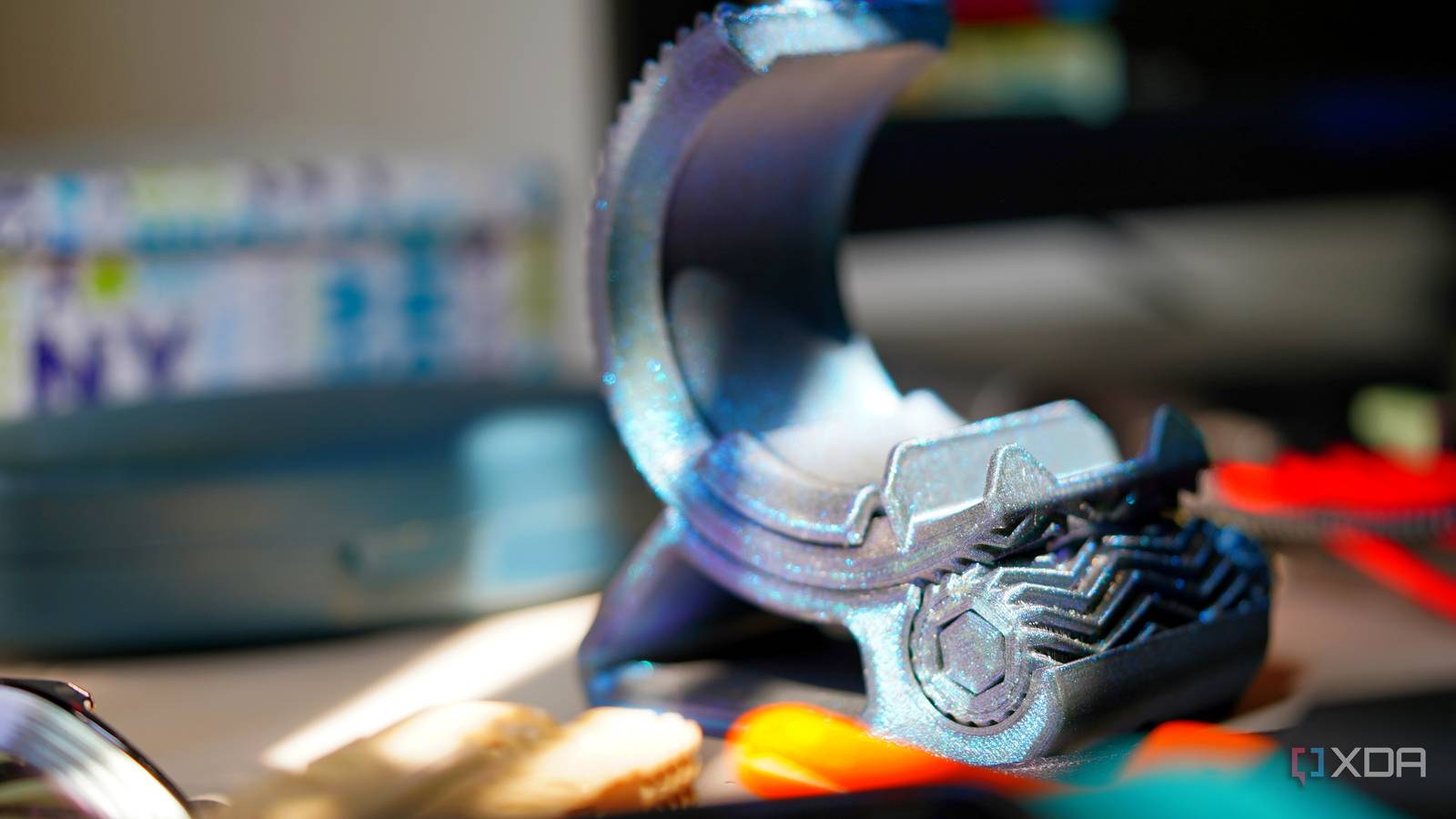
Published Nov 21, 2026, 3:30 PM EST A seasoned mechanical design engineer turned tech reporter and reviewer, Chandraveer brings more than four years of consumer tech journalism experience to the table, with bylines at Android Police and iPhoneHacks. He's written about everything from UI and UX changes across various apps to emerging software and AI trends. At XDA, he showcases his versatility in the tech reporting space with articles rooted in personal experiences and frustrations. Chandraveer's passion for consumer tech spills over into hobbies such as mechanical keyboards, photography, and 3D printing. With an academic background in design and manufacturing, his insatiable curiosity spans beyond the digital domain. Chandraveer's downtime is an eclectic mix of reading fiction, practicing calligraphy, conceptualizing new products, and enjoying an expansive FLAC audio library. Useful, functional 3D prints beat decorative figurines every single time I want to hand something to friends or family. Most people around me do not own a 3D printer, so giving them a well-engineered tool that solves a minor daily annoyance makes a far stronger impression than another shelf ornament. Moreover, it typically comes across as a more thoughtful, customized present than a store-bought item or an unhelpful gift card for a store the recipient may not patronize. After a few years of printing stuff, I looked back to realize a few prints have topped my "most gifted" list, and for very good reasons. I print these four designs regularly without encountering any slicing or hardware quirks, matching each one to the most suitable filament on my rack or using the smaller ones to exhaust spools. The people I give them to consistently appreciate having practical upgrades around the house, and none of these models demand hours of post-processing or extra hardware. A bag sealer that's also a jar Because rubber bands and bag seals are a hassle Pressi's coffee clip for open bags model on Printables replaces flimsy rubber bands and disposable plastic ties with a sturdy, reusable clamp that seals opened packaging and dispenses contents cleanly through a screw cap. It handles coffee beans, tea, snacks, and kitchen spices with equal ease, making it an easy win for any home cook or caffeine enthusiast. It's quicker to open and reseal, lasts longer, and only needs to be installed once per bag. At roughly 73 grams of filament and just over three hours on the build plate, this model requires more plastic than a quick spool-ender. So I treat it as a deliberate print, typically in filaments built to endure sustained stress and food exposure. The design prints cleanly without support and holds a firm grip on lightweight packaging through daily kitchen use. Whenever I share kitchen-adjacent prints with fellow makers, someone inevitably brings up the 3D-printing food-safety debate. I brush off those worries here because dry pantry goods make only momentary contact with the plastic while pouring, and the clip stays strictly away from liquids or moist foods. If food contact still bothers you or the intended recipient, print this sealer in food-grade PETG because this design earns its keep in your pantry immediately. Hold blades carefully Even the small ones, for small tasks Credit: Source: @Pressi/Printables The average safety razor blade is an oxymoron — a loose, hazardous double edge that's more trouble than the utility is worth. However, a small print can turn it into a precise pocket scraper that you can grip comfortably between your thumb and forefinger. Because the compact, rounded shell uses only a tiny amount of plastic, I love printing a handful of these whenever a filament spool nears the end of its life. The sleeve covers the bulk of the metal while exposing just one clean cutting edge along the side, giving you control without risking sliced fingertips. It's still not safe to toss around casually, but it's way simpler to print than a full-on box cutter designed to take safety razor blades. A surprising number of people find an immediate use for this once you try it. Wet-shavers who already keep packs of double-edge blades in the bathroom love having a dedicated scraper on hand, and DIY aficionados appreciate it for peeling stubborn stickers off car windshields or scraping hard limescale off shower glass. Fellow 3D-printing hobbyists can also keep one next to the printer to deburr brims and rough edges off fresh parts cleanly. Friends and family rarely think to buy a dedicated scraper for these small chores, so tossing this tiny print their way always gets a warm nod. A teardrop-inspired catch-all tray Not all coffee dosing equipment is for connoisseurs Try filling a coffee grinder with roasted beans once, and you'll want a funnel the next time. That's also been my experience filling thumbtacks in an organizer or sliding tiny Millmax hotswap sockets into a bag for storage. This handy print solves the annoying spill problem rooted in narrow openings. While the creator modeled its teardrop silhouette after ceramic tea vessels and classic dosing trays for weighing coffee beans, the funnel-shaped spout doubles brilliantly as a general catch-all tray for pouring screws, grains, or small parts straight into a grinder or a Ziploc bag. There are two sizes to choose from: one holds around 40g of beans, and the other twice as much. Both can justify a spot on a kitchen counter or workbench. Gentle 45-degree overhangs keep coffee beans from bouncing over the rim while letting the tray print cleanly without support material in roughly two hours using around 36g of filament. Coffee brewers I know immediately recognize the utility of a neat single-dose scoop, while others in my circle are instantly hooked after shoveling a batch of small hardware into a bag. Again, the food-safe filament debate rears its ugly head, and to that, I say you're better off using a funnel for ground coffee, fine powders, or anything moist that'd settle into FDM layer lines. Otherwise, momentary contact with dry whole beans or grain should be inconsequential, especially with food-safe PETG. Nobody hates a phone stand Especially if it fits in your pocket Every smartphone owner can use another desk stand, and Cherry Labs' flat-folding model is my primary go-to gift when any of the above are unsuitable. Phones are ubiquitous, and this model comes in three sizes to suit them all. It prints fast, collapses flat enough for a card wallet (in the Medium size), and finishes off the final few grams on the spool. Running it at a 0.15 mm or 0.20 mm layer height keeps the print-in-place hinges crisp right off the bed, turning a sliver of leftover filament into an everyday travel companion for anyone who works remotely or travels often. When I want to give a more elaborate or tangibly larger accessory with some flair, I prefer this geared phone stand. This sturdier model trades pocketability and quick spool-finishing for a long print time with more material consumption. I'm rewarded for the extra effort with a multi-part model I can print out in two or more materials for extra pizazz. The design features an infinitely adjustable gear mechanism and an integrated wheel lock that holds your chosen angle steady. There's a built-in charging cable hole and a channel under the stand to run the cable back cleanly. Everyone who's seen mine or been gifted one appreciates the utility of long video calls or bedside use in ambient mode. I should mention you'll have to unplug the cord each time you take your phone off the stand. Minor gear flex or looseness under heavier devices is also normal depending on slicer settings. Practicality beats ornamentation Keeping a small stash of proven utility models in your library turns spare printer uptime into useful gifts that people would appreciate more than trinkets and keychains. Between the scrap-busting razor blade holder and the more utilitarian bag sealer, these four picks also helped me appreciate how much everyday mileage you can squeeze out of basic filament without getting too technical about its suitability for the print.
Forget the figurines: 4 useful 3D prints that are actually worth gifting
Full Article
Original Source
Read the full article at Xda-developers →KhanList aggregates and links to publicly available news content. We do not host full articles from third-party sources. Always verify important information with original sources.