
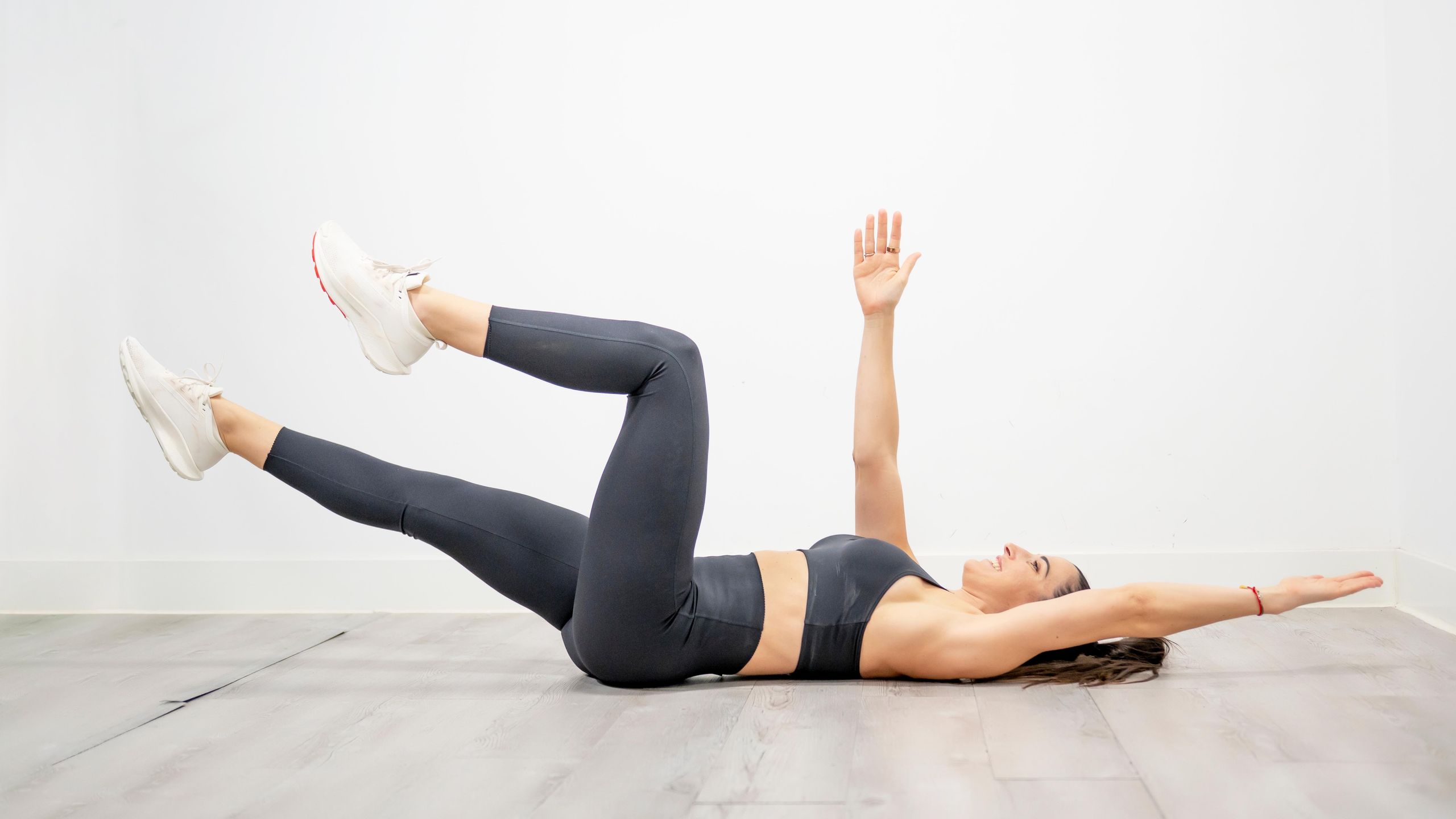
(Image credit: Shutterstock) The dead bug is a great core exercise that builds both strength and endurance in your midsection while being approachable to most fitness levels. It’s a hard move to improve on, in fact, but it turns out the best way to upgrade a dead bug is to move onto bigger creatures.I’d never heard of the dying turtle until a few weeks ago, when I did the move as part of attempting a pro runner’s 12-minute core workout. While I love turtles and the idea of them dying fills me with sadness, I immediately marked the exercise down as one to include in future workouts. It's also known as the dead bug press, which is a slightly less horrifying name.That’s because it builds on the benefits of the dead bug by making the move more challenging. As an obsessive runner I’m always looking for moves that boost core endurance, which helps me to maintain my running form deep into long events like marathons, and if they work one side of the body at a time then all the better.The dying turtle fits the bill perfectly, and I think it’s an especially good core move for runners and other sportspeople as a result, but really almost anyone can benefit from adding it to their training routine. How to do the dying turtle Dead bug with knee press - YouTube Watch On The dying turtle is a floor that you do while lying on your back, so if you might want to roll out one of the best yoga mats to do it. In the video above you can see it demonstrated by Brian Kinslow, Doctor of Physical Therapy at Evolve Flagstaff.Lie back on the floor and press your lower back into the floor — think about pulling your belly into your spine to help with this, and keep your lower back on the floor throughout the move.Bring your knees up into tabletop position and raise your arms above you.Firmly push on your left knee with your right hand — resist this push with your knee so it stays in tabletop position.Keep pushing as you lower your left arm behind you and extend your right leg out in front so both limbs are hovering just above the floor.Bring both limbs back up, then lower them again. Do 5-10 reps on this side, then switch and do the same on the opposite side, or work to time, doing 20-30 seconds on each side.I found that pushing on one knee while you lower the opposite limbs really engages your core during the movement and forces you to hold a tough position while moving, making the dying turtle a great progression for those comfortable with dead bugs.It’s important to keep your lower back imprinted on the floor throughout the move, so if you feel it starting to lift up, then you might need to shorten the reach of the arm and leg that you’re lowering.Get instant access to breaking news, the hottest reviews, great deals and helpful tips.Benefits of the dying turtle (Image credit: Getty/jacoblund)Like the dead bug, the dying turtle works pretty much all the muscles in your core, including the deep stabilizing muscles. The upper and lower abs are engaged by the move, as well as the obliques, and it also targets the hip flexors.Along with strengthening the target muscles, it also helps to build endurance because you are holding the engaged position by pushing your hand into your knee while moving.I find that the move also exhausts my core muscles much more quickly than just doing dead bugs, making it more time efficient — doing 20 seconds on each side is enough to get my muscles burning when doing the dying turtle.The act of pushing on your knee also makes you engage more with the exercise in general I find, and it means I stay focused on pushing my lower back into the floor. With dead bugs I can get a bit complacent about this and fail to spot I've lifted my back up.It is a more challenging move than the dead bug, but you can easily switch back to the dead bug from the dying turtle by releasing the pressure on your knee, so it's a move that I think anyone can try, so give it a go in your next core workout.Follow Tom's Guide on Google News and add us as a preferred source to get our up-to-date news, analysis, and reviews in your feeds. More from Tom's Guide‘I wear an Apple Watch every single day, and I never knew you could do this.’I wear an Apple Watch every day, and this is the free app I use all of the timeForget running — I added thousands of steps to my day using this simple trick Nick Harris-Fry is an experienced health and fitness journalist, writing professionally since 2012. He spent nine years working on the Coach magazine and website before moving to the fitness team at Tom’s Guide in 2024. Nick is a keen runner and also the founder of YouTube channel The Run Testers, which specialises in reviewing running shoes, watches, headphones and other gear.Nick ran his first marathon in 2016 and became obsessed with the sport. He now has PBs of 2hr 25min for the marathon and 15min 30sec for 5K. Nick is also a qualified Run Leader in the UK.Nick is an established expert in the fitness area and along with writing for many publications, including Live Science, Expert Reviews, Wareable, Coach and Get Sweat Go, he has been quoted on The Guardian and The Independent.
Forget sit-ups — the dying turtle is my new favorite core exercise, here’s how to do it
Full Article
Original Source
Read the full article at Tomsguide →KhanList aggregates and links to publicly available news content. We do not host full articles from third-party sources. Always verify important information with original sources.