
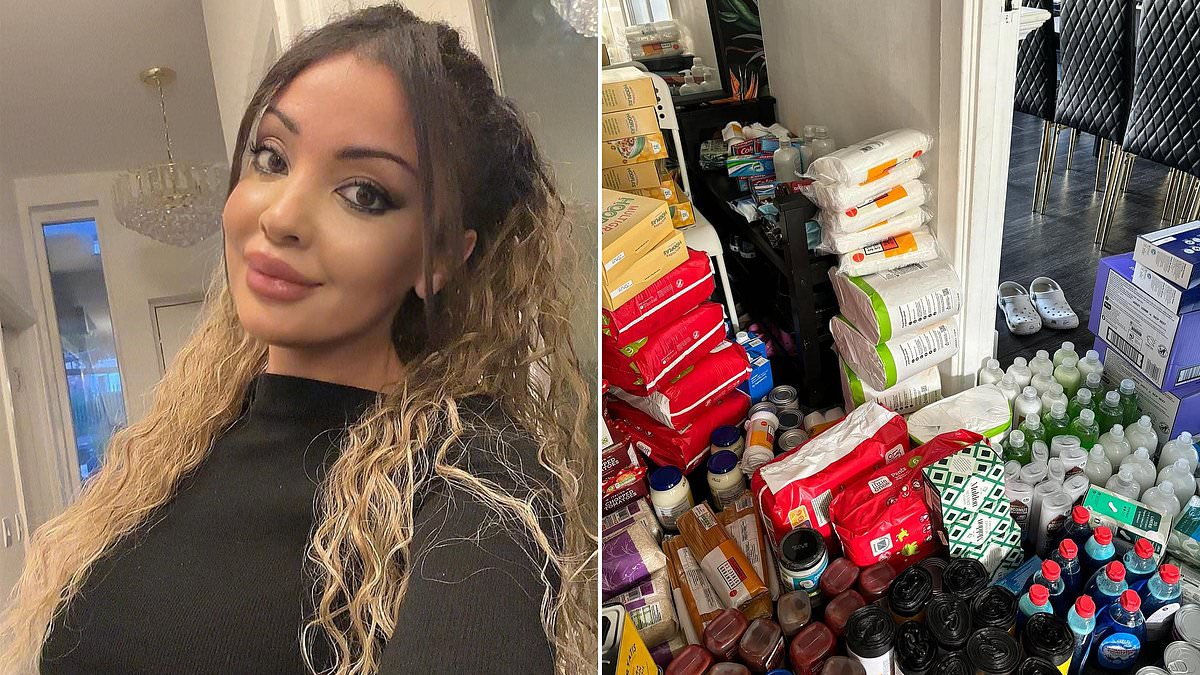
The stereotypical doomsday prepper is often imagined as an older man hunkered down in a remote bunker, surrounded by canned food, guns and gas masks.But a new study suggests the people most likely to identify as 'preppers' are actually young women.Researchers found this group was significantly more likely to consider themselves prepared for potential crises, from natural disasters and pandemics to technological threats and war, compared to others.'Prepper identity is stronger among women and younger respondents,' the researchers wrote in the journal Social Science Quarterly.It could be that younger generations are more mindful of potential crises after witnessing a succession of shocks including the pandemic, soaring living costs, extreme weather events and global conflicts.Researchers have also previously suggested that women frequently take responsibility for practical preparedness measures within the home, such as maintaining food stores, medical supplies and emergency plans. A new study suggests the people most likely to identify as 'preppers' are actually young women. Pictured: Charlene Woracker, who has shared her advice for anyone looking to create their own emergency stockpile Researchers found that young women were significantly more likely to consider themselves prepared for potential crises, from natural disasters and pandemics to technological threats and war, compared to othersFor their study, the researchers surveyed more than 1,300 Americans to uncover who is most likely to describe themselves as a prepper.Just over a quarter of respondents agreed with the statement: 'I am a prepper,' while 40 per cent actively disagreed, and 34 per cent sat on the fence.Rather than focusing on stockpiling supplies or belief in apocalyptic scenarios, the study examined prepping as a social identity.Analysis revealed that self-described preppers were more likely to believe in conspiracy theories and describe themselves as politically conservative.Another factor linked to prepper identity was the belief that governments have the ability to manipulate major weather disasters, including hurricanes.Surprisingly, people living in areas most vulnerable to natural disasters were no more likely to identify as preppers than those in lower-risk regions.The researchers also found that environmentalists were more likely to embrace a prepper identity, suggesting concerns about climate change may be driving some people to prepare for future crises.'Preppers are often portrayed as people living in rural compounds preparing for societal collapse,' Professor Casey Klofstad, lead author from the University of Miami, said.'Our findings suggest the reality is much more diverse. People who identify as preppers come from a wide range of backgrounds.' Derrick James, who owns and operates his own doomsday prepping company in Maine, has been interested in prepping for a world-ending catastrophe since childhood. But the new study suggests younger women are best prepared for the end of the world Dr Sarita Robinson is just one of a growing number of women in the UK who are readying themselves and their families for when 'disaster strikes again' The authors said their research suggests there may be two distinct types of prepper.'There may be multiple pathways into prepper identity,' Professor Klofstad said.'Some people may be motivated by concerns about environmental and climate-related threats, while others may be motivated by distrust of institutions and a more conspiratorial worldview.'The team hope to conduct further research into these two distinct types of preppers, which in turn could help develop more effective messaging to encourage people to prepare for disasters.'What this paper suggests is that you can't necessarily give the same message to everybody,' Professor Klofstad said.'What I'd like to find out is: Are different types of people more or less receptive to appeals to engage in preparedness behaviours?'Today's preparedness movement includes a growing number of women, from best-selling survival authors such as Tess Pennington and Daisy Luther to ordinary mothers building emergency food stores and disaster kits for their families.A 'doomsday prepper' recently revealed the items people should avoid stockpiling, the products that are a waste of money and the everyday essentials they should never overlook when preparing for an emergency.Charlene Woracker shared advice for anyone looking to create their own emergency stockpile.The 35-year-old spends around £300 every six months building up her supplies. She stocks a mixture of food, toiletries, cleaning products and household essentials.The mother-of-four began building up her household supplies during the Covid pandemic.Another 'prepper', Dr Sarita Robinson, an associate dean in the school of psychology and humanities at the University of Lancashire, has said: 'Prepping should not increase panic and anxiety.'It should actually help people to feel reassured that they would be able to look after their households without relying on others.'
Forget old blokes in their bunkers: Study finds young women are best prepared for the end of the world
Full Article
Original Source
Read the full article at Dailymail →KhanList aggregates and links to publicly available news content. We do not host full articles from third-party sources. Always verify important information with original sources.