
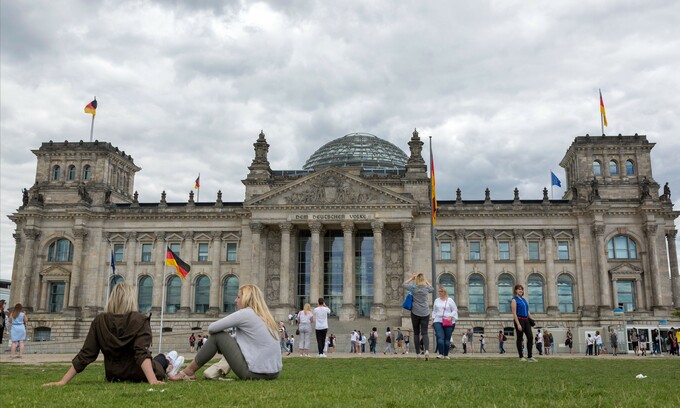
International students accounted for 18% of university enrollment in Germany in the 2025-26 academic year, the highest proportion ever recorded, with their number reaching 516,820. Data for the winter semester of the 2025-26 academic year, released by Germany's Federal Statistical Office in August, showed that the number had increased by 24,733 from the previous year, accounting for nearly one-fifth of all university students in the country.The proportion of international students has risen sharply over the years, from 9.2% in the 1998-99 winter semester to 18% in the 2025-26 winter semester, the highest ratio ever recorded.A data analysis for the latest winter semester is not yet available.According to a 2026 analysis by educational consultant Wissenschaft weltoffen based on the 2024-25 winter semester, Asia and the Pacific was the key region of origin for international students, accounting for 34%.Indian students made up the largest group among all international students in Germany in the 2024-25 winter semester, at 58,833, followed by Chinese students at 38,989, Turkish students at 20,900, Iranian students at 17,248 and Austrian students at 15,732.By field of study, the analysis said almost 35% of international students intended to obtain a bachelor's degree and 47% a master's degree. By subject group, engineering (43%) and law, economics and social sciences (25%) were the top choices.Germany is emerging as one of the most attractive study-abroad destinations outside the traditional four of the U.S., U.K., Canada and Australia.The main reason is relatively low tuition fees, ranging from around €5,000-20,000 (US$5,800-23,200) at private institutions and almost free at public universities, according to Study in Germany. Visitors are seen outside the historic Reichstag Building in Berlin, Germany. Photo by Pexels Many German universities offer world-class education, with five to seven institutions ranked among the top 100 in engineering and technology, natural sciences, and arts and humanities in the 2026 QS World University Rankings.Another factor is the growing number of English-taught programs (ETPs). Germany currently ranks second in Europe for the number of ETPs, with more than 2,400, according to ICEF Monitor.As many countries continue to tighten visa rules and post-graduation employment policies for international students, Germany has adopted more open policies toward highly skilled workers. International students can stay for 18 months after graduation to look for work, followed by a structured pathway involving a work permit, EU Blue Card, permanent residency, and eventually citizenship.Estimates show that around 19.5 million people in Germany will retire by 2036, while only 12 million will enter the labor market. The widening gap has made attracting skilled workers a key part of the country's economic strategy, with international students playing a crucial role, according to The PIE News.In a survey conducted by the German Academic Exchange Service (DAAD) last year, two-thirds of international students said they planned to stay in Germany, while around 50% said they wanted to seek long-term employment.
Foreigners make up record 18% of university students in Germany
Full Article
Original Source
Read the full article at E →KhanList aggregates and links to publicly available news content. We do not host full articles from third-party sources. Always verify important information with original sources.