
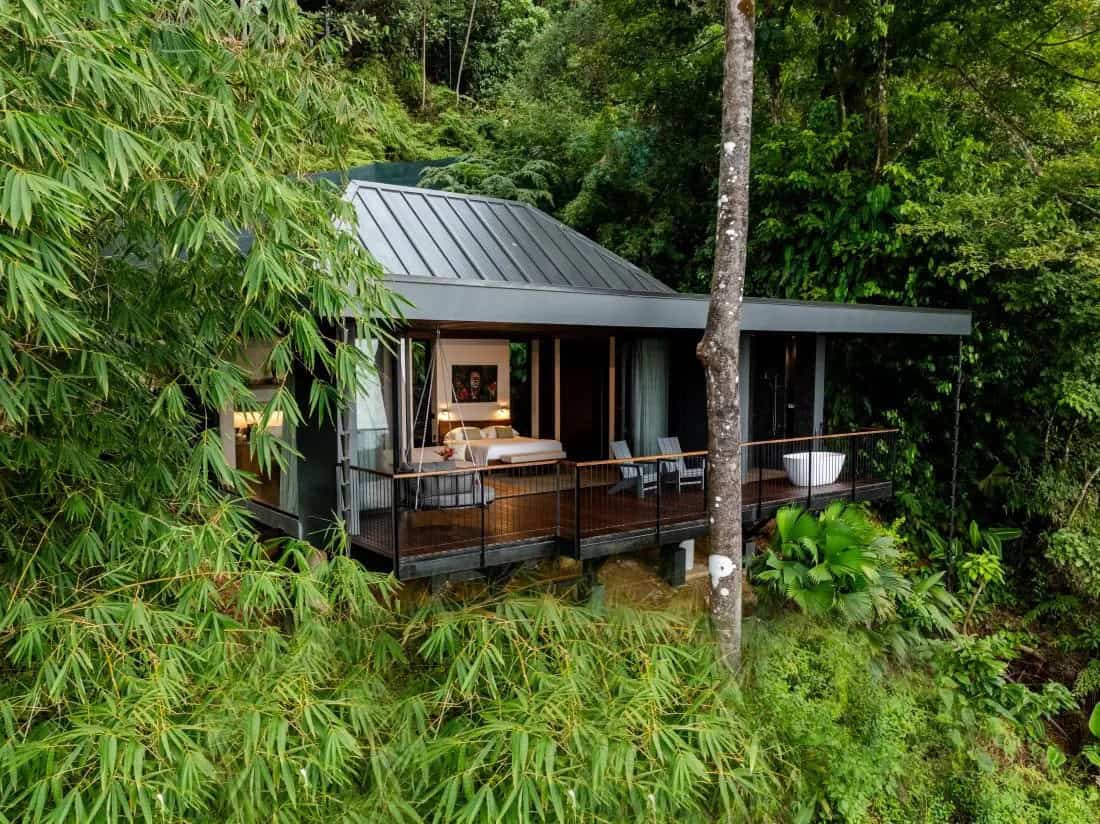
A Forbes travel feature published Oct. 26 names Rancho Pacifico, an adults-only resort in the rainforest above Uvita on Costa Rica’s southern Pacific coast, as one of its picks for travelers who want to avoid the crowds by going in the shoulder season. The piece, by Forbes contributor Wendy Altschuler, argues that time is the real luxury on any trip and that the weeks between a destination’s busy and quiet periods often bring lower prices, more availability and shorter lines. Costa Rica shares the list with the English countryside, Montana, Lake Tahoe and Mexico’s Chichen Itza. Altschuler pitches the property as a couples retreat built around slowing down rather than following a packed itinerary. She describes coffee on a private balcony surrounded by rainforest, with more birdsong than a visitor can identify. Early mornings, she writes, bring sightings of blue morpho butterflies, yellow-throated toucans and white-faced capuchin monkeys. Guests can also hike to a waterfall on the property with an onsite naturalist. The feature praises the food, prepared by experienced chefs, and a warm, attentive staff. It also highlights shared spaces designed for time with other guests or quiet moments as a couple, along with the Pacific sunsets that are one of the resort’s main draws. The resort sits about 600 meters (2,000 feet) up a mountainside, reached by a steep 3-kilometer (2-mile) road from Uvita, on 101 hectares (250 acres) of private rainforest. It holds two Michelin Keys, and the Michelin Guide lists room for a maximum of 20 guests, all over 18. According to the Michelin listing, the drive takes about 45 minutes from the Quepos airport or roughly three and a half hours from the international airport outside San José. Beyond the resort, Forbes points readers to three national parks. Marino Ballena, known for its whale-tail sandbar, sits on the coast just below Uvita, Manuel Antonio National Park lies to the north, and Corcovado is on the Osa Peninsula to the south, where visitors must enter with a certified guide. The feature also recommends a horseback ride on the beach. Shoulder season works a little differently in Costa Rica. The high season runs roughly from December through Easter week, while the green season, from about May through November, brings thinner crowds and often lower rates. On the southern Pacific coast, the heaviest rain usually falls in September and October, though mornings are often dry. Altschuler notes that destinations with wet and dry seasons take more planning so the weather does not get in the way of activities. The feature adds to a run of Forbes coverage of Costa Rica this year, including a September piece on La Fortuna’s turn toward Costa Rican fine dining and the country’s selection as Best Nature Destination at the Forbes Travel Awards in March.
Forbes Picks Costa Rica’s Rancho Pacifico to Beat the Crowds
Full Article
Original Source
Read the full article at Ticotimes →KhanList aggregates and links to publicly available news content. We do not host full articles from third-party sources. Always verify important information with original sources.