
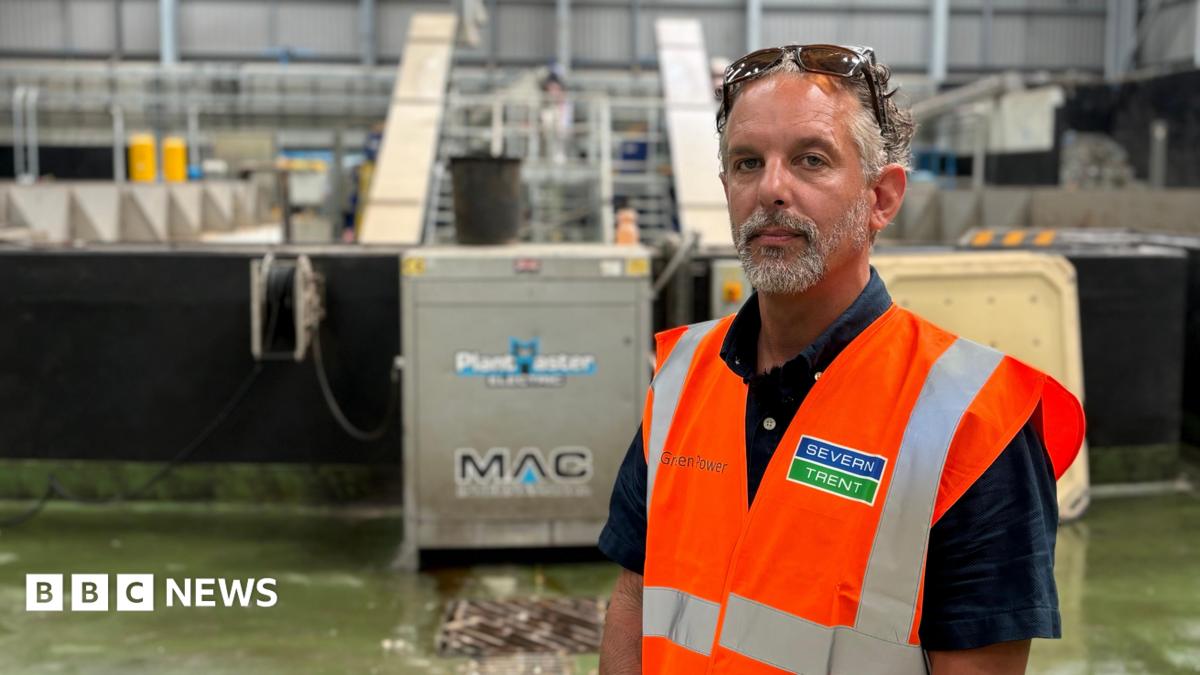
Food waste processing is 'worth the extra effort'Image caption, Chris Lofts says the digester could produce enough electricity to power 8,500 homesBySeb NobleCornwall political reporterReporting fromHolsworthyUnderstanding the benefits of recycling food waste could encourage more people to do it in future, Cornwall Council has said.For the past two years, leftover food has been able to be taken to an anaerobic digester to be converted into methane to generate electricity and produce fertiliser.The council said about 36,000 tonnes of food waste had been recycled to date since the introduction of its new waste service.It said it hoped increased participation through understanding the benefits would help meet its target to recycle nearly two-thirds of Cornwall's waste by 2029. Cornwall's food waste is taken to a digester in Holsworthy, Devon, operated by Severn Trent Green Power. Chris Lofts, the site manager, said the waste was first filtered before having water added and being fed into a digester to create methane."That methane we use as a fuel for engines that run generators and the generators produce electricity - and we then inject the electricity back into the National Grid," he explained.He said they tried to make sure nothing went to waste: "We use the heat as well to pasteurise the material on site for ancillary services that we do here."Even the by-product, the digestate that comes out - that's used as a fertiliser for farmers to fertilise the countryside and make all the flowers and crops grow."Image caption, Bosses said the facility usually processed about 1,100 tonnes of food every week Lofts said recycling food was better for the environment than just throwing it in the bin with other waste to be taken to an incinerator.He said: "The incinerators use the waste as a fuel - they burn it and heat up steam generators from that. But there is a residual, the ash, which needs to go somewhere."It's an imperfect procedure - you're not getting as much electricity out of it as you would do if you're sending it to us here."He said the site could process about 1,100 tonnes of food waste a week - creating enough electricity to power 8,500 homes. Image caption, Loic Rich said he hoped to increase Cornwall's overall recycling rate to 65% by 2029Councillor Loic Rich, portfolio holder for environment and climate change on Cornwall Council, said it was great to see residents engaging with recycling food. He said: "We're living on a planet that we've damaged with pollution and it's time now to take a bit more responsibility."It's just another thing we don't really want to be chucking away to get burnt in the incinerator when it can actually be reused and put to good use."The council said its analysis of Cornwall's household waste found food accounted for 22% of black bag rubbish - and 43% of that was still in the packaging.Rich said he hoped that figure would decrease if people understood the benefits of recycling food waste. "I'm just saying to people, if you're not doing your food waste, have a think about all the benefits - it's worth it."At the moment, we're just over 50%. I'd like to get to 65% by 2029 but we can only do that if people in Cornwall help."Follow BBC Cornwall on X, external, Facebook, external and Instagram, external. Send your story ideas to spotlight@bbc.co.uk, external.More on this storyExternal links
Food waste processing is 'worth the extra effort'
Full Article
Original Source
Read the full article at Bbc →KhanList aggregates and links to publicly available news content. We do not host full articles from third-party sources. Always verify important information with original sources.