
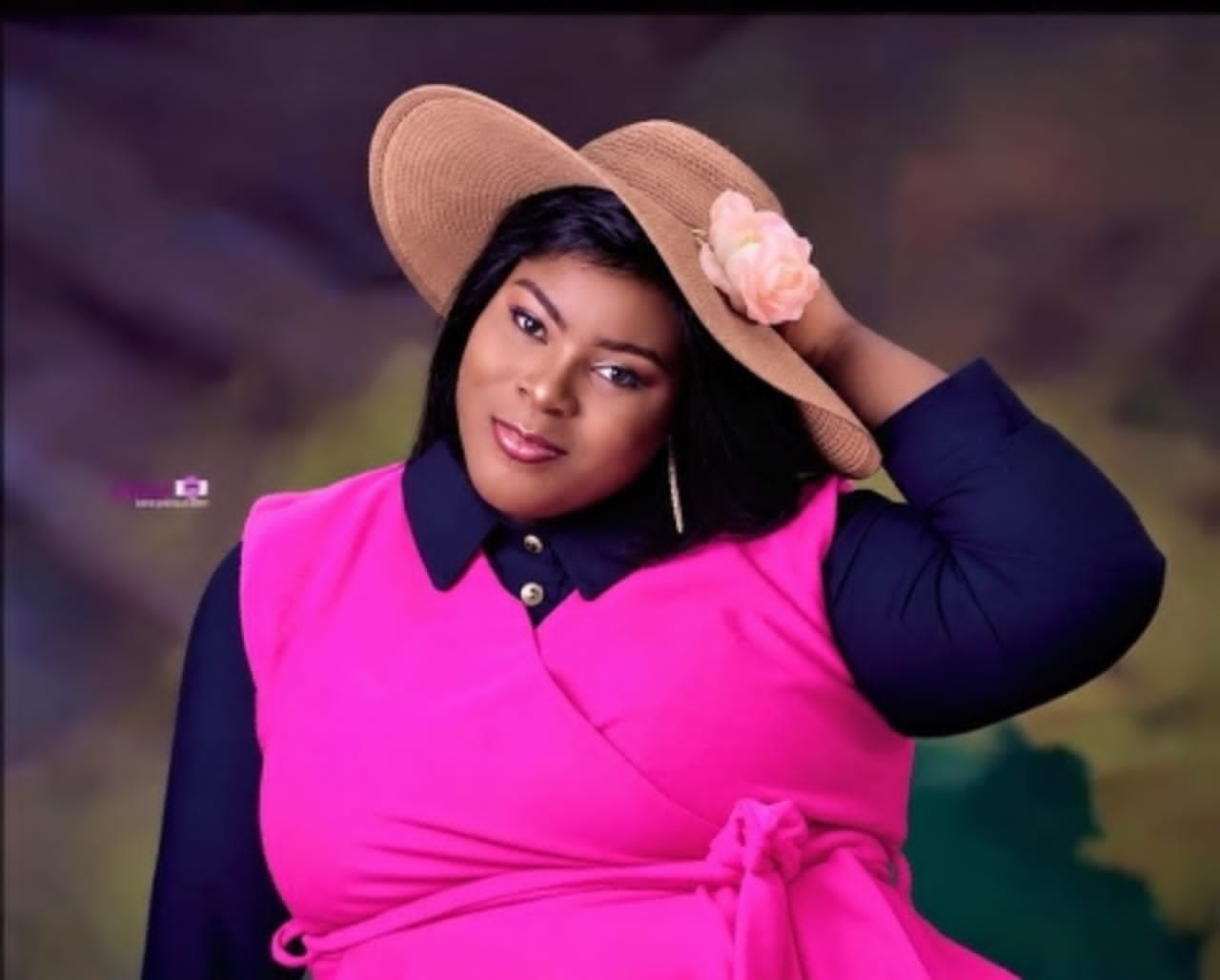
Long before she ever sketched a T-shirt, Folajogun Akinlami was dressing a wound in how society sees disabled women. A polio survivor with a physical impairment affecting her right leg, the broadcaster behind Beyond Challenges and founder of the Differently Abled Foundation has spent her career making space where there was none. It started in a radio studio in Ondo State. Then it became a TV show, a foundation, a fellowship in Wisconsin, three books, two films and a master’s degree in Nottingham. MARY NNAH examines how Nottingham-based Nigerian broadcaster Folajogun Akinlami is bringing her lifelong work on representation, self-worth and belonging to a more personal space, the wardrobe, through her new inclusive brand Let Love Lead, a line of T-shirts and activewear for every body On air, on the page and on screen, Folajogun Akinlami has spent years asking how visibility feels. With Let Love Lead, her new collection of T-shirts and inclusive activewear for every body, she is asking it where it matters most, in the fitting room. The Nottingham-based Nigerian broadcaster, author and disability advocate is turning visibility into something you can wear. For Folajogun Akinlami, fashion was never going to be just about fabric. To this end, Akinlami, who writes under the name Vickie Banks, is preparing to launch Let Love Lead, a new clothing collection of T-shirts and activewear that extends a creative career devoted to inclusion, representation, self-worth and belonging. “I have spent my whole career talking about inclusion,” Akinlami says. “Let Love Lead is me deciding that inclusion also has to be something you can put on in the morning. It has to live in your wardrobe”, she noted. It is a natural next step. For years, Akinlami has explored the same questions through broadcasting, books, music, film and the Differently Abled Foundation. Let Love Lead brings that conversation into a more intimate, everyday space: how we dress and how we allow ourselves to be seen. Wearing Visibility A polio survivor with a physical impairment affecting her right leg, Akinlami has drawn on her own lived experience to question how disabled people are seen and whose lives receive attention. Much of her creative work has addressed the space available to disabled women in public life, in relationships and in culture. Let Love Lead takes that concern into the everyday experience of dressing and being visible. “I know what it feels like to walk into a shop and not see yourself anywhere,” Akinlami says. “Not on the mannequin, not on the poster, not in the sizes. Let Love Lead started from that wound, she said. The collection’s launch campaign says it all without saying too much. Women of different ages and body shapes appear in coordinated activewear in several colours, moving, laughing, modelling together. Its message – inclusive activewear for every body – places representation at the very centre of the brand’s introduction. “We did not cast models; we cast real life. Different ages, different bodies, different stories. Because every body deserves activewear, not just some bodies,”, she explained. The ambition is deliberate: to make room for people who may not recognise themselves in conventional fashion advertising and to encourage confidence in how they present themselves. In a market that often tells women to shrink, Let Love Lead invites them to belong. A History of Being Heard That ambition has a history that long predates the clothing rail. Long before the launch, Akinlami was a familiar voice and face in Nigerian television and radio. Her career includes presenting and producing entertainment programmes at the Ondo State Radiovision Corporation and Orange FM. At OSRC, she also served as Head of the Entertainment Unit and Secretary of the Programmes Department, contributing to programme reviews and broadcast-content standards. Working across both entertainment and public-interest programming gave her a rare skill: reaching audiences through familiar cultural forms while carrying a deeper message. That was evident in her disability-focused programme Beyond Challenges, which brought the achievements and experiences of people with disabilities into public discussion. Rather than treating disability as the whole of a person’s identity, the programme made space for careers, ambitions and participation in society. Her current platform, Folajogun Akinlami TV, continues that work through digital broadcasting and film. Beyond and Above Challenges develops her long-standing interest in the lives and achievements of people navigating barriers, while Hanging with Diasporans brings conversations about Nigerian and diaspora experiences to online audiences. Together, these programmes provide a setting for discussions that connect individual experiences with wider social questions. Advocacy Beyond The Screen In 2018, Akinlami established the Differently Abled Foundation in Nigeria. The organisation brings a community dimension to the concerns explored in her creative work, advocating inclusion and opportunities for people with disabilities. The relationship between her broadcasting and foundation work is direct: public storytelling can draw attention to exclusion, while community advocacy addresses how people experience it beyond the screen. “The Foundation taught me that advocacy cannot stay on screen. It has to touch lives on the ground,” Akinlami noted. Her international experience deepened that connection. In 2019, she was selected as a Mandela Washington Fellow at the University of Wisconsin-Madison. During that period, she volunteered at Gigi’s Playhouse, a Down syndrome achievement centre. Her experience there became the subject of Fola and Haley: A Friendship Story, published by Wisconsin Life in January 2020 and credited to Akinlami and producer Karl Christenson. The contribution explored friendship and self-perception through her connection with a young participant at the centre. Writing Her Own Life The same willingness to examine personal experience runs through her writing. Her book Stolen Paradise explores life, love and disability; themes that also featured in a discussion documented in the University of Wisconsin-Madison’s 4W Initiative 2020 progress report. Writing as Vickie Banks, Akinlami later developed her autobiographical work in Phoenix: A Journey of Rebirth and Resilience, returning to questions of identity, relationships, and rebuilding a life. “I write because disabled women are rarely allowed to tell their own love stories, their own motherhood stories. I had to write mine, so others could know they can own theirs too”, Akinlami said. Her subsequent manuscript, The Child I Chose, carries that autobiographical journey into motherhood. Across these works, the connecting subject is consistent: a woman’s right to describe her own life in its complexity. Disability sits alongside intimacy, disappointment, hope and family, giving readers a fuller account of experiences that public discussion can too easily reduce to a single label. From Soundtrack to Screen Music and film form another part of that creative history. Akinlami’s work includes Ariwo Oja, a music project connected with her screen work. She co-produced Ariwo Oja Parts 1 and 2 and contributed the soundtrack. Those credits brought her musical and production work together, giving her another way to reach audiences through popular entertainment. Her later executive-producer credits include Pendulum and Ile Binukonu, released through her developing film platform in 2026. Enough is a further executive-producer project awaiting release. The films broaden her portfolio beyond disability-focused programming, and that broadening is itself a statement: her participation in entertainment also reflects the place she claims for disabled creatives as producers of a range of stories, not just one kind of story. Her academic work has examined related questions. She completed a master’s degree in Youth Work and Leadership Practice at Nottingham Trent University, researching the self-perception of women living with physical disabilities in Nigeria. That subject connects closely with the issues of visibility and identity running through her books, broadcasting and now, her clothing campaign. Why Clothes Matter Let Love Lead gives these long-held concerns a commercial expression. “For me, this is not a fashion brand; it is a statement. That love should lead how we see ourselves, how we design, how we include. If we let love lead, we will make room for everybody,” Akinlami said further. Clothing is personal, but the images used to sell it also communicate powerful assumptions about who belongs. By choosing inclusive representation as the starting point for the brand, Akinlami brings her advocacy into practical decisions about how a collection is presented and who is invited to see themselves wearing it. The new line also marks a further stage in her work between Nigeria and the United Kingdom. Her career has moved from regional broadcasting to community advocacy, international exchange, publishing and online production. The formats have changed, while her interest in people’s ability to participate and define themselves has remained visible. As she prepares to introduce Let Love Lead, the connection between the collection and her earlier work gives the launch its wider context. The clothing belongs to an ongoing creative practice in which representation is a practical question: whose story is told, whose image is shown, and who has the opportunity to create. For Folajogun Akinlami, the next expression of that work will be something people can wear – inclusive activewear for every body, made to let love lead.
Folajogun Akinlami: The Broadcaster Turning a Lifetime of Disability Advocacy into Inclusive Fashion
Full Article
Original Source
Read the full article at Thisdaylive →KhanList aggregates and links to publicly available news content. We do not host full articles from third-party sources. Always verify important information with original sources.