
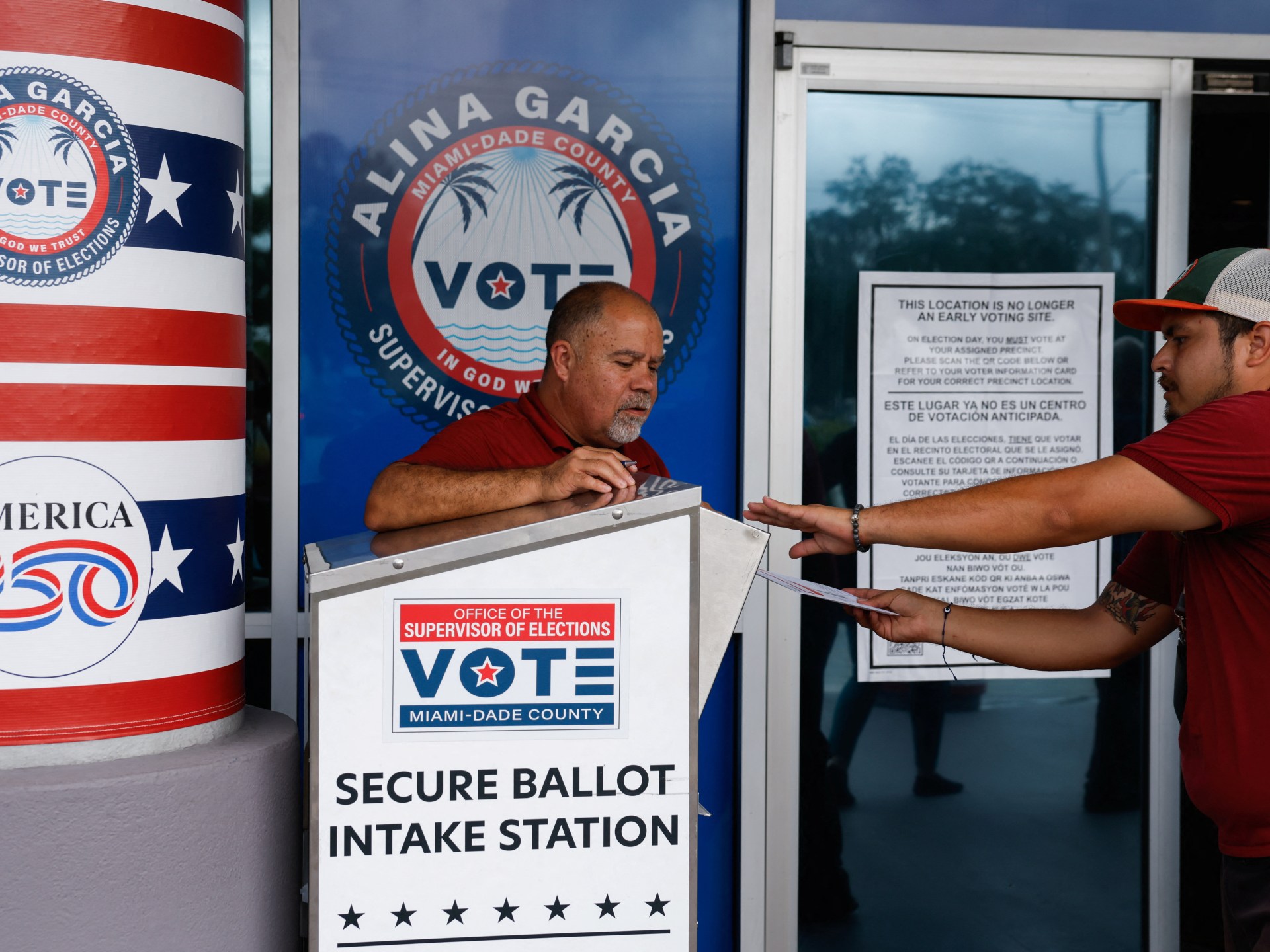
Like many others, when I saw the United States midterm election results on November 4 , I was shocked by the scale of the blue wave that had swept the country, with Democrats and democratic socialists making gains nationwide. Traditionally conservative states, such as South Carolina and Texas, elected Democratic senators for the first time in decades. Georgia also elected its first Black woman as governor.In an election awash with money from wealthy donors, including tech bosses, Democrats campaigned on affordability, with progressive candidates unapologetically championing working-class interests and Medicare for All. The results suggested a new kind of coalition politics was possible and amounted to a sweeping repudiation of Trump after nearly two years of turmoil: a violent immigration crackdown, conflicts in the Middle East, and threats to Greenland and Canada.Yet I wondered why Republicans in my home state, Florida, had managed to hold on to a US Senate seat, the governorship and most statewide offices, even as Democrats made historic gains elsewhere.For most of my childhood, Florida was a swing state with Democratic governors in Tallahassee and mayors in Miami. But by the turn of this century, Republicans had begun to consolidate their hold on state politics. Two factors have helped sustain that dominance: Florida’s long history of voter suppression and support for the Republican Party among conservative Cuban Americans.Voter suppression has long undermined democracy in the south of the US, especially in my home state. Like other southern states, Florida historically restricted African Americans’ voting rights through literacy tests and poll taxes, which also disenfranchised poor white voters. The Voting Rights Act of 1965 was intended to end these discriminatory practices. Yet in 2000, Florida purged thousands of eligible voters, disproportionately Black, from its rolls. These practices have undermined fair representation and helped skew elections towards Republicans.Another major factor in the Republican wall is the historically conservative Cuban American vote. Many Cuban Americans, particularly those whose families fled Cuba’s communist government, have traditionally voted Republican. As Trumpism took shape, many found a political home in the MAGA movement. As then-Florida state senator Manny Diaz Jr told the Miami Herald, “If you look at the city of Hialeah [in Miami-Dade], Trump went from winning the city by, like, 100 votes to getting 66 percent of the vote … That’s a growing movement, and it’s not going away.”Yet despite these longstanding advantages, the 2026 midterms exposed cracks in Republican dominance in Florida. Earlier this year, the Republican-controlled state legislature tried to strengthen its electoral position through gerrymandering, redrawing the boundaries of four Democratic-held congressional districts – the ninth, 14th, 22nd and 25th – to favour Republicans. Governor Ron DeSantis signed the new map into law, but the effort failed to deliver the gains Republicans had hoped for. Democrats Kathy Castor, Pia Dandiya and Jared Moskowitz won in the 14th, 22nd and 25th districts, respectively, while Darren Soto appeared set to retain the ninth.And the challenge to Republican dominance extended beyond congressional races. Miami-Dade County, which voted for Trump in the 2024 presidential election, backed the Democratic candidates for governor and Senate in 2026. Although Republicans retained both statewide offices, the races were surprisingly close. The Democratic Senate nominee, Angie Nixon, lost by just under three percentage points to Republican incumbent Ashley Moody. David Jolly, the Democratic nominee for governor, lost to Byron Donalds by just 1.3 percentage points, or little more than 100,000 votes.Even in defeat, Angie Nixon’s campaign was historic. A member of the Democratic Socialists of America who championed the working class, she faced racist attacks from Trump allies and little financial support from the national Democratic establishment. After Nixon won the Democratic Senate primary in August, Laura Loomer, a far-right activist and ally of Donald Trump, posted on X, “Angie Nixon is a ghetto, black, communist.”When asked whether the Democratic Party would support her grassroots campaign, Nixon recounted a conversation with Senate Minority Leader Chuck Schumer: “He’s going to look into it. That’s what was said, that he’s going to look into it.” Yet neither the Democratic Senatorial Campaign Committee nor the Senate Majority PAC spent any money supporting her campaign, leaving many wondering whether the Democratic establishment’s failure to invest cost Nixon a winnable Senate seat.That lack of support is particularly striking given the scale of the national Democratic advance. As the Financial Times reported, the vast majority of districts in the United States swung towards Democrats, delivering a brutal verdict on the MAGA movement, which has felt unstoppable for nearly a decade. If people organise around working-class interests, they can challenge the political power of the ultra-rich. The challenge for Democrats is to back those movements rather than leave them without the resources needed to win.But election results alone are not enough. People must keep challenging their representatives to improve living conditions, including by revitalising the public sector and expanding universal social programmes. In Florida, the losses did not kill a movement; instead, they have reinvigorated the public’s belief that if people fight, they can win. Angie Nixon is showing us what a democratic socialist fight might look like: “We may have lost this battle, but the war is not over, and I need y’all to stay in this fight. 2028 is around the corner, so Ashley Moody, you better get it right, ’cause we’re coming for you.”The views expressed in this article are the author’s own and do not necessarily reflect Al Jazeera’s editorial stance.
Florida’s red wall is cracking, but Democrats are missing their chance
Full Article
Original Source
Read the full article at Aljazeera →KhanList aggregates and links to publicly available news content. We do not host full articles from third-party sources. Always verify important information with original sources.