
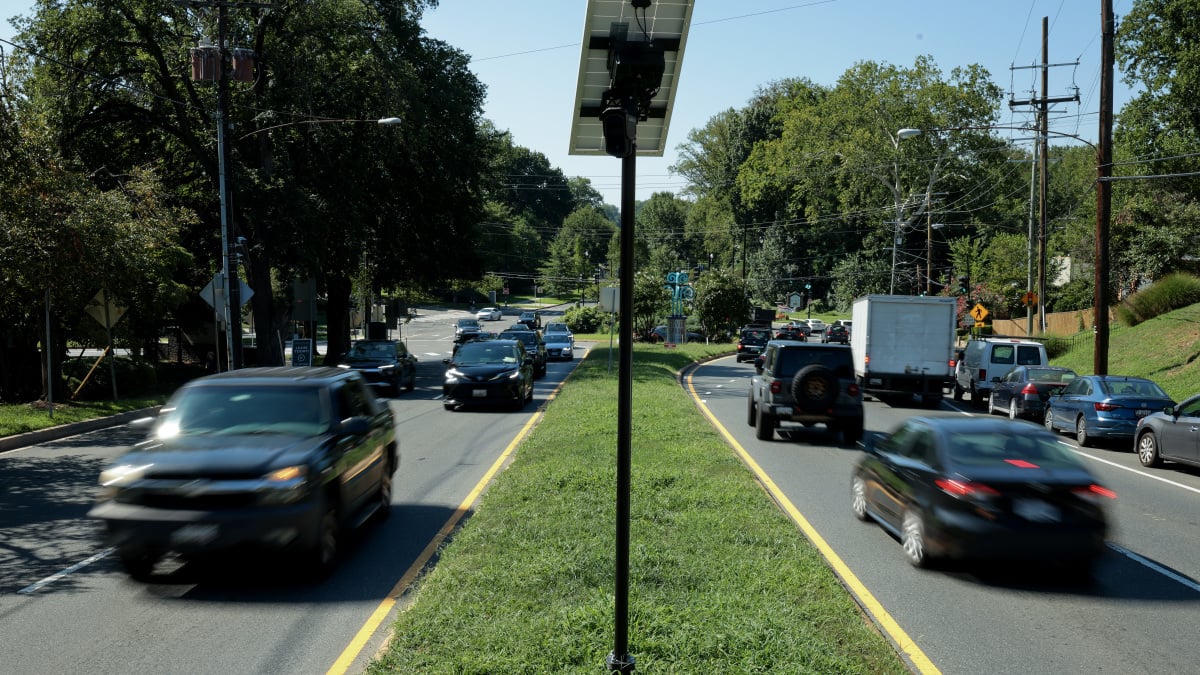
The cameras are coming down in Florida. Partially. On Monday, the Florida Department of Transportation officially revoked permission for law enforcement agencies to operate automated license plate readers on state highway rights-of-way. Police agencies have 30 days to remove them.The order represents one of the broadest government actions yet against the increasingly controversial technology. And although Flock Safety has become almost synonymous with automated license plate readers, Florida’s directive applies to the entire category, including cameras supplied by competitors such as Axon and Motorola. Florida officials cited the "recent exponential increase" in camera deployments, along with "concerning reports of misuse, data privacy concerns, and surveillance schemes."Florida appears to be the first state to order the wholesale removal of automated license plate readers from its state highway system, rather than pausing new installations, limiting their use, or cutting funding. The order applies statewide but only to cameras installed within state highway rights-of-way. It does not prohibit license plate readers on local roads or private property, where Florida officials say most of the cameras are located. The Jacksonville Sheriff’s Office said it would discontinue its use of license plate readers throughout Duval County effective immediately, even as it called them valuable investigative tools. Pasco and Manatee counties have also moved to ban or remove the devices, while Oviedo’s mayor said the city’s cameras would be gone by the end of September "one way or another."Gov. Ron DeSantis had telegraphed the move days earlier, describing the proliferation of license plate readers as "out of control" and warning against the creation of a surveillance state. Mashable Light Speed "These cameras that are out there now — who’s to say they’re only doing the license plate?" DeSantis said during an appearance on Eric Bolling’s Main Street America program. "I think it’s capturing people in their cars. I think it’s capturing way more information than they’re letting on. And you’ve seen the abuse."Flock says a ban is the wrong response. The company argues that its cameras help police solve serious crimes, recover stolen vehicles, and locate missing people. "Rather than banning a critical public safety tool, we support thoughtful legislation and strong privacy, transparency, and accountability guardrails," Flock said in a statement.Florida may be the biggest development of the week, but it is not an isolated one. Across the country, state and local officials (and local vigilantes) have spent the past several days covering cameras, canceling contracts, and asking questions that many departments did not address before the technology was installed. "I think it’s capturing people in their cars. I think it’s capturing way more information than they’re letting on. And you’ve seen the abuse." Weeks of cancellations, pauses, and proposed bansFlorida is not the only state reconsidering its relationship with Flock. Just days before the highway order, Texas Gov. Greg Abbott directed state agencies to stop funding the company’s cameras. His office pointed to mounting concerns about misuse, including the indictment of a Lufkin police officer who faces 100 felony counts for allegedly conducting unauthorized searches in Flock’s database.In Wisconsin, Menasha Mayor Austin Hammond ordered every Flock camera in the city covered by the end of Sept. 1. He added that he would ask the Common Council to terminate its contract later in September. Menasha police had already introduced additional safeguards, including a public transparency log and regular audits of system users. Even with those measures, Hammond said community concerns about privacy and data access warranted ending the program. "There is a great and genuine concern that exists regarding privacy and how the data is accessed and shared," Hammond told local news. The pullback continued Sep. 1 in Tennessee, where Hamilton County Sheriff Austin Garrett paused all 70 automated license plate readers overseen by his office. Meanwhile, several Massachusetts communities took action over the preceding days: Abington and Ayer ended their relationships with Flock, while Southbridge suspended its program pending greater public discussion of the technology and possible statewide safeguards. Groton also announced that it would terminate its contract, following an internal review. They add to five other local Massachusetts towns discontinuing their cameras. "Being a successful police department is not simply about having the most tools or the newest technology," Abington Police Chief John Bonney. "It’s about maintaining the trust and confidence of the people we serve."As of Aug. 31, the Institute for Justice, a libertarian public-interest law firm challenging automated license plate readers in court, counted 144 local governments that had canceled or declined to renew ALPR contracts since the beginning of 2025.The speed of the pullback reveals how quickly Flock’s standing has deteriorated. A company that once built an enormous national network by selling its cameras as relatively inexpensive, low-maintenance tools for solving crimes now faces scrutiny from both political parties, organized community opposition, and the public at large.
Florida takes sweeping action against license plate readers as cities drop Flock
Full Article
Original Source
Read the full article at Mashable →KhanList aggregates and links to publicly available news content. We do not host full articles from third-party sources. Always verify important information with original sources.