
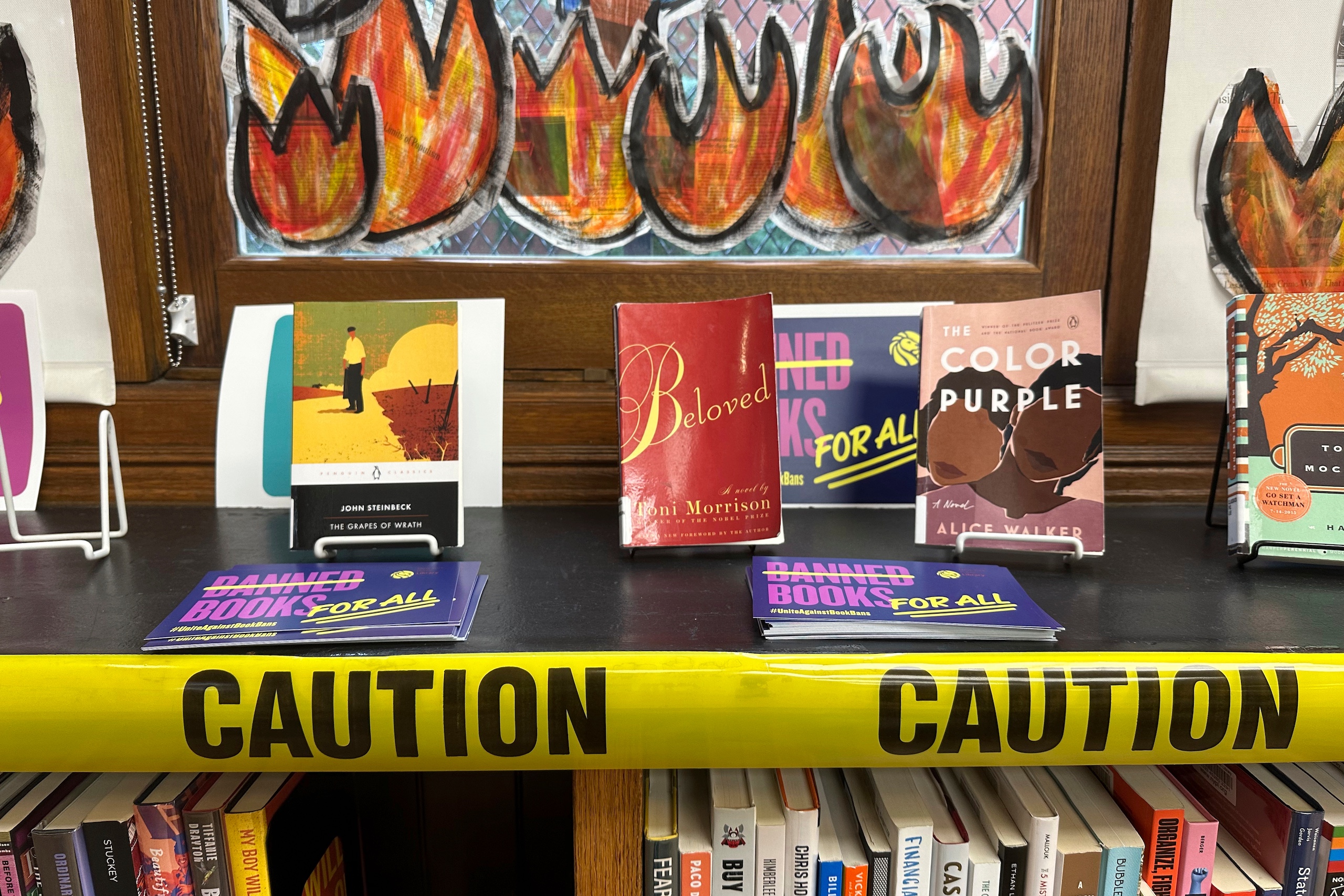
The decision comes as Florida had some of the highest book removals in the country over the past school year.ATLANTA (CN) — The 11th Circuit ruled Monday that members of a Florida school board must testify about why they removed certain library books amid a national surge in banned books.Seven members of the Escambia County School Board asked the federal appeals court to quash subpoenas seeking depositions on their motives for removing and restricting more than 100 books in the district’s public libraries.But in the majority’s opinion, the board members’ votes on various books were administrative acts, not legislative, and therefore not shielded from examination.“The District Court concluded that when the board members voted to remove specific books as inconsistent with the board’s existing policies, they acted as administrators, not legislators. We agree and affirm,” U.S. Circuit Judge Andrew Brasher wrote.U.S. Circuit Judge Jill Pryor, a Barack Obama appointee, joined the Donald Trump appointee in the opinion.They said the court has previously held that a legislative act’s touchstone is whether it involves “policymaking rather than mere administrative application of existing policies.”But Chief U.S. Circuit Judge William Pryor, a George W. Bush appointee, disagreed.“Because the members of the Escambia County School Board exercise discretion over a matter of public policy when voting to remove books from school libraries, the majority wrongly strips them of their privilege to avoid testifying about those votes,” Pryor wrote in a dissenting opinion.In Pryor’s opinion, the board’s actions are comparable to a challenge to a zoning decision the 11th Circuit held was a legislative act.But the majority said that case is different because it involved a request to amend the zoning ordinance, not a request to apply the zoning ordinance in effect.They added that a decision not to amend an ordinance, just like a decision to enact an ordinance in the first place, is an unconstrained, policymaking decision. But the majority said the plaintiffs do not seek to depose the board members about their decisions to create, repeal, or amend any policies in response to book-related complaints.“Our dissenting colleague’s independent research may have been comprehensive. But we respectfully suggest that his resort to unraised arguments about far-flung authorities merely underscores that this court’s precedents (which we have obviously addressed in depth) do not support his position,” Brasher wrote.A group of parents, authors, a free speech interest group called PEN American Center Inc. and publisher Penguin Random House sued the Escambia School Board in 2023, claiming it violated the First Amendment.As part of discovery, the plaintiffs sought to depose the board members about their motivations and decision-making behind their votes on the books they determined needed to be removed or restricted, even though they are not named parties in the lawsuit.Florida law required the board to adopt a policy for its employees to remove any library or instructional materials that are, among other things, pornographic or “depict or describe sexual conduct.”Under the school board’s policy, if someone challenges a book to the board, members must review the objected-to material and allow the public an opportunity to comment before voting on whether to remove it.The process that led to the mass book removals and restrictions began in May 2022, when a single Escambia County school teacher, Vicki Baggett, led a campaign to remove books from school libraries over ideological objections to their contents.Hundreds of books were challenged, mirroring the rationale and book excerpts posted on websites affiliated with Moms for Liberty, a politically conservative group focused on combating “woke” influence in public schools, which targets the same books across the country.These books include many American literature classics, like “Slaughterhouse-Five” by Kurt Vonnegut, “Beloved” by Toni Morrison and “Forever” by Judy Blume, which the plaintiffs say have sat on school library shelves for years, if not decades, without issue.The plaintiffs cite the Supreme Court’s 1982 decision in Board of Education, Island Trees Union Free School District v. Pico, which said public schools can bar books from libraries that are “pervasively vulgar” or not right for the curriculum, but they cannot remove books “simply because they dislike the ideas contained in those books.”The 11th Circuit’s decision comes a week after Banned Books Week, an annual awareness campaign that celebrates the freedom to read and highlights the impact of book censorship.According to PEN America, a staggering 11,982 book bans were recorded nationwide during the 2025–26 school year — the highest single-year total ever documented. This included 4,500 books that had not previously appeared in PEN America’s Index of School Book Bans.Florida is leading the charge, just behind Texas, with more than 3,000 books banned during that same period, despite reports that it has some of the lowest and rapidly declining reading scores in the country.Subscribe to our free newslettersOur weekly newsletter Closing Arguments offers the latest about ongoing trials, major litigation and rulings in courthouses around the U.S. and the world, while the monthly Under the Lights dishes the legal dirt from Hollywood, sports, Big Tech and the arts.Additional Reads
Florida school board must testify about book removals
Full Article
Original Source
Read the full article at Courthousenews →KhanList aggregates and links to publicly available news content. We do not host full articles from third-party sources. Always verify important information with original sources.