
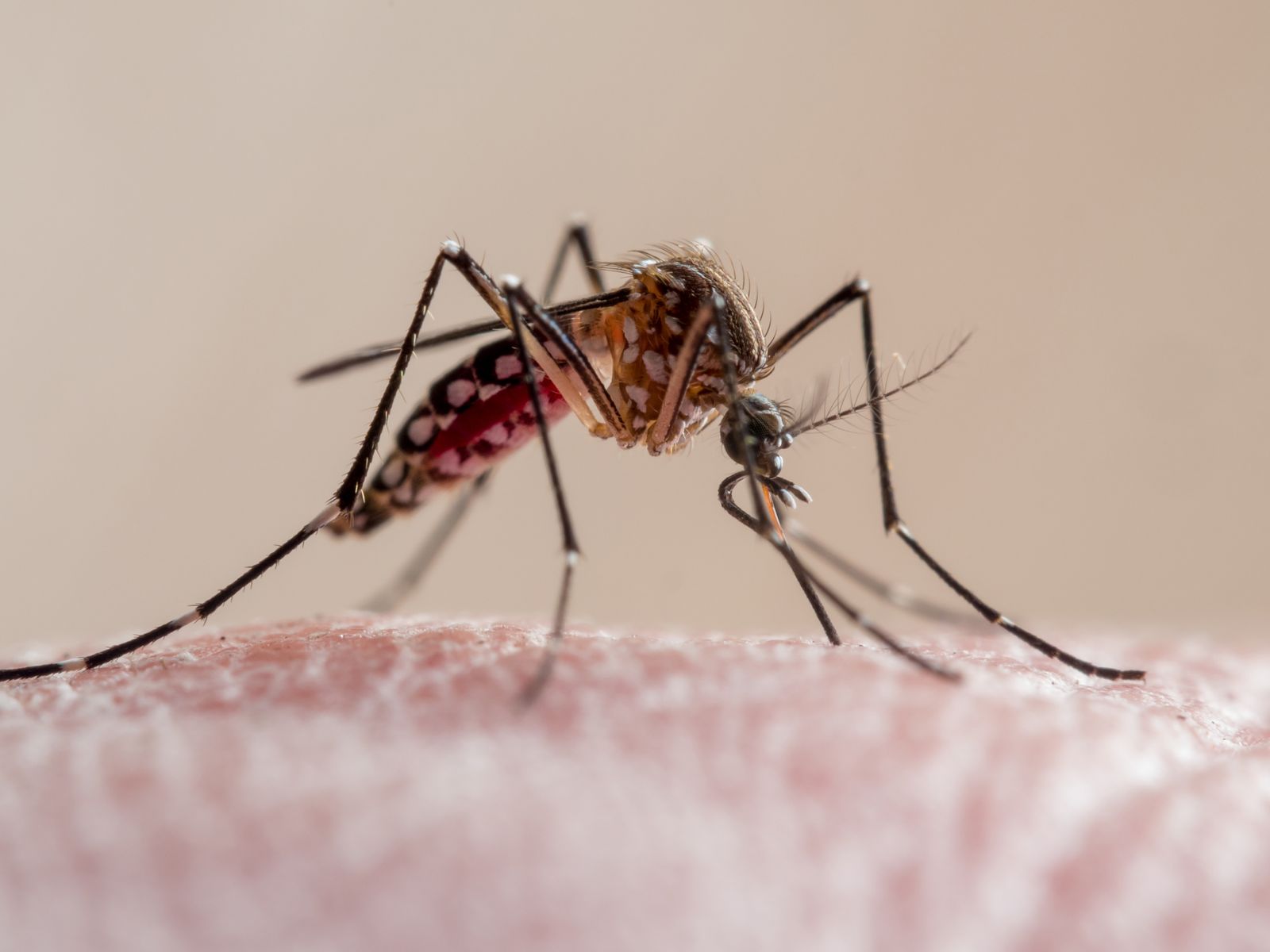
Most dengue infections cause mild flu-like symptoms or no symptoms at all. But at least one person has died from this year’s outbreak in Florida, where health experts worry the disease will become more common in the future McKenzie Prillaman | November 12, 2026 2:52 p.m. Dengue is a viral disease transmitted by mosquitoes. Joao Paulo Burini via Getty Images This year, the Florida Department of Health has recorded a staggering 524 locally acquired cases of dengue, a mosquito-borne viral disease, as of October 31. That’s the highest number recorded there since the disease returned to the state in 2009, according to Forbes’ John Drake. For context, only 62 locally acquired cases were documented in 2025. Most infected people either do not show symptoms or experience only mild illness. But in early September, a Tampa-area woman named Gay Rabb Small died of dengue on her 80th birthday, after developing a tremor and going to the emergency room, per the New York Times’ Anemona Hartocollis. Later that month, three counties in Florida declared local emergencies over the illness, and in October, the Centers for Disease Control and Prevention (CDC) issued a national emergency response to dengue. “It is very unusual to have transmission in the United States,” Eva Harris, an infectious diseases expert at the University of California, Berkeley, tells the Times. “This is so very much of an eye-opener.” Here’s what to know about dengue. What is dengue? Dengue is a viral disease spread by mosquitoes, mainly the species Aedes aegypti and Aedes albopictus, which are both present in Florida, among other places. The disease is more common in tropical and subtropical regions, where these biting insects thrive, than in temperate climates. Around three in four infected people are asymptomatic or have mild flu-like symptoms, such as fever, headache, nausea and rash. Muscle and joint pain is another common symptom, which is why the disease is sometimes called “breakbone fever.” Symptoms usually appear within two weeks of being bitten by an infected mosquito and clear up after a week or two. However, one in four dengue cases becomes severe. Those symptoms include extreme abdominal pain, persistent vomiting, rapid breathing and blood in vomit or stool, and anyone experiencing them should seek medical care. These signs often appear after the fever goes away, and people who have previously been infected are at a greater risk of severe dengue. Individuals who recover from dengue can continue feeling fatigued for several weeks. Can you prevent or treat it? Although dengue vaccines exist, none are currently approved for use in the United States. They’re authorized in nations where the disease is more common, such as Argentina, Brazil, Indonesia and Thailand. Vaccines are also challenging to develop, because dengue has four distinct but closely related virus types, called 1, 2, 3 and 4. When infected with one type, the body builds up pathogen-fighting antibodies against it, and immunity lasts for life, reports the Associated Press’ Mike Stobbe. But if later infected with a different type of dengue, the antibodies might fail to attack that virus and even help the pathogen enter immune cells and make copies of itself. Experts say the best way to protect yourself is to avoid mosquito bites. Cover up with loose-fitting long sleeves and pants, apply insect repellent with DEET and control for mosquitoes in and around your home, such as by removing stagnant water—where young mosquitoes live—and treating your yard with insecticide. Additionally, there are no specific treatments for dengue. For those with mild symptoms, physicians recommend drinking plenty of fluids and resting. Ill individuals can take acetaminophen to alleviate fever and pain, but they should avoid nonsteroidal anti-inflammatory drugs (NSAIDs), such as ibuprofen and aspirin, because they can increase the risk of bleeding. People with severe dengue might need oral or intravenous fluids or even blood transfusions. Why is dengue so bad in Florida this year? Historically, most U.S. cases of dengue have come from travel to other countries or U.S. territories. Southern Florida has hosted many of them, because it’s a transit hub that welcomes lots of travelers from Puerto Rico and other locations where the disease is prevalent, says Dawn Wesson, an infectious diseases researcher at Tulane University, to the AP. In fact, the state has reported 382 travel-associated cases of dengue in 2026, as of October 31. Quick fact: Previous largest statewide outbreak Before Florida’s current dengue outbreak, the largest statewide one occurred in Hawaii. Health officials there recorded 264 locally acquired cases in a six-month stretch from 2015 to 2016. However, that means locally acquired cases have outpaced travel-linked ones this year, and many infections have shown up in the central part of the state. Researchers are still trying to figure out what’s behind the trend, per the Times. Rainstorms have recently flooded parking lots and playgrounds in Southern Florida, which could potentially help mosquitoes lay eggs, multiply and continue spreading dengue. Additionally, climate change is continuing to make the state a warmer and wetter place, creating an even more ideal environment for the disease-carrying creatures. “I think the dengue outbreaks will get worse over the coming years in the U.S.,” Ira Longini, a biostatistician at the University of Florida, tells the Times. You Might Also Like Get the latest stories in your inbox every weekday. More about: Climate Change Disease Disease and Illnesses Florida Health Insects Medicine Microbes, Bacteria, Viruses Viruses
Florida Is Facing Its Worst Dengue Outbreak in Decades, With at Least 524 Locally Acquired Cases. Here's What to Know
Full Article
Original Source
Read the full article at Smithsonianmag →KhanList aggregates and links to publicly available news content. We do not host full articles from third-party sources. Always verify important information with original sources.