
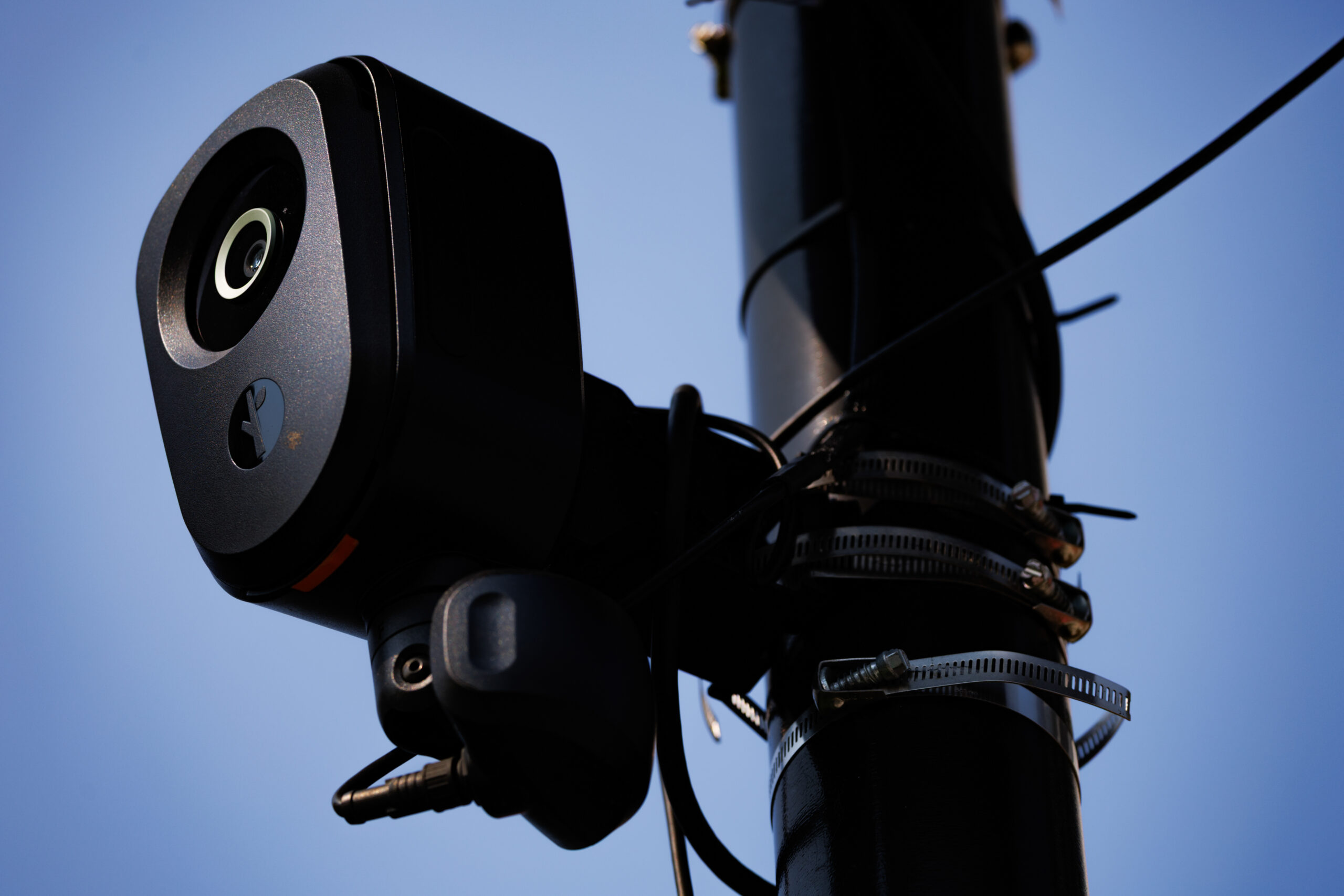
Florida has banned local police from installing license-plate readers on state roads, responding to growing concern about the proliferation of surveillance cameras made by Flock Safety and other companies. The Florida Department of Transportation on Monday revoked all permits for local law-enforcement agencies to operate license-plate reader systems, ordering any that have been installed removed from state roadways within 30 days. The department said in a memo that use of the devices had seen an exponential increase, and that “concerning reports of misuse, data privacy concerns, and surveillance schemes merit immediate action to preserve Floridians’ sovereignty and quality of life.” Gov. Ron DeSantis urged the state Legislature to consider restrictions on Flock cameras so Florida won’t “turn into some type of digital prison.” DeSantis has emerged as a leading critic of the tech industry among Republicans, this year enacting far-reaching regulations on AI data centers in the state. “What we don’t want in the state of Florida is to have a digital, AI surveillance state where everything we’re doing is being tracked at all times,” DeSantis said at a news conference in Jacksonville on Monday. Several cities and states have sought to rein in license-plate readers amid protests from across the political spectrum decrying the devices as intrusive. Arizona’s Democratic attorney general recently announced a review of the use of Flock’s cameras, while Texas Governor Greg Abbott, a Republican, blocked state agencies from spending money on the company’s surveillance networks. Flock didn’t immediately respond to a request for comment about the Florida ban. Cities and towns across the US have installed technology made by Flock, an Atlanta startup. Police say the networks of cameras and sensors that automatically read license-plate numbers allow them to map vehicles’ travel over long distances, bolstering the ability to fight crime. And some local officials in Florida were critical of the decision to revoke permits for the technology. Miami Beach Mayor Steven Meiner argued that license-plate readers have helped police, calling it a “hit to public safety.” Related: How a $1 Texas Insurance Fee Funded Thousands of Flock Cameras Miami-Dade County Sheriff Rosie Cordero-Stutz said license-plate readers have helped deputies “apprehend murderers and robbers, and saved children from being abducted and found missing people.” The county’s license-plate reader system will be shut down by the end of Tuesday, she said. “Public safety and constitutional rights are not competing values,” she said in a statement. “In Miami-Dade County, we have shown that we can protect both.” The ban on license-plate readers quickly became a talking point in the race to succeed DeSantis, who’s finishing a second term. Republican Byron Donalds applauded the move in an interview with Florida Politics. “I agree with the Governor 1000% on that,” he said. Donalds’ Democratic opponent, David Jolly, urged DeSantis and the state legislature to pass a law restricting license-plate readers. Flock recently put limits on how its data can be shared and stored after some towns and cities abandoned contracts with the company. Flock has said that in 2025 its systems played a role in approximately 1 million police cases. “We’re not Big Brother,” Flock Chief Executive Officer Garrett Langley said in an interview on Aug. 13. “We’re focused on protecting people.” –With assistance from Micah Barkley, Bloomberg. Copyright 2026 Bloomberg. Topics Florida
Florida Bans Flock Cameras, License Plate Readers From State Roads
Full Article
Original Source
Read the full article at Insurancejournal →KhanList aggregates and links to publicly available news content. We do not host full articles from third-party sources. Always verify important information with original sources.