
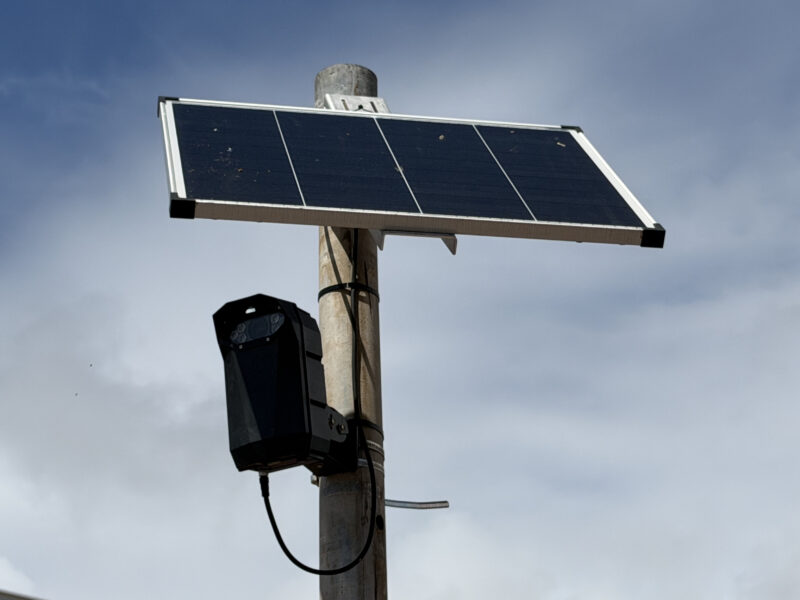
A federal judge said he didn't see why Flock sharing vehicle data with federal agencies was any more harmful than the company sharing data with California police departments.(CN) — A federal judge said Thursday he was inclined to rule the plaintiffs accusing Flock of data sharing don’t have standing to sue because they haven’t suffered personal injuries.But he also indicated that he would likely remand the case to state court where the suit was originally filed.“A violation of the law is not, in itself, an Article III injury, as we all know,” U.S. District Judge Vince Chhabria told the attorneys representing a number of California drivers. “What is the cognizable injury?”The plaintiffs’ attorney Mickey Terlep replied: “The disclosure of sensitive information, such as movements to seek medical care. Which is entirely unavoidable unless they choose not to drive on public roads.”Flock cameras are automated license plater readers placed on public streets, which take snapshots of every vehicle passing by, logging their make, model, license plate number, time and direction of travel. This information is typically passed on to local governments, and is often used by law enforcement to investigate crimes. Passed in 2015, the California ALPR Privacy Act prohibits local law enforcement from sharing this data with federal agencies like Immigration and Customs Enforcement, as well as out-of-state police.But the plaintiffs say Flock has been illegally allowing out-of-state agencies to access is database, often through a local police department. For example, agencies were reportedly able to search the San Francisco Police Department’s ALPR database more than 1.6 million times between August 2024 and February 2025, according to one of the complaints, filed in San Francisco Superior Court this past February.“Flock has created an Orwellian mass-surveillance infrastructure that is practically impossible to avoid, particularly for anyone operating a vehicle in the towns and cities across this country where Flock has installed its cameras,” two drivers say in that complaint, which was consolidated with about a dozen others and moved to federal court.On Thursday, Chhabria expressed skepticism about the claims, asking the plaintiffs why, if it’s perfectly fine for hundreds if in-state agencies to access Flock’s data, is it an injury for thousands of out-state-agencies to do the same thing.“I just don’t see a material distinction between those,” Chhabria said.“The state line really does matter,” Terlap said, citing one example of a woman who was “tracked after leaving Texas to go receive an abortion.”But Chhabria also indicated he did not believe his court had jurisdiction over the case, meaning that it will likely move back to state court.Subscribe to our free newslettersOur weekly newsletter Closing Arguments offers the latest about ongoing trials, major litigation and rulings in courthouses around the U.S. and the world, while the monthly Under the Lights dishes the legal dirt from Hollywood, sports, Big Tech and the arts.Additional Reads
Flock data-sharing suit likely headed back to state court
Full Article
Original Source
Read the full article at Courthousenews →KhanList aggregates and links to publicly available news content. We do not host full articles from third-party sources. Always verify important information with original sources.