
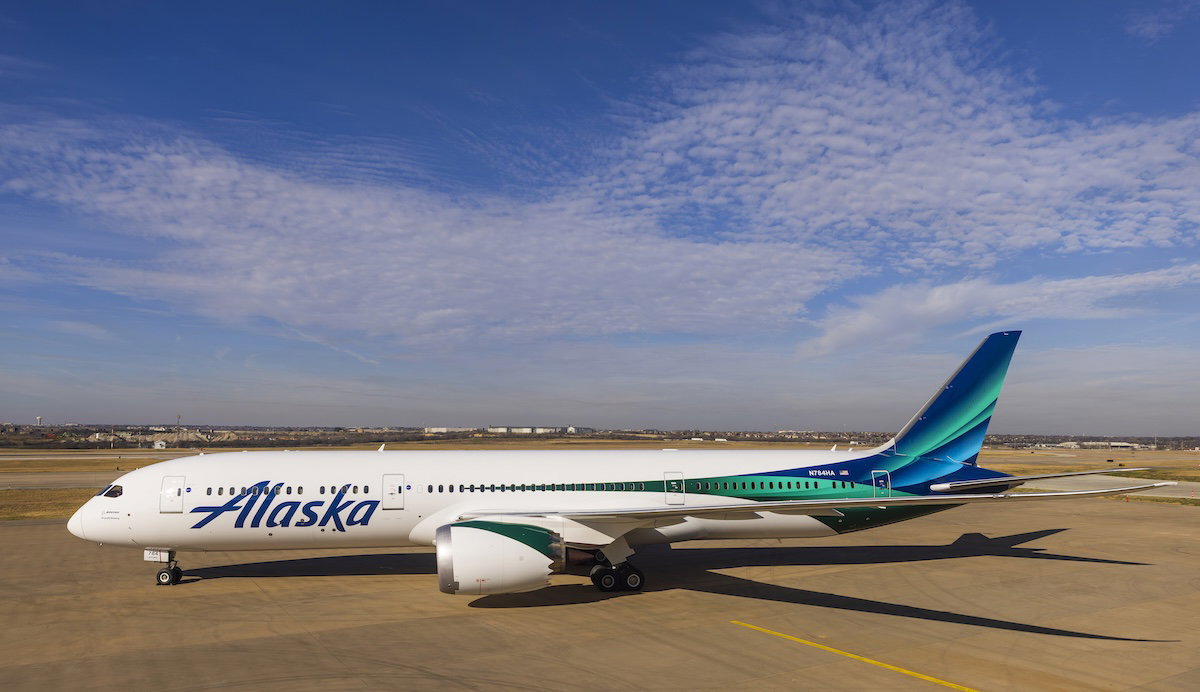
It’s always interesting to learn about the internal politics between airline management and frontline employees, especially when it comes to staffing levels, since that can also impact the passenger experience.As most people are probably aware, Alaska Airlines has started operating long haul flights, using ex-Hawaiian Airlines wide body planes. As it turns out, staffing these planes is proving to be contentious, as the union claims it’s impossible to deliver on the service that the airline is promising, as flagged by PYOK. Alaska Boeing 787 inflight service grievance from flight attendantsThis disagreement is primarily about economy staffing levelsBottom line Alaska Boeing 787 inflight service grievance from flight attendantsIn terms of its long haul network, Alaska Airlines currently flies Boeing 787-9s from Seattle (SEA) to London (LHR), Rome (FCO), Seoul Incheon (ICN), and Tokyo Narita (NRT).While Alaska and Hawaiian are now on a single operating certificate, crews aren’t yet on a single contract, and this means that these long haul flights are currently staffed by Hawaiian flight attendants. Eventually crews will be on a single contract, but for the time being, that’s how things stand.Along those lines, the Association of Flight Attendants (AFA), which represents flight attendants at both Alaska and Hawaiian, has filed an inflight service grievance over the Dreamliners. Here’s how the union describes the crux of the issue:For decades, Hawaiian Airlines Flight Attendants have defined the Spirit of Aloha. We take pride in delivering world-class service, but management’s current Boeing 787-9 service model is threatening that legacy. It isn’t just inefficient—it’s an unsustainable pace that undermines the quality our passengers expect and the professional standards our crews deserve.The idea is that when Alaska-branded long haul flying started in April 2026, management offered a 30-day observation period, to gather flight attendant feedback and implement service flow improvements. After all, airlines and unions collaborate to determine how many flight attendants will work a flight, based on the service level. The claim by the union is that the observation period ended in late May, and months later, management has offered no resolutions to the negative feedback from flight attendants, claiming they need more data. The union argues that the refusal to collaborate is a direct violation of the contract flight attendants have, which requires mutual agreement on inflight service requirements. As a result, the union has filed a grievance:At its core, this grievance is about one simple principle: If management expects a certain level of service, it must provide the staffing necessary to deliver it. They face a clear choice: increase staffing to meet their service goals, or work with our Inflight Service Committee to establish realistic service standards that actually reflect the staffing provided. Until they choose one, we will not accept being set up for failure.Flight attendants aren’t happy with Dreamliner staffing levelsThis disagreement is primarily about economy staffing levelsIt appears that the union’s primary grievance involves service in economy, as the AFA argues that current staffing levels “make it impossible to deliver on management’s promises.” The union is encouraging flight attendants to “keep documenting every challenge” that crew members face with the current service levels.The idea is that the current service flow has flight attendants working each aisle front to back, rather than being assigned one specific section, which makes for a very long and complicated service.While that was initially conceived in order to maximize efficiency, this was decided before Alaska “introduced several new products and services in the Main Cabin—such as premium-class offerings, status recognition, expanded beverage options, alcohol for purchase, and both ice cream and warm cookies—without the opportunity for further testing.”For what it’s worth, these Dreamliners have 300 seats, including 34 business class seats and 266 economy seats. Flights are typically staffed with 10 flight attendants, with four working in business class, and six working in economy class.Four of 10 flight attendants work in business classBottom lineFlight attendants working Alaska’s Dreamliners on long haul flights claim the service expectations of them are impossible, given limited staffing in economy. The argument is that Alaska has added all kinds of amenities and service expectations, and it’s just not realistic for six flight attendants to serve 266 passengers.The union has filed a formal grievance, and is asking flight attendants to document every service issue, as part of their case with management. I’ve not flown Alaska’s Dreamliners on a long haul flight, so I can’t really chime in here. On the surface, I see both sides. On the one hand, I respect the collective bargaining process, and I also realize that management often tries to cut costs and limit staffing. On the other hand, a lot of the service “issues” at US airlines seem to be much less of an issue virtually anywhere else in the world.What’s your take on this flight attendant grievance over Alaska’s 787s?
Flight Attendants Hate Working Alaska 787s, Complain Of “Impossible” Service
Full Article
Original Source
Read the full article at Onemileatatime →KhanList aggregates and links to publicly available news content. We do not host full articles from third-party sources. Always verify important information with original sources.