
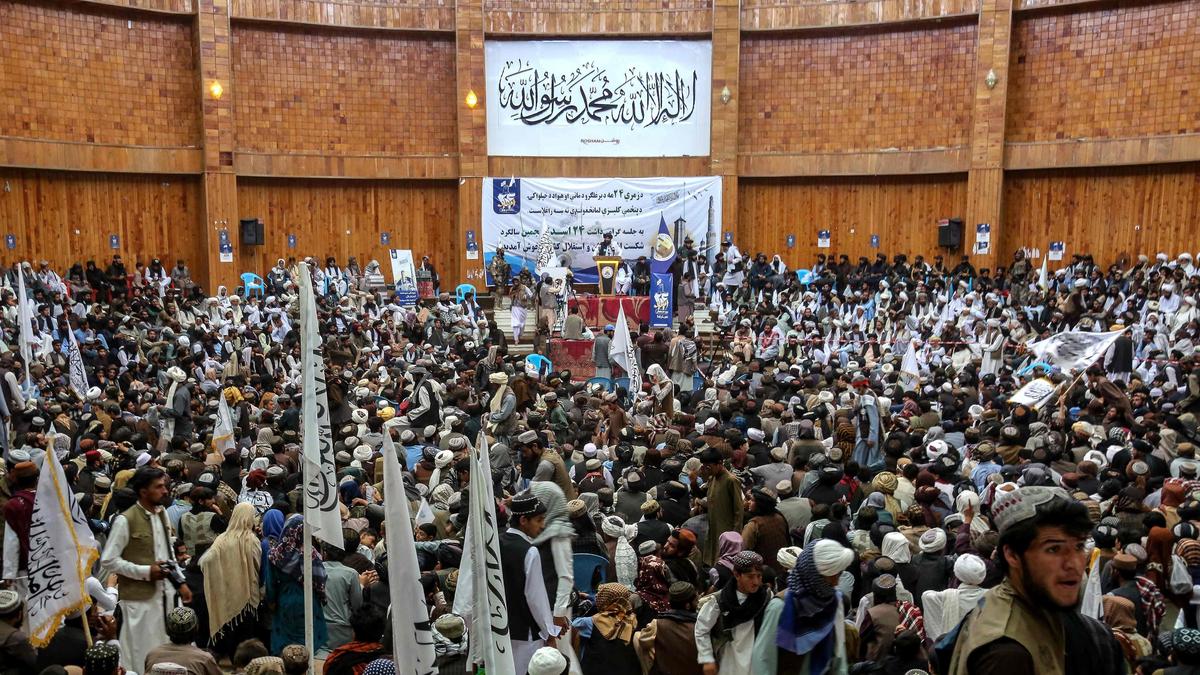
A ceremony to celebrate the fifth anniversary of the Taliban government's return to power, in Ghazni province, on August 15 | Photo Credit: AFP For a people long regarded as at the crossroads of civilisations, the past five years of the Islamic Emirate of Afghanistan (IEA) under Taliban rule resemble the backwaters. After 47 years of bloodletting, terrorism and foreign occupation, the current “stability” is a respite. But the ongoing time-freeze only postpones an eventual transition to modern universality. So far, the process has been glacial and selective, causing pain and uncertainty. It is time to take stock of the past half-decade and try to fix the broad contours of a foreseeable future.The IEA’s overall performance since the August 15, 2021 takeover has been a binary. On the positive side, though the IEA 2.0 transition was as chaotic as the IEA 1.0 transition in 1996, it spared the country from mass retribution. Afghanistan is now largely stable and secure. The country’s “Badlands” were long associated with militant groups such as al-Qaeda. Their 9/11 attacks unleashed two decades of bloody U.S. retribution on both al-Qaeda and the IEA 1.0. The IEA 2.0 has disallowed the use of their territory for operations against other countries. During the past five years, an estimated 5.7 million refugees from Pakistan and Iran have returned to Afghanistan. While this return of an eighth of the country’s population has exacerbated the penury, the government has managed it reasonably well. These unmistakable shifts from the ruinous policies of the previous Islamic Emirate (1996-2001) have partially mitigated the world’s concerns. Published - August 29, 2026 12:16 am IST
Five years on, Taliban are still at a fork in the road
Full Article
Original Source
Read the full article at Thehindu →KhanList aggregates and links to publicly available news content. We do not host full articles from third-party sources. Always verify important information with original sources.