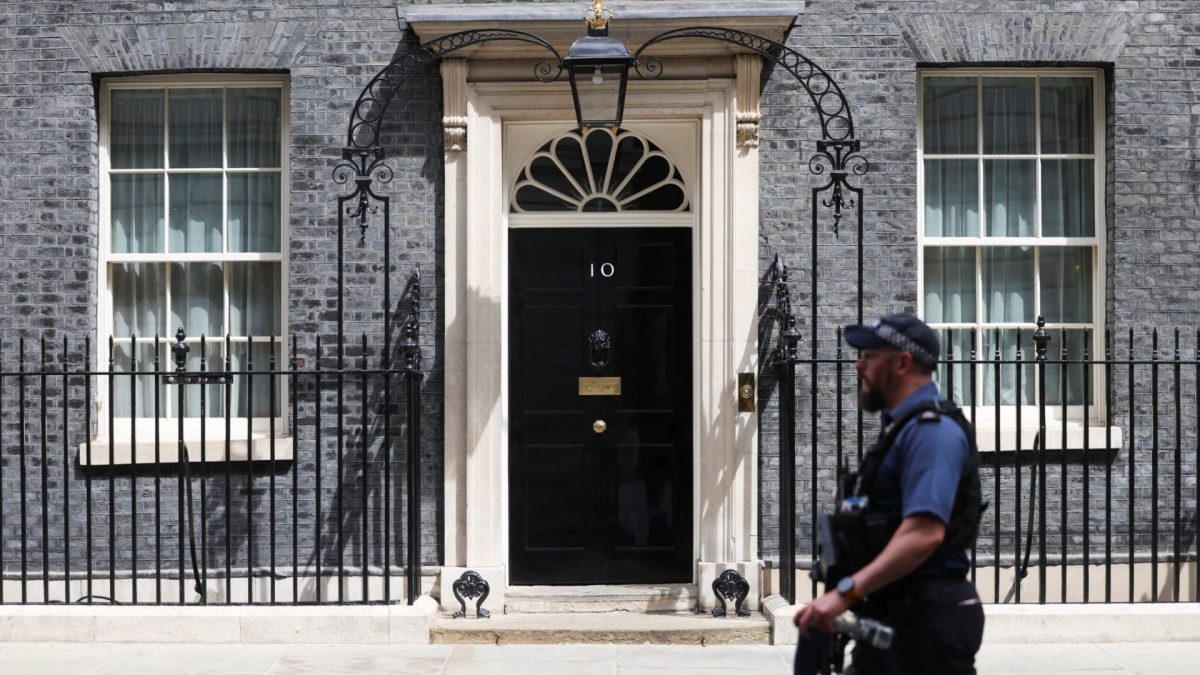
At some point around midday on Monday, Andy Burnham will emerge from Buckingham Palace, in an official government car, as prime minister of the United Kingdom. He will have just spoken to the King, who will have asked him to form a Government. Minutes later, he will deliver a statement in Downing Street in front of scores of reporters and TV crews. But what happens once he turns his back on the assembled media and goes through the black door of No 10? In his Labour leadership acceptance speech on Friday, Burnham’s message was overtly political – telling the party and country how he will govern as “boldly, confidently, authentically us”. Yet his first day as prime minister will be very different. Alex Thomas, executive director for impact at the Institute for Government and a former senior civil servant, told The i Paper: “It’ll be a massive change from what he was doing as mayor. It’ll be a massive change from his experience as health secretary or other ministerial jobs. “He will want to keep the things he cares about and retain that sort of aspirational idealism, but he will have to find a way of operating with the reality of this rush of decisions that will crowd in on him.” Here are the first five things he will have to do in office: Write the Letters of Last Resort Shortly after arriving in No 10 and meeting his top team of officials, Burnham will be taken into a windowless, high-security room to be briefed on the UK’s nuclear deterrent by his Cabinet Secretary, Dame Antonia Romeo and a senior Royal Navy chief. He must then decide what his personal instructions are to the commanders of the UK’s four Vanguard-class nuclear submarines, if Britain comes under nuclear attack – known as letters of last resort. There are four handwritten, identically worded letters, one for each submarine commander, and once written, they are kept in locked safes on board the vessels. Thomas said while this job was “obviously very very important” there was “also a bit of theatre” around it to ensure the incoming prime minister understands “the seriousness of the job and is feeling the weight of the office”. But there will be other security decisions to take alongside his national security adviser, Jonathan Powell, who is staying in post to provide continuity from Sir Keir Starmer’s administration. Burnham will have to nominate deputies to take decisions on major national security issues if the prime minister is not available – such as authorising military action. These could include his chancellor, deputy prime minister, foreign secretary or defence secretary. Appoint a cabinet If the nuclear deterrent letters and national security are one “bucket” of things to do for a new prime minister, a second such “bucket” is people and appointments, Thomas said. This includes appointing his first cabinet, with the high offices of state – chancellor, home secretary and foreign secretary – the most important. Burnham insisted on Friday he had not made any decisions about who will sit at his top table, but the reality is that he and his inner circle will have had names in the frame for most of the key posts for a number of days, if not weeks, even if they were not yet finalised until this weekend. He will also need to finalise his team of senior advisers – something he will want to get right after Starmer presided over infighting inside No10 within his first weeks in office. Thomas said: “Obviously, he’s got his chief of staff [James Purnell] and he’s building a team together. But you know, how do they all relate to each other?” Call Trump and Zelensky Burnham may want to do things differently from his immediate predecessor, but there are relationships any UK prime minister has to keep sweet. A phone call to Donald Trump, as president of the UK’s closest ally, in the first week of office is unavoidable. Burnham will also have to call other leaders that are strategically or politically important – or both – to Britain. These will include President Volodymyr Zelensky of Ukraine, France’s Emmanuel Macron, and Friedrich Merz of Germany, as well as other EU and G7 leaders. This early diplomacy – the third “bucket” – is vitally important, and ensures stability for national security and Britain’s place in the world. Thomas said: “You wouldn’t expect those calls to have loads of substance to them, but it’s about tone and relationship-building.” Burnham and Trump have not clashed directly, but they have made unflattering comments about each other, meaning the first phone call will have to be delicately prepared for by civil servants, diplomats, and Burnham’s advisers. In theory, Burnham could try to refuse to put in a call to Trump, but Thomas said the civil service would advise very strongly against it – in Whitehall speak, call it “very courageous”. He said: “There are certain things that the leaders expect – to talk to the boss, and you can’t fob off Trump with the foreign secretary or someone else. “And the civil service will be saying, if you don’t do this call, this is the signal that you’re sending; it will be interpreted this way in Washington. “So the pressure is quite intense, but it’s grounded in fact. That is part of the role of the civil service in these circumstances.” Make decisions early about government The fourth “bucket” relates to organisation and structures, Thomas said. If Burnham wants to do a big redesign of No 10 – including, as he has pledged, to create a “No 10 North” – then this should be announced straight away. There has been speculation that Burnham wants to reorganise some government departments to focus on his key priorities. Thomas said: “Day one is the day to announce things as part of a reshuffle, because you’re never more powerful than at that moment. “And if you don’t create a new prime minister’s department or whatever on day one, then it won’t happen.” Set out a policy platform Because he has not had to face a contest, the incoming prime minister has been coy about his policy agenda, beyond his broad vision for devolution and a big focus on social care. But if he wants to bring about real change, he will need to get going in the first week on what domestic policies he wants to introduce – and how much continuity he wants to keep with the Starmer administration. This task – his fifth “bucket” – will include making decisions on leftover policies from Starmer. Much of this work will have begun during access talks between Burnham’s team and Whitehall. Burnham will also need to set a date for his first Budget so the Treasury and the Office for Budget Responsibility can get working on tax and spending plans. Thomas said: “The civil service will be saying, ‘We need to know your view on this, to know whether we’re proceeding with it or not. Otherwise, we’re kind of stuck.'”
Five things Burnham will do this week – including calling Trump
Full Article
Original Source
Read the full article at Inews →KhanList aggregates and links to publicly available news content. We do not host full articles from third-party sources. Always verify important information with original sources.