
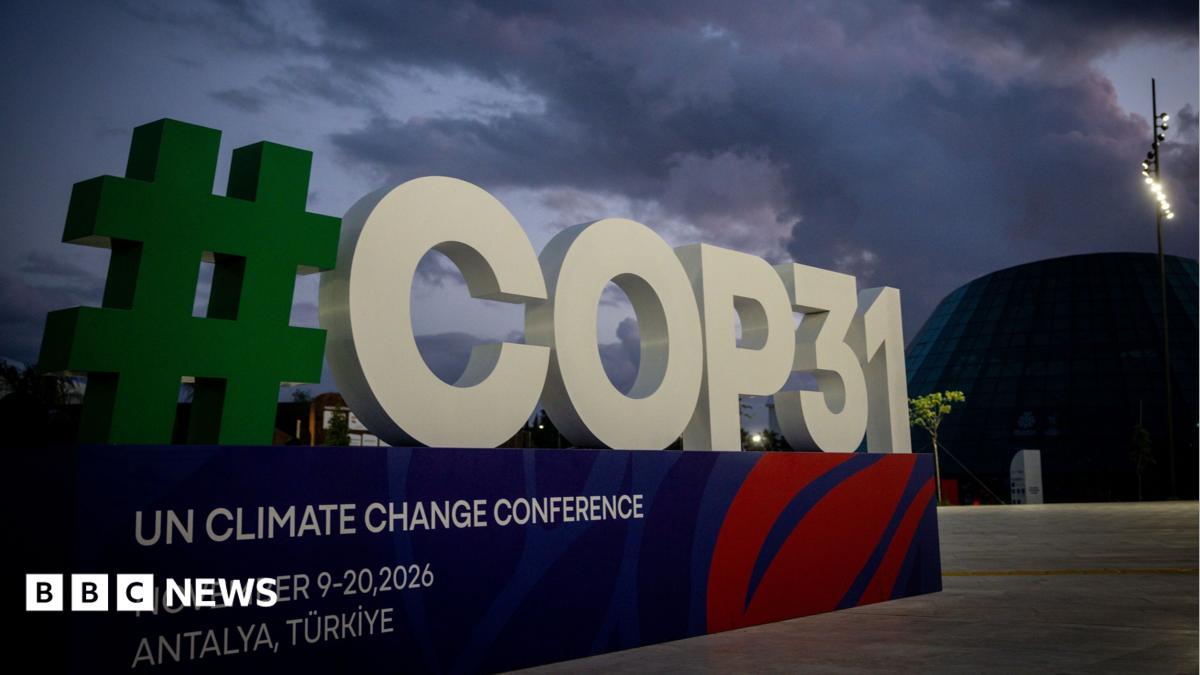
This year's negotiations have exposed a troubling problem - consensus does not last forever.On the central political agreement – the Antalya Pacts – countries could not bridge the divide on including language on fossil fuels.And yet the very same pledge had been made just three years ago at COP28 in Dubai.Rich nations also failed to put a figure to how much more money could be given to developing countries to adapt to climate change.This is despite there already being a commitment from last year to triple the figure by 2035 from $40bn (£30bn) - but the interpretation of that pledge remains contested.If governments cannot even agree to reaffirm commitments they've already made, it raises troubling questions about their ability to work together as the climate crisis intensifies.Minister Chris Bowen from Australia, who was co-leading the negotiations, pointed out at the end of the talks that the world is a very different place from when these commitments were struck just a few years ago."The situation coming into this COP was the most complicated and fraught geopolitical environment in living memory".That was made apparent during the final meeting when pointed remarks were delivered. EU representative Darragh O'Brien said the talks had been "hijacked by some oil states". While the Russian delegate, Sergei Kononuchenko, switched from Russian to English to directly address the EU delegation. He accused them of providing climate finance only in the form of loans to developing nations: "This is an old colonial distribution of labour under a new banner".It is a serious blow not just to climate action, but to multilateralism itself - the idea that countries can put aside their differences on other issues to tackle problems they can't solve alone.The economics have been changing too.Solar panels, batteries and electric vehicles have become increasingly competitive, and against the headwinds of inflation new investment announcements emerged at COP as part of the "Action Agenda".This is the part of the COP process that tries to mobilise action outside of formal talks from businesses, investors and cities – this year the focus was on electrification. Turning more of our energy from fossil fuels to electricity."We are not entering the age of electricity, we have arrived at the age of electricity," Fatih Birol, head of the IEA, told the BBC. He says energy security and climate policies are now "closely aligned".That doesn't make COP irrelevant.Governments still have a crucial role in facilitating the transition, according to Dr Jennie Dodson, a senior director at the World Business Council for Sustainable Development which includes among its members the likes of Amazon and Apple."A key message from business is we can go so far, a lot of it is cost competitive, but there are policy barriers both around infrastructure and permitting".But as clean energy develops its own commercial momentum, formal negotiations may become less important in determining its direction and pace.COP31 has shown how the role of these annual UN climate conferences is changing.For the first 30 COPs, the emphasis was on building the international framework for tackling global warming.The great diplomatic breakthrough came in Paris in 2015, when almost every country agreed to keep global warming well below 2°C and to pursue efforts to limit it to 1.5°C.Paris also established machinery designed to turn promises into progress. Every five years, governments assess collective progress in a global stocktake and submit new national climate plans, known as NDCs.Then came further agreements: a fund for climate damage at COP27, a commitment to transition away from fossil fuels and triple renewable energy capacity at COP28, a new climate finance target at COP29 and increased support for adaptation at COP30.The international architecture for tackling climate change has, in other words, largely been built.Now comes the harder business of making it work. That's why this year's conference in Antalya, Turkey, had been billed as an "implementation COP".The emphasis now is shifting towards delivering commitments already made. Camilla Born, who helped develop the UK's strategy for COP26 and now heads the campaign group Electrify Britain, told the BBC this is making COP more procedural - less about fundamental negotiations than ensuring the machinery actually works.This could mean doing away with a cover text – the central political agreement that countries sign up to with new pledges.It is not a requirement to have one, and for many years countries managed without. Australia chose to push one for this COP, and it is where they fell down.On many of the procedural issues Camilla Bonn spoke of, they did agree things. That may be important. It isn't necessarily exciting.And there is a fundamental limit to what this machinery can achieve. Under the Paris Agreement countries have no mechanism to force them to meet their emissions targets.So, when critics berate the COP process for failing to tackle the problem fast enough, it isn't really the system that is at fault, says Alden Meyer, a veteran climate negotiator now at the climate think tank E3G.The COP process, he suggests, is "like a mirror that we hold up to ourselves every year". If the reflection is disappointing, the problem is the governments, not the mirror.
Five takeaways from the failed climate talks COP31
Full Article
Original Source
Read the full article at Bbc →KhanList aggregates and links to publicly available news content. We do not host full articles from third-party sources. Always verify important information with original sources.