
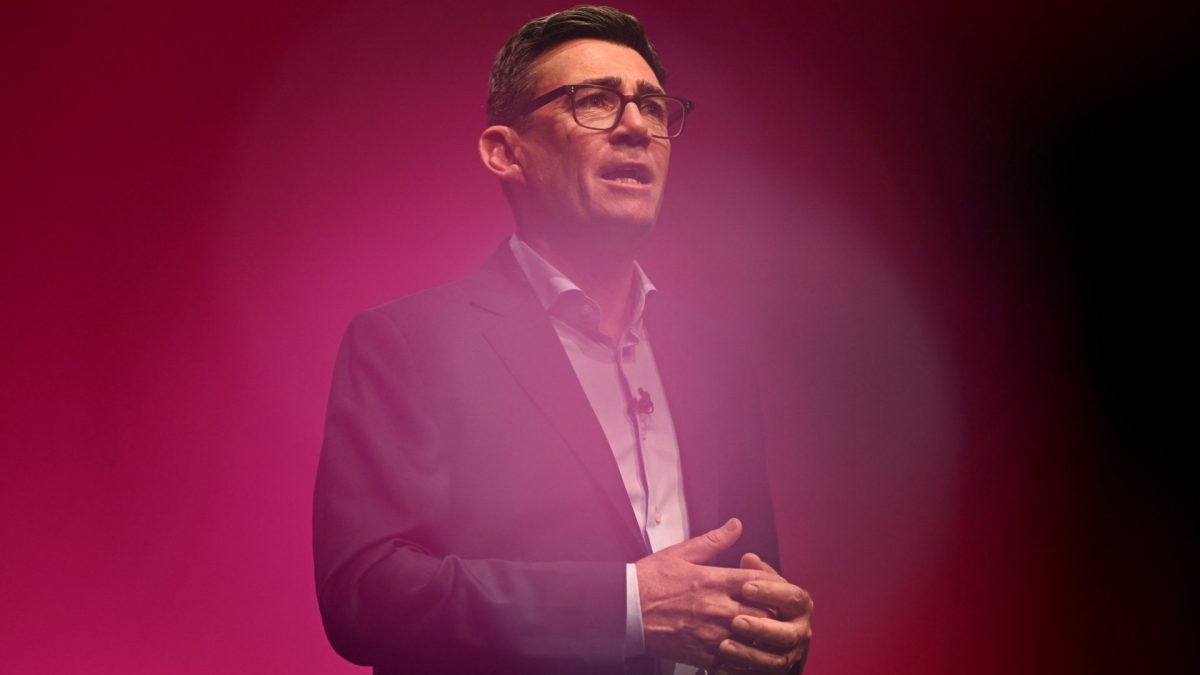
Andy Burnham promised a different kind of leader’s speech for his first Labour conference as Prime Minister, and he was not lying. The speech was crammed full of radical policies on the state pension triple lock, electoral reform and a change to Britain’s relationship with Europe which appeared to leave open the possibility of rejoining the EU. Triple lock Burnham announced that to help fund his commitment for free at the point of use social care in Labour’s next election manifesto, he would bring an end to the triple lock, under which the state pension rises each year in line with the highest of inflation, wages or 2.5 per cent. Shorts The Prime Minister said that he would continue with the lock for the rest of this parliament, but from April 2030 “we will adjust it”. Stories broke last night that Burnham would use the speech to signal an end to the lock. But the big surprise was that he provided the detail about what would replace it. “The state pension will continue to rise every year at least by prices or 2.5 per cent,” he said. “And it will hold its value relative to earnings over time so that pensioners will always share in the rising prosperity of the nation.” A long term buffer is expected to be in place to protect the growth of the state pension from falling behind earnings growth. Burnham admitted that the move could lose him votes. “I won’t pretend some of this won’t be difficult,” he said. “I accept I may pay a political price. But someone has to go through the pain barrier and rip the plaster off.” Electoral reform Burnham said that Labour would have a commitment to overhaul Britain’s electoral system in the party’s next manifesto. Signalling his intention to move away from Britain’s first-past-the-post system to a proportional system, he said: “We will contest the next election with a manifesto commitment to change the electoral system so that everyone’s vote counts and everyone’s voice is heard.” First-past-the-post elects the candidate with the most votes in each constituency, while proportional representation allocates seats more closely in line with each party’s share of the vote. In the meantime, he announced plans for a “national commission” to explore voting reforms. Europe The Prime Minister said that Britain needed to change its long-term relationship with the EU. He said that at the UK-EU summit planned this autumn he would “take the opportunity to lay out to the country what I believe the different options are for Britain’s long-term relationship with our European partners”. Burnham did not provide details on what these options would be, but what was almost as telling was his decision not to rule things out. It suggests that the possibility of Britain fully rejoining the bloc could be on the table. Other options could be ditching Sir Keir Starmer’s red lines around rejoining the single market and customs union, or potentially seeking the “associate” member status which Brussels recently offered to Canada. “We will not give Britain the clear path we need into the rest of the century until we decide on a long-term relationship with what is still our largest market,” he said. “I cannot say to you that where we are is good enough. Brexit has done more harm than good.” The Prime Minister said that he would try to “find consensus” around one of the options “which will give us clarity about our position and the future of the continent that we live in”. Water One of the main themes of the speech was a promise to bring “strong public control” to “essentials” like energy, housing and water. Burnham announced a path to public ownership of water firms in cases where they are failing. The Prime Minister said that water had become a “symbol of what has gone wrong with Britain – a service where the shareholders never lose and the public never win, from which some have syphoned out easy money while the public picked up the bill for the sewage in our seas. It stinks.” He announced that the Environment Secretary Angela Eagle would “present a strengthened Water Bill to Parliament”. Unexpectedly, he said the “centrepiece” of the bill would be the “repeal of Margaret Thatcher’s ideological ban on public ownership of water companies”. He said this would “start a 10-year journey to a very different water system” in which mayors would have “new powers to hold water companies to account, with tougher consequences for those which repeatedly fail”. Burnham said that “where private companies serve the public interest, we will support them” but warned there would be “consequences” for failing firms “including taking back control or ownership”. The i Paper revealed on Monday that Burnham would signal his intent to take firms like Thames Water into public ownership. Fuelled by emotion In a break from the traditional conference speeches from party leaders, Burnham was somewhat emotional. He took a long pause in the speech before talking about his late father, Roy, who died earlier this month at the age of 86 with Alzheimers disease. Appearing to hold back tears, the conference gave the Prime Minister a round of applause as he gathered himself. When he spoke again, he said that on the day his father died, the Scottish First Minister John Swinney claimed he would be the UK’s last prime minister. Burnham said he was not looking to seek “sympathy” or to criticise Swinney. He went on: “I relay it because I want you to know how it made me feel. Utterly determined to prove him wrong.”
Five surprises from Burnham’s extraordinary Labour conference speech
Full Article
Original Source
Read the full article at Inews →KhanList aggregates and links to publicly available news content. We do not host full articles from third-party sources. Always verify important information with original sources.