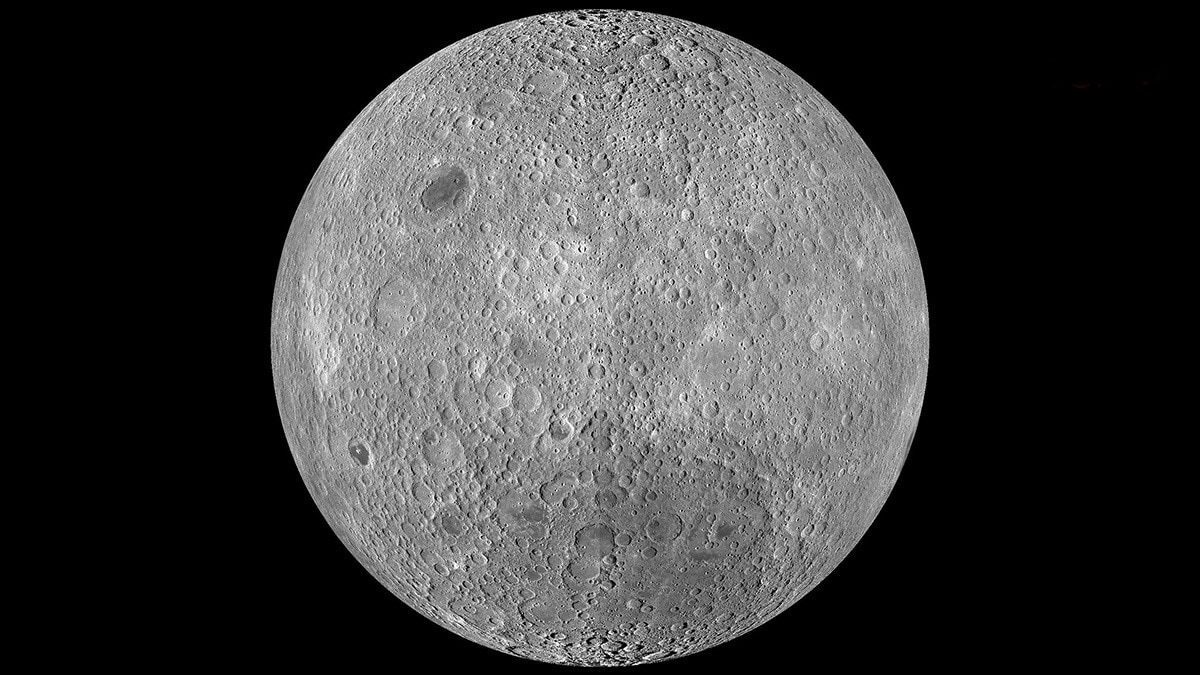
A discarded SpaceX Falcon 9 upper stage is expected to strike the Moon on 5 August 2026. Scientists say the impact could aid crater studies and renew focus on deep-space debris disposal.Scientists say it offers a rare opportunity to study how impacts shape the Moon. (Photo: Nasa)The Moon is set to gain a brand-new crater, not from a natural asteroid impact, but from a discarded piece of a SpaceX rocket.On August 5, 2026, the upper stage of a SpaceX Falcon 9 rocket is expected to slam into the lunar surface after spending more than a year orbiting Earth.While the impact poses no danger to Earth or future lunar missions, scientists say it offers a rare opportunity to study how impacts shape the Moon. The object is the second stage of a Falcon 9 rocket, the workhorse launcher that has carried hundreds of satellites, astronauts and lunar missions into space.Unlike the reusable first stage, which returns to Earth and lands after launch, the upper stage completes its mission before being left in orbit. The stage headed for the Moon is roughly the height of a five-storey building and has remained in a highly elliptical orbit with distances comparable to the Moon's orbit for over a year.Current predictions place the impact at 19.455° North latitude and 266.406° East longitude, with the collision expected to occur within minutes of the forecast time.Although the event is unlikely to produce dramatic visual fireworks, it will carve out a fresh crater on the lunar surface.Scientists hope observations of the impact and the resulting debris could provide valuable insights into the composition of the Moon's surface and the physics of impact cratering.Tracking the object has been a challenge because of its great distance from Earth. While the US military routinely monitors tens of thousands of pieces of space debris using radar, objects near the Moon are about 400 times farther away than low-Earth orbit satellites, making radar detection extremely difficult.Instead, astronomers rely primarily on powerful optical telescopes to determine their trajectories.The planned impact also highlights a growing concern over the disposal of spacecraft hardware beyond Earth orbit.Most Falcon 9 upper stages either burn up in Earth's atmosphere or remain in Earth orbit, while some escape into solar orbit. However, a small number can drift for years before eventually colliding with celestial bodies.Although the collision presents no safety risk, it underscores the need for improved planning and disposal strategies as humanity's presence in deep space continues to expand.With more lunar missions planned by governments and private companies, experts say responsible management of space debris will become increasingly important to protect future exploration efforts.- EndsPublished By: Sibu Kumar TripathiPublished On: Jul 30, 2026 13:21 IST
Five-storey building-sized rocket to crash on the Moon, carve new crater
Full Article
Original Source
Read the full article at Indiatoday →KhanList aggregates and links to publicly available news content. We do not host full articles from third-party sources. Always verify important information with original sources.