
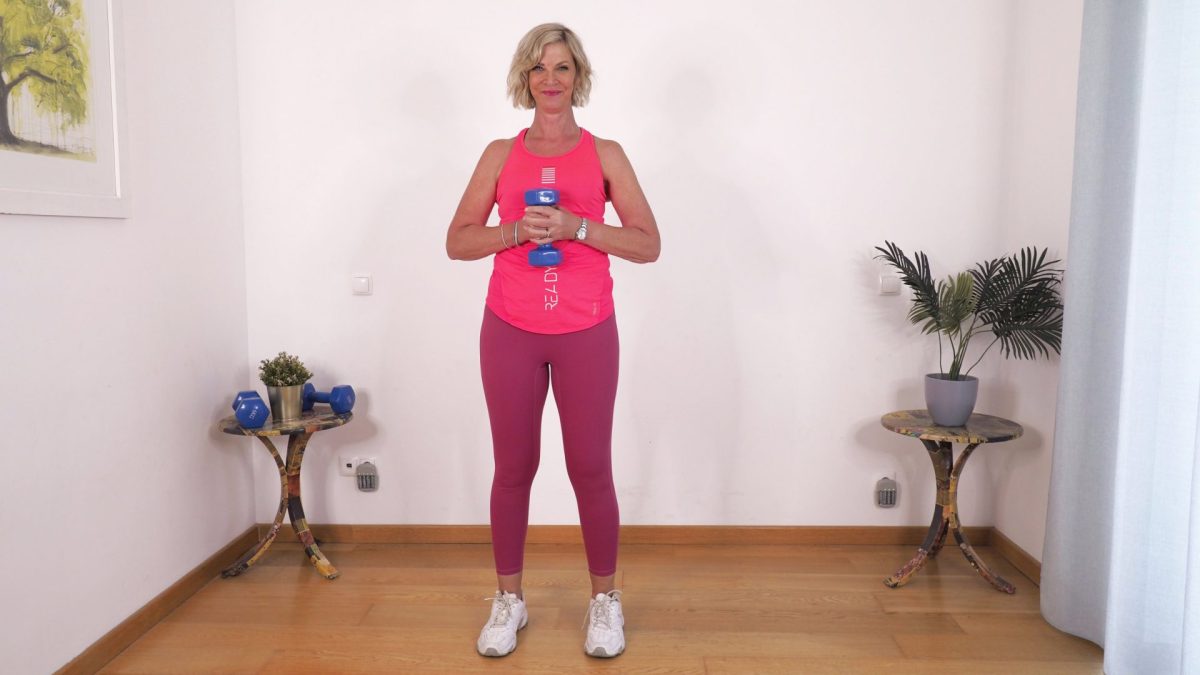
Karen Case is a specialist in older-adult movement and functional independence, with more than 25 years’ experience working across health, social care and community settings. She is also the founder of The 3-20 Way, a guided movement programme helping older adults and those with limited mobility to feel stronger and steadier. But preparing your body for later life, Case advises, ought to begin well before you get there… In February this year, at the age of 58 and after 30 years of incident-free skiing, I tore my anterior cruciate ligament, resulting in reconstructive surgery, three weeks on crutches and a long confinement to the sofa. The (ongoing) rehabilitation started two weeks after the surgery and was both challenging and frustrating. I couldn’t get in or out of the car, on or off the loo. Stairs were an absolute nightmare and so was I. After being active and fit all of my life, I was shocked by how quickly I lost not only my lower-body mobility, but also upper-body and core strength. In just a few months, I felt like I had aged 30 years. Most of us reach our physical peak in terms of muscle mass and power, bone density and cardiovascular fitness between the ages of 25 and 35. From there, a gradual decline begins, becoming more noticeable in our fifties and sixties. The impact of my knee injury was sudden and obvious, but the decline that happens naturally in midlife can be gradual and barely noticeable, until we find ourselves struggling with everyday activities that used to be easy.Which is why midlife is exactly the time to act. You don’t need to be a fitness fanatic, but regular targeted exercise can make a huge difference to your strength, mobility and independence in later life. Here are five exercises to master now to protect mobility and strength in your later life. If you are just getting started, do them with your body weight only and then add in weights as you get stronger. Aim to do them three to four times a week. 1. Deep squats Deep squats are important for strength and mobility Deep squats strengthen quadriceps, glutes and inner thighs while improving hip, knee and ankle mobility, strength and stability. Practising them in midlife helps to maintain the strength, flexibility and control needed to get out of low chairs and pick things up from the floor. How to do it Stand with your feet shoulder-width apart, toes pointing slightly outward. Sit your hips back as if sitting into a low chair. Keep your heels flat on the floor, your spine long and your knees aligned with your toes. Lower as far as comfortably possible, then push through your feet to return to standing. Do three sets of eight to 12 repetitions. 2. Deadlift rows Deadlift rows are good for posture and stability Deadlift rows combine two functional movements, which strengthen the glutes, hamstrings, upper back, shoulders and core. They develop the strength needed to bend, lift and carry everyday objects, while also strengthening the muscles that support good posture and spinal stability. How to do it Stand with feet hip-width apart, holding a dumbbell in each hand. Keeping your knees slightly bent and spine long, hinge forward from your hips, pushing your bottom backwards and lowering the weights towards your shins. Keeping your back flat, pull the dumbbells towards your hips, squeezing your shoulder blades together. Lower the weights with control, then return to standing. Do three sets of eight to 12 repetitions. 3. Downward dog to plank Work your core with a downward dog to plank This movement combines upper body and core strength with shoulder stability, hamstring flexibility and ankle mobility. Moving between downward dog and plank also develops co-ordination, balance and the ability to support your body weight through your arms. How to do it Start on your hands and knees, with hands shoulder-width apart. Tuck your toes under, lift your hips up and back into downward dog, keeping your spine long and gently pressing your heels towards the floor. Shift your weight forward into a plank, bringing your shoulders over your wrists, keeping your body in a straight line from head to heels without letting your back dip. Hold for a few seconds, then push your hips up and back into downward dog. Move slowly and with control between each position. Repeat eight to 12 times. 4. Side lunge Side lunges are great for balance and ankle strength Side lunges strengthen the quadriceps, glutes and adductors (inner thighs). Moving sideways isn’t something we do regularly in everyday life, yet it is essential for avoiding obstacles, suddenly changing direction and regaining our balance when our centre of gravity shifts. Side lunges also strengthen ankles, helping us to stay steady on uneven ground and react quickly if we lose our balance. How to do it Start with feet hip-width apart. Take a wide step to one side, bending the stepping knee and pushing your hips back while keeping the other leg straight. Keep your chest lifted, spine long and knee bent and aligned over your foot. Push through your stepping foot to return to the start position. Do three sets of eight to 12 repetitions on each leg. 5. Figure of four stretch Keep your hips flexible as you get older This stretch targets the glutes and deep hip rotator muscles, helping to maintain hip flexibility and range of movement. Good hip mobility is needed for everyday activities such as putting on socks and shoes, getting in and out of cars and bending down. How to do it Sit tall with both feet flat on the floor. Cross one ankle on the opposite thigh, just above the knee, creating a figure-of-four shape. Keeping your spine long and chest lifted, gently hinge forward from your hips until you feel a stretch in your buttock and outer hip. Hold for 45 to 60 seconds, breathing naturally, then repeat on the other side. Do this as often as you can – sitting at your desk, kitchen chair or on the sofa. For more information: 320way.com
Five daily exercises every midlifer should master to stay mobile
Full Article
Original Source
Read the full article at Inews →KhanList aggregates and links to publicly available news content. We do not host full articles from third-party sources. Always verify important information with original sources.