
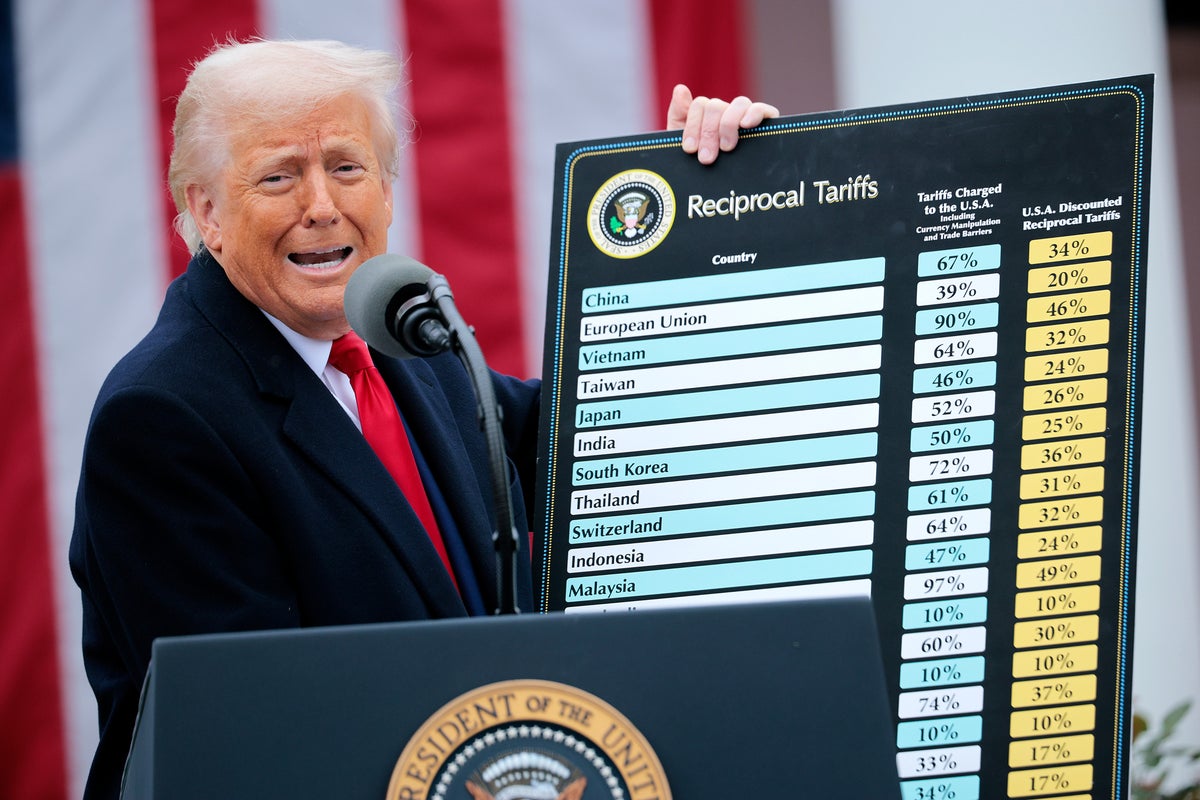
Washington has proposed new tariffs on goods arriving from 14 major trading partners, including China and the European Union, in a move it frames as a response to excess industrial capacity.The United States announced the proposals on Wednesday.Below are some takeaways from the new tariffs.Beijing gets slapped with the steepest bill as a ticking clock threatens a 40% tariff spikeChina would face the steepest proposed rate, at 20%. The country's goods trade surplus has climbed beyond $1 trillion in the first 10 months of this year. The overall rate was kept at an agreed cap, however, because the Trump administration chose not to stack the new duties on top of a previous round imposed in July over what Washington said was a failure to curb forced labour.The United States on Wednesday proposed new tariffs on imports from 14 major trading partners, including China and the European Union, to counter what Washington says is excess industrial capacity (Getty)Trade Representative Jamieson Greer said the rate would climb to 40% if Beijing and Washington fail to extend their trade truce further, which is set to expire on January 10. China said it reserved the right to take measures in response to the new tariffs. It also said the two governments maintain close communication about extending the trade truce.Trade issues are likely to feature at an expected December summit between Chinese leader Xi Jinping and US President Donald Trump. That meeting would be the fourth time the two have met this year.Washington turns up the heat on India, Vietnam and Brazil with a sign-or-suffer tariff ultimatumChina is not alone in facing tariffs that depend on how its trade negotiations with the U.S. turn out. India has yet to reach a trade deal with the Trump administration. It would face a 17% tariff rate if an agreement is finalized, and 25% if talks fail.President Donald Trump and China's President Xi Jinping pose for a photo during a bilateral meeting in Kylin Villa on the sidelines of the Asia-Pacific Economic Cooperation (APEC) Summit in Shenzhen, in China's southern Guangdong Province (AFP/Getty)Vietnam would face a capped rate of 20% if it reaches a trade agreement with Washington. That rate would rise to 35% if negotiations fail. The US separately proposed adding new tariffs on goods from Brazil, among them a 10% duty on finished aircraft. Washington said Brasilia had failed to rectify what it calls "unreasonable" trade practices.Trading partners that played nice earlier get shielded by strict tariff limitsImported goods from Cambodia, Indonesia, Malaysia, Thailand and Bangladesh would face tariff rates capped at 18%. For Japan, South Korea, Taiwan, the EU and Switzerland, the cap is 15%, including existing most-favored-nation duties.Greer told CNBC the proposed caps were consistent with trade agreements reached over the past year that also lowered barriers to US exports.Neither the Supreme Court nor midterm voters could slow down Donald Trump’s tariff steamrollerThe new round forms part of the administration's efforts to rebuild its tariff leverage after the Supreme Court struck down Trump's broad global duties under a national emergencies law in February. By basing the levies on Section 301 of the Trade Act of 1974, the administration aims to put the tariffs on a firmer legal footing.The markets largely shrugged off Trump's latest tariffs (Getty)The move shows the Trump administration remains determined to push ahead with its sweeping tariffs despite major losses the Republican Party suffered in US midterm elections. The Office of the Trade Representative said the new tariffs would not take effect until after a public hearing on January 25.Global stock markets shrug off the tariff drama because traders saw it coming a mile awayStock markets in Europe and Asia gained on Thursday, as the latest tariffs presented little surprise. "The latest news on tariffs hasn't caused many ripples in markets so far, partly because it was baked in," said Fred Neumann, HSBC's chief Asia economist.
Five big takeaways from Donald Trump’s sweeping new tariffs on China, Europe and 12 other economies
Full Article
Original Source
Read the full article at Independent →KhanList aggregates and links to publicly available news content. We do not host full articles from third-party sources. Always verify important information with original sources.