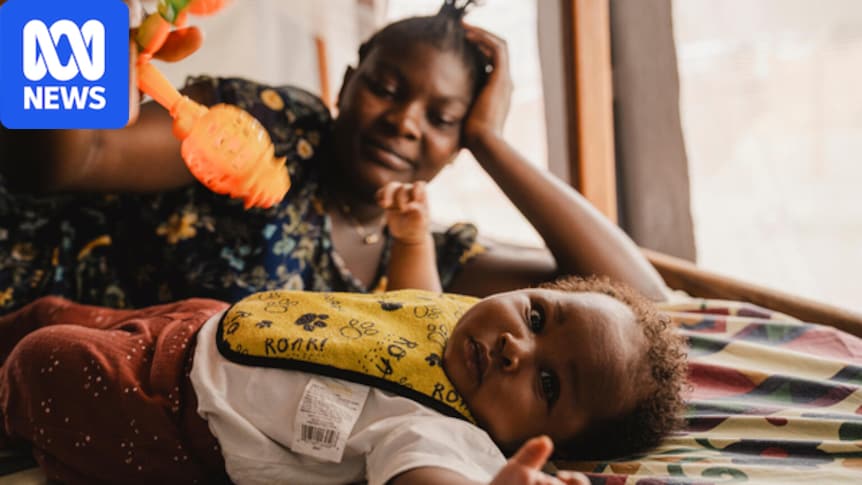
When the sun starts to set, Wivine Kabala makes her final rounds at the first nursery for infants and children whose parents have been struck down by Ebola in the Democratic Republic of Congo (DRC)."Several children are waiting there, others are asking for their parents," Ms Kabala said."I bring them a smile, a few comforting words and the certainty that they are not alone."Ebola has resurfaced in the DRC in Central Africa in the first major outbreak in more than a decade, with the World Health Organization declaring it a public health emergency.In the DRC, Ebola is a fatal viral disease driven by the rare Bundibugyo virus strain. The first UNICEF-supported emergency Ebola nursery has opened in the Ituri province in the north-eastern part of the DRC, where 135 children have been orphaned by the outbreak.The province is at the epicentre of the outbreak, accounting for 90 per cent of cases and 85 per cent of deaths.Wivine Kabala provides psychosocial support to patients, their relatives and caregivers. (Supplied: UNICEF/Benekire)Children with confirmed Ebola make up 15 per cent of total cases and are almost twice as likely to die from the disease as adults, according to UNICEF. Ms Kabala said many children were scared and needed support.The nursery offered a safe space for children and infants separated from their caregivers, providing them with care and psychosocial support."Behind these figures lies a deeper reality. Every day, psychosocial workers like me re-establish dialogue when fear takes over," she said. Mapenzi, 17, with her three-month-old baby brother Eliya, at the UNICEF-supported nursery. (Supplied: UNICEF/Benekire)UNICEF chief Catherine Russell said there was a need for extra support for children affected by the outbreak."Children are especially vulnerable because they depend on caregivers and cannot distance themselves from a sick parent or sibling in the same way that an adult can," Ms Russell said."Our teams in Ituri have met children who have lost their mothers, and in some cases both parents, to Ebola." Attacks on health facilitiesRubble set on fire as concerns grow over health workers involved in Congo's Ebola response centres. (AP: Constant Same Bagalwa)At least a dozen attacks on health facilities have sparked safety fears for healthcare workers.Many of the attacks have been carried out by angry mobs who have stormed treatment centres or targeted response teams in the field, according to incident manager at Congo's National Institute of Public Health, Pierre Akilimali.Officials said the attacks were not limited to healthcare teams and they also affected frontline workers such as burial teams.The outbreak has unfolded amid widespread insecurity and displacement due to ongoing war and conflict, while the country grapples with limited access to basic services and fragile health systems.UNICEF regional director for West and Central Africa, Gilles Fagninou, who just returned from a mission in Ituri province, said five provinces were affected by Ebola amid a turbulent time."This geographical increase, in a context of conflict, insecurity, population displacement, and limited access, makes the response both more complex and more urgent," Mr Fagninou said.Mental health support for childrenUNICEF set up treatment centres and other spaces to help children struggling with grief and anxiety. (Supplied: UNICEF/Benekire)The impact of the outbreak on children's mental health has been immense, with more than 4,000 children in Ituri receiving mental health and psychosocial support, according to Save the Children.Organisations such as UNICEF and Save the Children have set up spaces to help those struggling with grief and anxiety after losing family to the outbreak.Save the Children staff in Ituri said the disease had also changed how some children interact, with many now avoiding close contact and keeping their distance from others.Dr Babou Rukengeza, Save the Children's Ebola Response lead in the DRC, said children in Ituri were carrying an enormous emotional burden. "Many have witnessed violence, lost loved ones because of the Ebola outbreak or lived through repeated displacement," he said."Child Friendly Spaces give them a safe environment where they can express themselves, rebuild confidence and simply be children again."The effects of prolonged stress and distress during childhood can extend far beyond the immediate crisis.Save the Children said without adequate support, repeated exposure to adversity can have lasting consequences for children's cognitive development, emotional wellbeing and long-term physical and mental health.
First nursery for babies of Ebola victims opens in Congo
Full Article
Original Source
Read the full article at Abc →KhanList aggregates and links to publicly available news content. We do not host full articles from third-party sources. Always verify important information with original sources.