
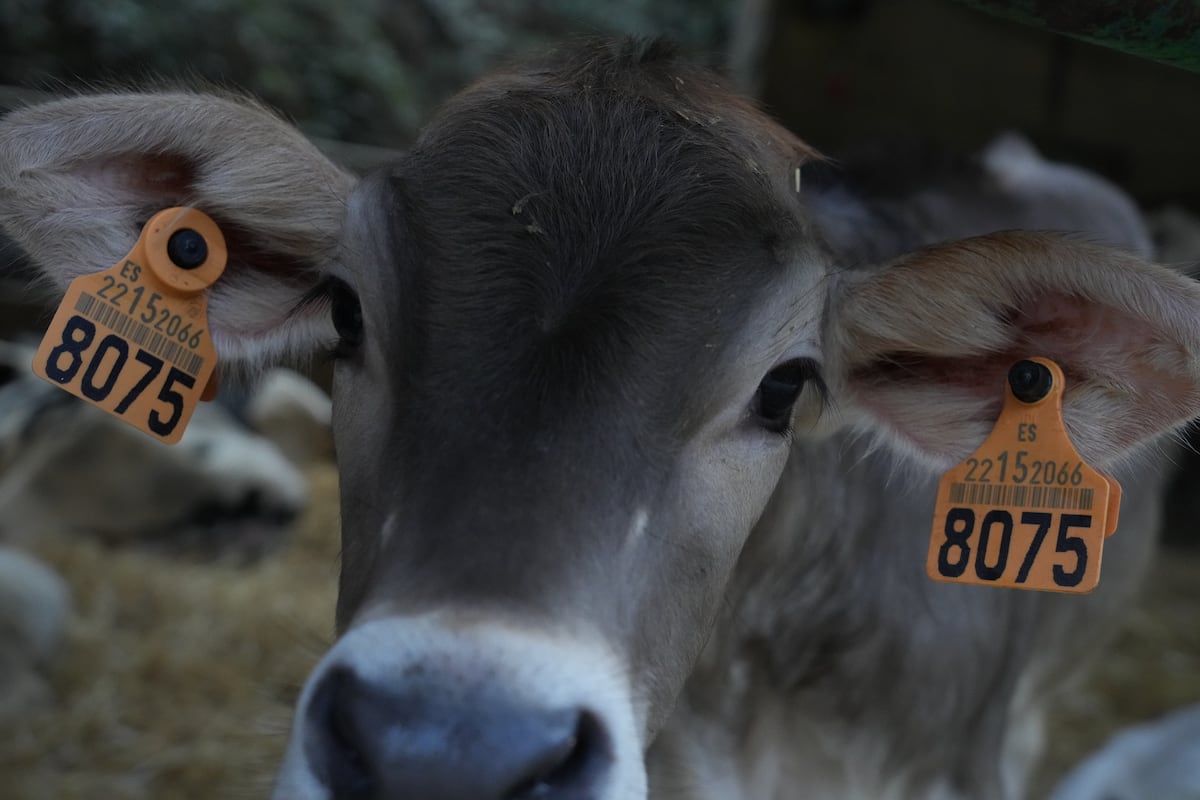
The death of a person in France infected with the Shamonda virus (SHAV) has put European public health authorities on alert. “The European Centre for Disease Prevention and Control (ECDC) is carefully monitoring the situation after the French authorities announced the first ever reported human infection with Shamonda virus (SHAV), a disease that has until now only affected animals,” the agency said in a statement.What kind of virus is it?It is an orthobunyavirus that belongs to the Simbu serogroup, specifically subclade B. No human infections had been detected previously. Although expert virologists did not predict a risk to people from this virus, bunyaviruses, which have segmented RNA genomes, show “very high mutagenic potential,” says José Francisco Ruiz Fons, a senior scientist at Spain’s National Research Council (CSIC) and a member of the Health and Biotechnology Research Group (SaBio). “Within this Simbu serogroup there are several viruses (from subclade A) that are infectious to humans and can cause clinical problems,” he added in remarks to the website SMC España.Is it new?This virus has been known since the 1960s, when it was observed in Nigeria. It was later detected in Japan and South Africa, but it had never been identified in Europe until this year. Ruiz Fons acknowledges that what is really new is its behavior: “Expert virologists did not predict a risk to people from this virus.” However, some members of its group are infectious to humans and cause clinical problems.Where is it in Europe?SHAV was detected in Europe for the first time last summer — specifically in France — and since then it has been identified on farms in Austria, Belgium, France, Germany, Ireland, Italy, Liechtenstein, Luxembourg, the Netherlands, Portugal, Spain and Switzerland. “Such a geographical expansion has never been documented before,” Ruiz Fons stresses.Which animals does it affect and how?This pathogen mainly affects cattle, although it has also been detected in sheep and goats. Infected animals can show symptoms such as fever, diarrhea, lethargy and reduced milk production. Transmission among animals occurs via the bites of midges, tiny fly-like animals of the genus Culicoides.Why does a virus jump from animals to people?This process is known as zoonosis. “In recent years there has been an accumulation of zoonotic events related to increased interactions with wild animals, ecosystem disruption, climate change, globalization and tourism to remote places,” lists Elisa Pérez Ramírez, a veterinary virologist at the Animal Health Research Centre (CISA-INIA-CSIC).Global warming alters ecosystems, increases and expands vector populations (such as mosquitoes, which act as a bridge to transmit the virus to humans), and displaces wildlife; deforestation, fires and droughts also change reservoir and pathogen dynamics; real estate development occupies isolated ecological niches and pushes wildlife closer to human-populated areas; and globalization and mass tourism, even to remote sites, raise the risk of humans coming into contact with potentially dangerous microbes and transmitting them to others.Although epidemiological surveillance systems are becoming more robust, the threat of pathogens that could become high-risk international epidemics has continued to grow.Did the French patient die because of the virus?That is not known for certain. The case involved “a patient receiving treatment for a serious illness that made them more susceptible to infection and complications than the general population” the ECDC said. The man died in early October and France is now investigating “whether the virus caused or contributed to the patient’s death and how the infection was acquired,” according to the ECDC. The deceased was being treated at the Hospices Civils de Lyon and suffered cerebral complications that the treating physicians consider “very likely” related to the infection, French media report.Should we be worried?French authorities have emphasized that, to date, no public health risk to the general population has been identified and are conducting clinical, biological and epidemiological investigations. The ECDC said it is closely monitoring the situation to investigate the possible implications of this first human infection for public health.Sign up for our weekly newsletter to get more English-language news coverage from EL PAÍS USA Edition
First known human case of Shamonda: What do we know about an emerging virus that has surprised experts?
Full Article
Original Source
Read the full article at English →KhanList aggregates and links to publicly available news content. We do not host full articles from third-party sources. Always verify important information with original sources.