
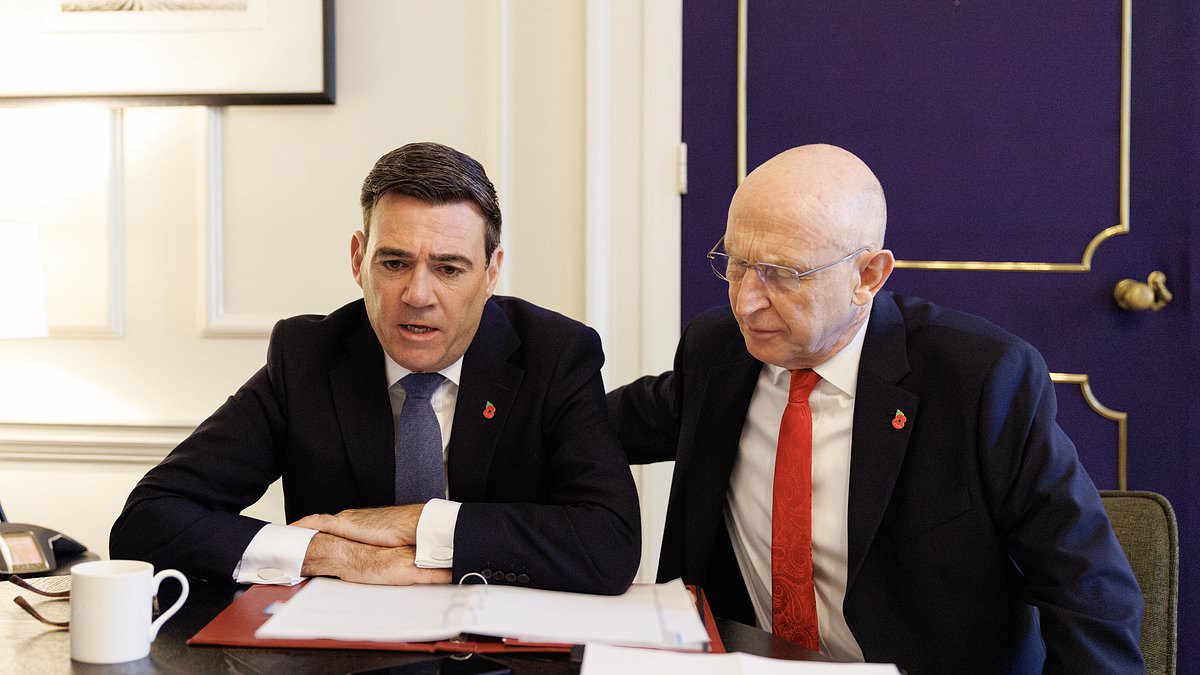
Updated: 19:02 EST, 10 November 2026 Labour's first Budget under Andy Burnham failed to meet a 'minimal test of credibility' and threatens to open up a £30billion black hole in the public finances, experts have warned.Analysis by the National Institute of Economic Research (NIESR) found that Chancellor John Healey kicked the challenge of bringing down borrowing 'into the long grass'.It said that the government's 'hesitancy' in doing so risked making Britain's outlook even more painful and that balancing the books in the years ahead will instead rely on good luck.NIESR director David Aikman said: 'A plan that is not believed adds to the premium the government pays to borrow.'He said that while there were a record 98 measures announced in the Budget, the government 'didn't tackle the two big problems' of borrowing and the £3 trillion debt mountain.Mr Healey in theory met targets to bring down borrowing over coming years, with £15 billion to spare. But that 'headroom' was down from £24 billion in the spring. Andy Burnham and John Healey's Budget lack credibility, NIESR experts said And even achieving that thinner buffer was based on assumptions that Labour will impose painful 'austerity' type spending cuts on some departments in the years ahead.NIESR suggested that it was likely to backslide on these plans in next year's spending review, resulting in the headroom being wiped out and the targets being missed by £30 billion.It also noted that while soaring debt levels are expected to peak in a couple of years' time before coming down, they are still forecast to be higher than they are now in 2031/32.'The minimal test of credibility for the Chancellor at this Budget was whether he was willing to take modest steps to stabilise the debt to GDP ratio,' the NIESR report said.'Based on the forecast paths laid out by the OBR [Office for Budget Responsibility]… we can see that this minimal test of credibility was not met.'With the government set to spend a staggering £144 billion in the current fiscal year alone on the debt interest bill, even 'modest' spending restraint could have boosted the government's credibility on financial markets – shaving up to £2 billion a year off the cost of borrowing, NIESR said.'This opportunity was not seized, with difficult decisions on tax and spending postponed instead.'Material improvements in the fiscal outlook are now largely dependent on good economic fortune.'NIESR deputy director Stephen Millard said: 'The Chancellor really pushed into the long grass the choices needed to bring the deficit down.'The report said the public finance outlook 'depends heavily on spending restraint… raising doubt about its deliverability'. That is because rising inflation is eroding the real terms value of departmental budgets – leaving them £7 billion a year worse off unless they are topped up.On top of that, the government needs to find £11 billion to meet defence spending commitments.NIESR argued that the spending review in 2027 would be a 'real test' and that the government should stick to its existing plans rather than topping them up to make up for rising inflation – which has been driven by a surge in oil and gas prices caused by the Iran war.'Higher energy prices make the UK poorer as a country, and government spending cannot offset that loss,' the report said.NIESR chief economist James Smith said: 'The government's plans lack credibility.'Mr Smith said that while tax rises were not 'inevitable' to fill the financial hole, the scale of cuts implied otherwise 'starts to look like austerity level spending… that's the big choice there'.Many critics say the government must bring down the welfare bill to make the sums add up. Mr Smith said: 'The big debate is going to be on the welfare side.'
First Budget under Burnham 'failed credibility test' and threatens £30billion black hole
Full Article
Original Source
Read the full article at Dailymail →KhanList aggregates and links to publicly available news content. We do not host full articles from third-party sources. Always verify important information with original sources.