
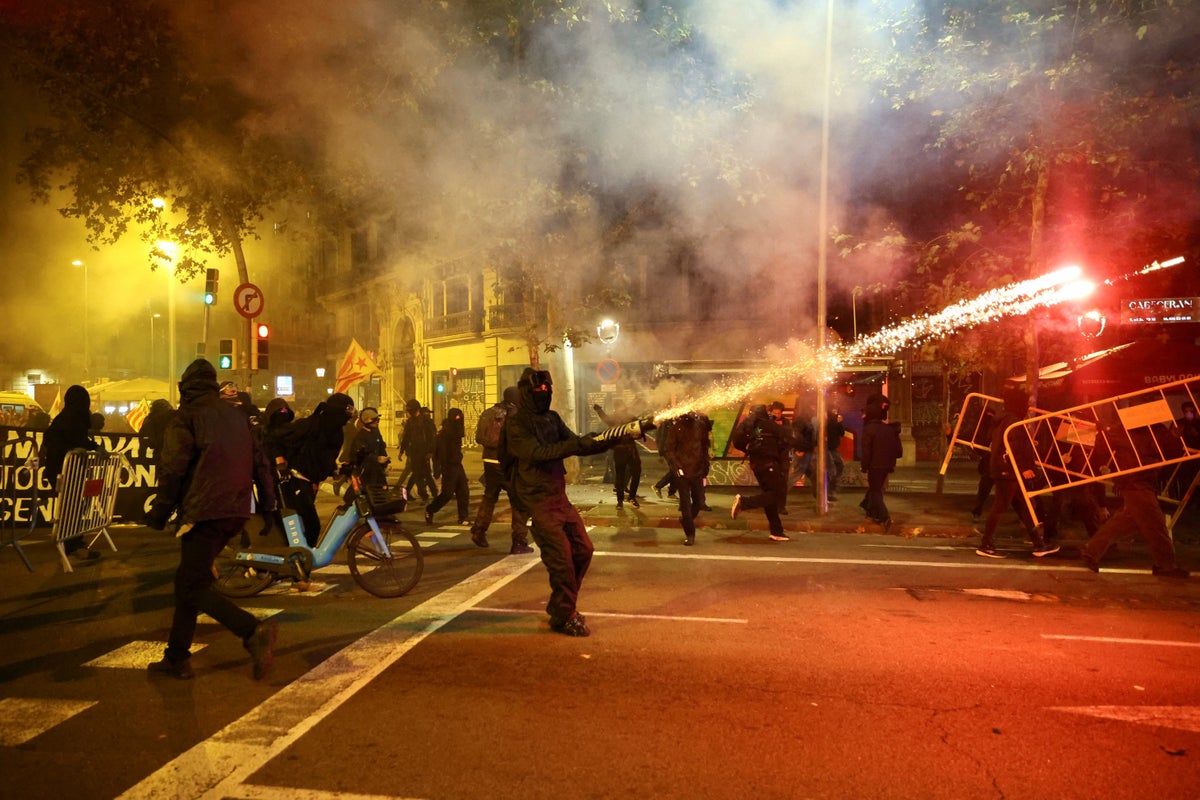
Millions of workers have taken to the streets across Spain’s major cities in a nationwide strike against soaring rents and property prices, disrupting public transport and closing businesses in the eurozone’s fourth-largest economy.The mass protest — held under the banner "Salaries. Housing. Prices." — represents the country’s first general strike in 14 years, and the first driven primarily by anger over the cost of living and housing. It comes as Spain’s left-wing government attempts to mobilise voters ahead of a snap national election later this month, facing difficult opinion polls. Meanwhile, housing campaigners are demanding tighter regulation of tenants' rights and a crackdown on real estate speculation.Demonstrations culminated in major gatherings in Madrid, Barcelona and other cities. Organisers stated that 400,000 marchers packed the streets of Barcelona, while municipal officials put the turnout at 55,000 behind a large banner stating "Live. Not Just Survive."In Madrid, government officials estimated that 120,000 people took part despite heavy rain.Following a peaceful demonstration in Barcelona, small groups of younger protesters smashed windows of major brand-name stores along the Paseo de Gracia shopping avenue. Fires were set outside retail outlets, rubbish bins were burnt, and fireworks were launched at riot police who responded in armoured vans.A group of hooded individuals also tried to force entry into an Apple store in the city centre.Bins were set on fire in Barcelona (Reuters)Throughout the day, Barcelona’s metro and bus services ceased operating outside of rush-hour periods, significantly reducing traffic, though many smaller businesses such as cafes remained open.Carlos Ferrer, a 45-year-old customer service worker attempting to return to Alicante by train from Barcelona, said that sometimes only "radical measures, such as a general strike" can force a change of course."Authorities need to feel pressure from the citizens so they can do something," he said.In the capital, umbrella-bearing crowds filled the Paseo del Prado boulevard as rain continued into the evening. Almudena López, 74, joined the protest alongside her husband out of concern for their children."My son is 43 years old and still doesn’t own a home as he cannot afford one," López said, explaining that her son works in IT but can only afford to rent a room in a shared property."When I was young, if you had a university degree, you could get a job by saving a bit — which always required some sacrifice — but you could manage. It’s nothing like it is today."A protester burns mannequins during the strike (Reuters)Although organised by Spain’s two primary trade union federations, the strike was largely driven by grassroots housing movements formed predominantly of younger people facing housing pressures."This strike is against rent seekers, against real estate speculators, against the large companies that get rich by selling properties and, of course, against all the levels of government," grassroots campaigner Valeria Racu told reporters in Madrid. "We are here to show that we have the capacity to mark our own agenda and we are going to keep doing so no matter who governs."Trade unions declared the action a resounding success, whereas business organisations argued that participation was minimal."The strike has exceeded the labor unions’ expectations," said Unai Sordo, secretary-general of CCOO, one of the two main unions behind the walkout in a country of 22 million registered workers.CCOO and the UGT union reported widespread disruption in key industrial sectors, claiming participation reached 90 per cent in automotive manufacturing and ports, 85 per cent in the meat processing industry, 82 per cent in waste collection and 75 per cent in the energy sector. Schools and universities across the country were also shut.However, the leading business group CEOE described the strike as a "failure," estimating overall worker involvement at roughly 5 per cent.Both unions and business groups acknowledged that participation was noticeably higher in heavy industry and transport than in sectors such as retail and hospitality.Store windows smashed by protesters during the strike (Reuters)Spanish airport operator AENA reported that approximately 5 per cent of flights across the country were cancelled on Wednesday.Isolated incidents occurred during the early hours of the strike, including scuffles between picketers and police near Madrid’s main wholesale market, where officers deployed pepper spray.Police confirmed that 49 people were arrested across Spain for strike-related offences.Average rent prices in Spain have almost doubled over the last decade, severely straining domestic budgets and driving public anger.Tensions escalated further following the eviction of an 87-year-old woman in Madrid last month. The subsequent death of the woman, known publicly as Maricarmen, turned her into a powerful symbol for citizens struggling to access affordable housing.Campaigners used the outcry over Maricarmen’s death to call for the strike, quickly securing union support.Housing groups are demanding the automatic renewal of rental leases alongside stronger tenant protections, while trade unions are pressing for an increase in public housing and a new national minimum wage agreement.Following the unrest over Maricarmen’s eviction, Spanish Prime Minister Pedro Sánchez called an early general election for 29 November, hoping to retain power for his left-wing coalition.However, his election campaign suffered a blow in late October following a high-speed train collision — Spain’s second fatal rail crash this year — which left 69 people dead.Last month’s train crash left 69 people dead (AFP/Getty)Political analyst Oriol Bartomeus suggested the strike offers an opportunity for Sánchez’s party and its allies to refocus the political debate."The Socialists need for the strike to be a success and for there not to be any violence so that the election campaign can swing back to being about housing," said Bartomeus, a professor of political science at the Autonomous University of Barcelona.Spanish Prime Minister Pedro Sánchez kept a low profile on Wednesday. Earlier in the week, he shared a video on X highlighting historic social victories such as the 40-hour working week and national healthcare system, describing them as achievements of the labour movement."It wasn’t easy, but they changed Spain," Sánchez said, warning that right-wing parties would underfund public services if elected.Opposition politicians from the conservative Popular Party and the far-right Vox party accused the unions of staging the strike to support Sánchez’s campaign."This is a gift by the unions to their political parties during the buildup to a campaign where it is clear the left needs all the help it can get," said Popular Party spokesman Miguel Tellado.
Fireworks launched at riot police as Spain’s strike over housing crisis descends into violence
Full Article
Original Source
Read the full article at Independent →KhanList aggregates and links to publicly available news content. We do not host full articles from third-party sources. Always verify important information with original sources.