
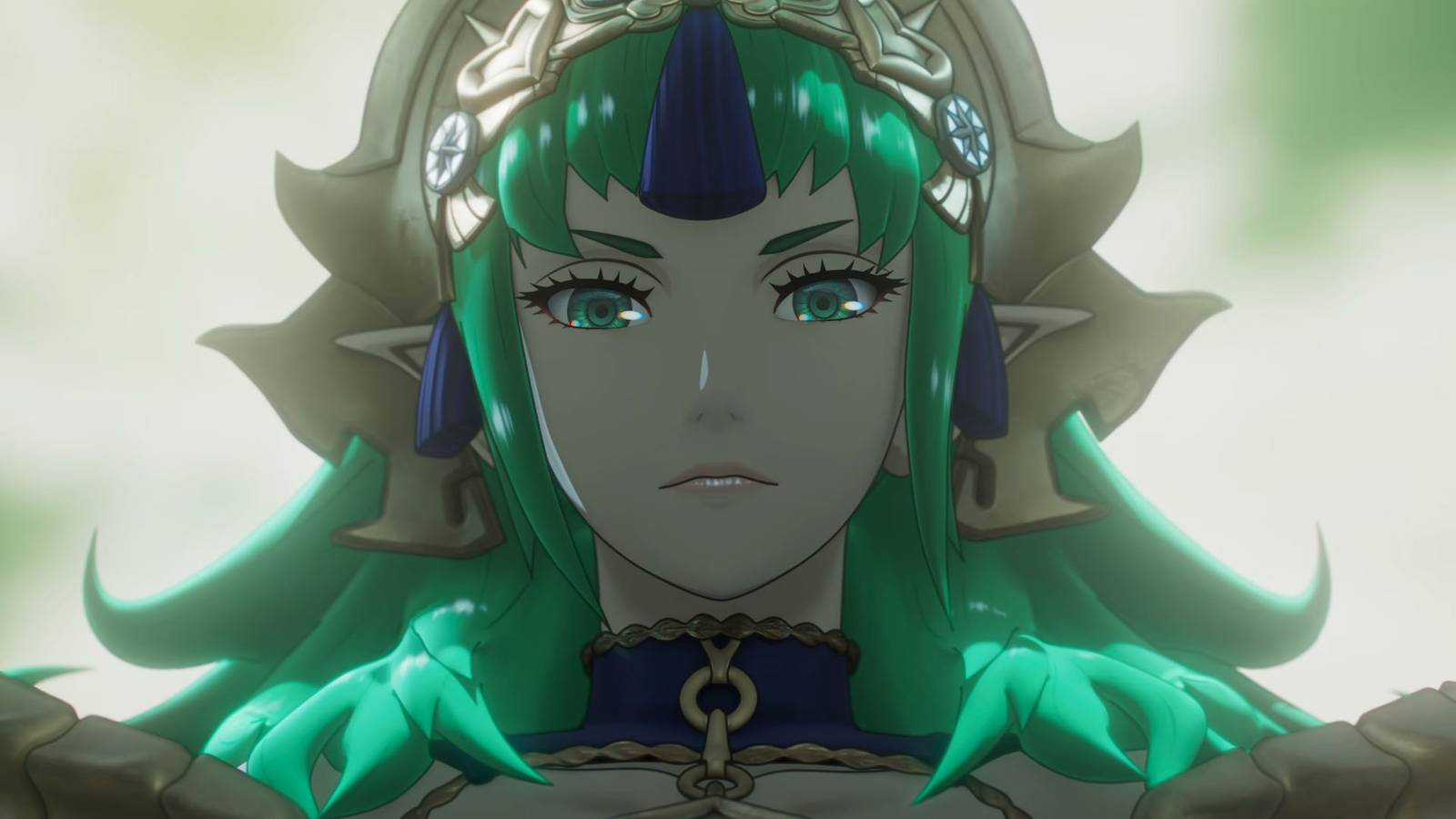
Published Oct 4, 2026, 12:00 PM EDT Maybe not the DLC we want, but a DLC we need Fire Emblem: Fortune's Weave’s true ending paves the way for a huge character’s comeback Image: Intelligent Systems/Nintendo via Polygon Despite being a game that can easily surpass the 150-hour mark, Fire Emblem: Fortune's Weave leaves many questions unanswered in its ending. After it was revealed that four routes had been cut out during the development process in a recent Ask the Developer interview, one possibility is that these stories will become DLCs in the future — and that those expansions will answer some lingering questions. While we still don't know if any of this is happening, of course, I believe the ending of Fortune’s Weave suggests one clear thing: that Sothis is coming back — and maybe in more than one way. [Ed. note: Spoilers follow for Fire Emblem: Fortune's Weave.] Who is Sothis in Fire Emblem: Fortune’s Weave? Image: Intelligent Systems/Nintendo via Polygon Sothis has many names, and ever since she was introduced in Fortune’s Weave’s predecessor, 2019’s Fire Emblem: Three Houses, we know that she's not only the strongest character in the game's universe but also one of the most mysterious. Although her origin as an alien from outside the planet is not new, we don't actually know why she left her planet (the "Blue Sea star") and what happened when she arrived, nor do we know exactly what she actually is. Her story has been slowly told. In Three Houses, we see Sothis's current state in the Fire Emblem universe as having lost her material body and living inside Byleth. Fortune's Weave takes us before that, letting us see a moment when she was still alive, but sleeping, working as a looming force that can erase a whole civilization from history. We haven't, however, seen the beginning of her story, but Fortune's Weave's post-credit scene seems to indicate that we might be about to. What happens in Fire Emblem: Fortune’s Weave’s post-credits scene? After you view profiles for your characters, see what happened to your units after the Underworld War was over, and let the credits roll, the screen goes black, and we hear Sothis talking to Balor. Although we don't see what is actually happening, her words paint a clear picture: Balor has returned to Sothis, his mother, and is now trying to convince her to not kill him for everything that happened. Luckily for him, Sothis has a mother's compassion and his sentence is to "drown in Mother's love — a vaster depth than any of the seas." We could interpret that figuratively, as Balor being left under her control, or a bit more literally, as in Balor's existence merging into Sothis'. Regardless of which you believe, what matters is that she promises to tell Balor a bedtime story: her tale, one that started "a long, long time ago…" The interaction between Sothis and her rather rebellious son could only imply that Balor hasn't been completely erased from existence, but I believe the rest of the game gives us enough evidences to show that one of developer Intelligent Systems’s goals with Fortune's Weave was to lay the groundwork required to eventually tell her story. More than once, we are put face-to-face with elements from the past and Sothis' origin story, but none is as emblematic as Theodora's chapter 7 in Part 1. Free sign-up Get Polygon’s Wishlister newsletter A weekly cheat sheet to what you’ll eventually love to play. No buying, no commitment — just saving for later. Sign up free Free. Unsubscribe anytime. The chapter starts with Theodora dreaming of Balor and Dagda, both in their dragon forms, fighting in a modern urban city that has been completely devastated. The fight is short and the god of the underworld defeats his brother. As Balor flies toward the sky, he is stopped by Sothis in her humanoid form. He engages, firing three fire balls. As the camera follows the trajectory of the spheres, we see them hitting not the female humanoid figure, but an enormous creature: Sothis' real form. The previous duel between two powerful dragons becomes insignificant; Balor pales in comparison to the titanic proportion of the creature in front of him. He is seized and pushed inward into the enormous creature. These events are never fully discussed during the game, yet in this brief segment, we have the opportunity not only to see Sothis' true form but to also understand how alien she actually is. We’re not talking about a regular dragon coming from space, but a creature that makes Fortune's Weave feel more like a Xenoblade Chronicles game. At the same time, questions remain: Why were her sons fighting? What happened to human modern civilization? What was Balor attempting to accomplish that made Sothis come with her real form to punish him? We might actually learn as Sothis tells her tale to her son. The origin of the progenitor god or at least the events that changed the world, might not be the only part in Sothis's story that Fortune's Weave is nodding to. As mentioned, as far as we know, Sothis lost her physical body and has merged with Byleth from Three Houses. But, based on what we learn from Fortuna after the battle against Balor, we can speculate that Sothis could eventually obtain a physical body again. Hear me out. What Fire Emblem: Fortune’s Weave might be telling us about Sothis' future? The third act in Fortune's Weave, called "The Salvation Arc," is the culmination of everything the game has been building through its first two parts. Eshmel and Fortuna, along with all the Flame Lords and units you have saved, go to the "depths of the underworld" to fight Balor. The mission is risky because, according to Fortuna, as soon as the god of the underworld is defeated, his domain is destined to disappear as well, throwing everyone inside it into oblivion. That's because, up until then, the underworld was tied to Balor's existence. Image: Intelligent Systems/Nintendo via Polygon However, Balor has been able to expand the underworld beyond his being by creating another pillar to support his dimension, making it a material place that could survive his soul's destruction — the exact condition that allows the characters to survive the final fight. Balor was not just trying to keep the underworld in the material, though. His true goal was to use the underworld as body, a new, more powerful vessel for his soul, so he could challenge Sothis again. In other words, it is possible for a vessel as powerful as Sothis's true body to be created and a soul transferred to it. In both Fortune's Weave and Three Houses, it’s established that Sothis can inhabit other bodies. She can either move into one of her simulacra's bodies, like Fortuna's, and take over their identity, or she can coexist with another soul, as she does with Byleth. If Sothis can come up with a plan like Balor's — that could perhaps avoid the mass killing part — and create a god-like simulacrum, it would be possible for her to have a physical body of her own — and, you know, kick the god of the underworld's ass again. Image: Intelligent Systems/Nintendo via Polygon Maybe seeing a post-Three Houses chapter in the progenitor god's story might be less likely than the next game in the series (or potential DLC) being a prequel, as the post-credit scene suggests. Regardless of which, Fortune's Weave has paved the way for more stories about Sothis to be told. I will be waiting.
Fire Emblem: Fortune's Weave true ending, explained
Full Article
Original Source
Read the full article at Polygon →KhanList aggregates and links to publicly available news content. We do not host full articles from third-party sources. Always verify important information with original sources.