
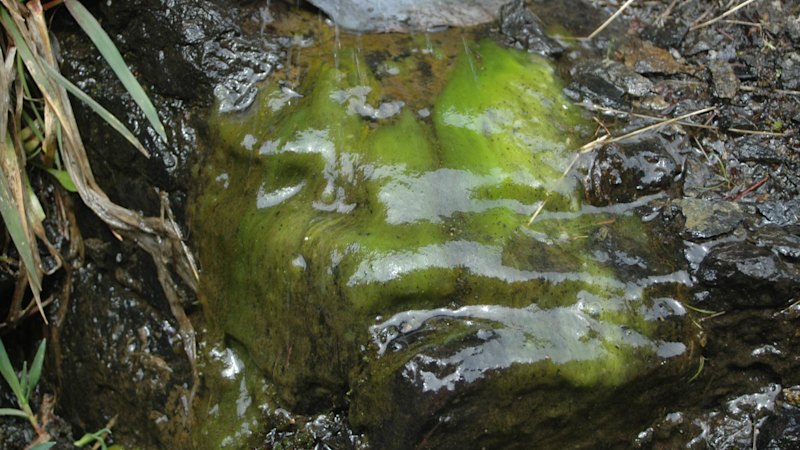
October 30, 2026 — 5:12pmEvery Halloween, we invite monsters into our homes. Vampires, zombies, murderous clowns – all reassuringly imaginary. I find it harder to be frightened by them these days. I spend too much of my working life contemplating creatures whose real-life talents would be rejected by a horror screenwriter as excessive.An enormous “murder” hornet whose sting has been compared with having a hot nail driven into your flesh. An alga called “rock snot” that can smother riverbeds in great mats of slime. Or how about a beetle the size of a sesame seed that carries a fungus capable of killing magnificent old trees. Welcome to my nightmares.Ugly by name, ugly by nature: Rock snot is an unwelcome addition to most environments.Teresa TrimmHaving spent decades working on invasive species and extinction, I am frequently asked which potential invaders worry me most. It is a surprisingly difficult question. Thousands of species native to somewhere else could cause serious harm if they arrived here, and global trade and travel provide ever more opportunities for them to hitch a ride.But in honour of Halloween, here are a few inhabitants of my ecological chamber of horrors.First, rock snot (Didymosphenia geminata).This freshwater alga can grow into thick mats carpeting riverbeds. It invaded New Zealand in 2004 and has since spread through waterways there, transported between rivers on wet fishing and recreational equipment.Australia has so far kept it out, and we sure hope it stays that way.In the horror movie of invasive species, prevention is the rather uncelebrated hero – succeeding precisely when there is no dramatic ending. No rivers smothered in slime, no wildlife lost, no monster to defeat in the final act. No minister holds a press conference beneath a banner reading: “Terrible thing continues not to be present.”Something that is here, though, is the polyphagous shot-hole borer. A most frightening monster, although almost invisible, it was first detected in Perth in 2021 and has the potential to devastate our country if it’s able to hitchhike further.Its victims have included magnificent old trees shading Perth’s parks and public spaces. Trying to contain it has required trees to be felled and destroyed. It’s been estimated it could wipe out 47 per cent of Sydney’s tree canopy if it were to reach the east coast.Borers are boring? The damage they could do to Australia’s tree canopy will keep you up at night.Further north, another potential invader is practically knocking. The climbing perch is a fish that can survive out of water for hours and wriggle across land between water bodies. It also has sharp spines that can lodge in the throats of animals attempting to eat it. After invading Papua New Guinea, it recently reached islands in the Torres Strait.And then there are the animals we have deliberately brought into the country. Ferrets remain popular pets in parts of Australia despite the severe threat they could pose if they established in the wild. Then there are Burmese pythons and other exotic snakes kept illegally in captivity.We have an unfortunate tendency to treat the walls of a cage as though they constitute a biosecurity system. But animals do escape, or worse, people release unwanted pets. Every invasive population starts somewhere.And remarkably, we are contemplating adding another formidable predator to the mix. The Australian government is considering allowing Bengal cats – a cross between domestic cats and Asian leopard cats – to be imported as pets. A nightmare for any of our snack-sized mammals.It will cost us to keep red imported fire ants at bay, and cost us more if we don’t. April Noble, Antweb.org, Bugwood.orgOf course, none of these creatures are purposefully evil. Nature does not deal in villains. The horror comes from humans moving species somewhere they do not belong – and then failing to act while we still have the chance.Australia has been taught this lesson repeatedly. Rabbits multiplied into hundreds of millions. Foxes and cats helped erase native mammals from huge parts of the continent. Invasive grasses have transformed landscapes and fire. Cane toads poisoned native predators as they spread across northern Australia.Today, fire ants provide perhaps our starkest warning of what happens when an invader gets a foothold. This is the strange asymmetry of biosecurity. Before an invasive species establishes, keeping it out can seem expensive. Afterwards, almost any amount we might have spent preventing its arrival looks cheap. And because prevention leaves behind no ruins, carcasses or dramatic footage, its victories are easily forgotten.Perhaps that is the real monster in this story: complacency. Australia is an island continent with wildlife found nowhere else on Earth. That gives us an extraordinary advantage. We can stop many harmful species before they establish. But an island is only as safe as the systems protecting its shores – and the decisions we make about what we import, trade, keep as pets and tolerate once detected.This Halloween, I won’t lose much sleep over ghosts. I’ll worry about the tiny beetle inside a piece of timber. The microscopic cells clinging to fishing gear. The escaped pet. The ant colony hidden in freight.The monsters of ecological horror rarely arrive with ominous music. Usually, they arrive in a shipping container.Dr Carol Booth is a policy director at the Invasive Species Council.Get a weekly wrap of views that will challenge, champion and inform your own. Sign up for our Opinion newsletter.From our partners
Fire ants have arrived. Let’s make sure rock snot and murder hornets don’t
Full Article
Original Source
Read the full article at Smh →KhanList aggregates and links to publicly available news content. We do not host full articles from third-party sources. Always verify important information with original sources.