
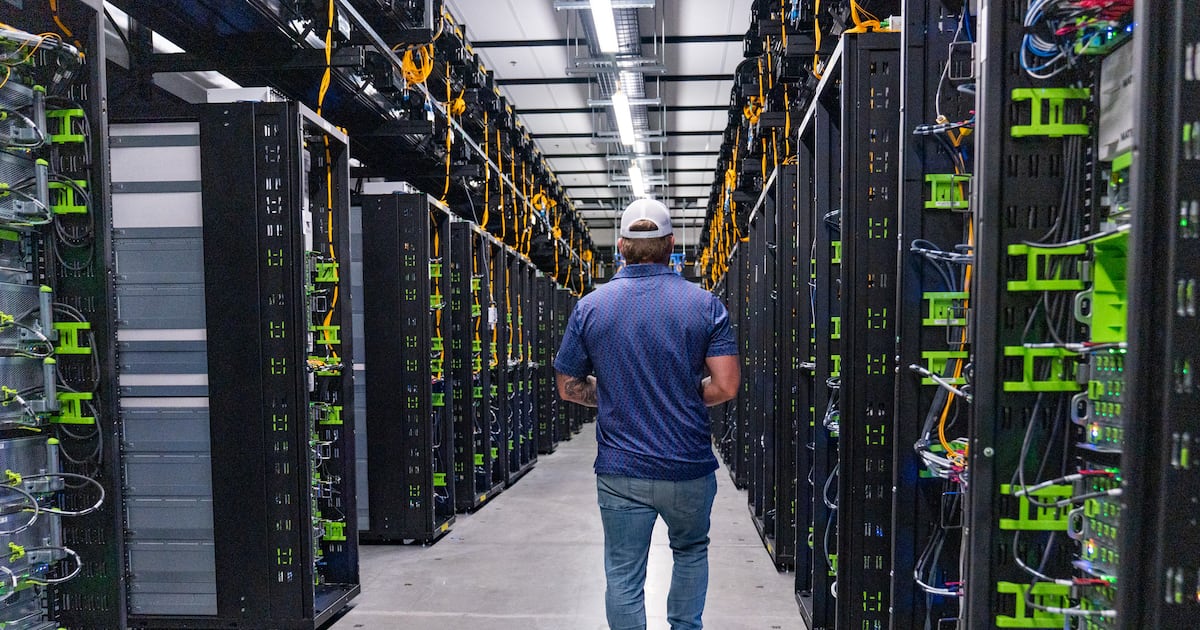
The state of New York is 75 per cent larger than Ireland. It is home to 133 data centres. Our much smaller island has 129 data centres (121 in the Republic and eight in the North). New York is worried that it has too many – our Government can’t get enough.In July the governor of New York, Kathy Hochul, declared a year-long moratorium on new hyperscale data centres in her state: the “scale and speed of development has put unprecedented demand on energy and water resources and threatens to drive up utility costs. Before it goes any further I need safeguards in place to protect New Yorkers.”Ireland hosts 10 times the European per capita average of data centres. Our electricity grid is in danger of being overwhelmed, we have woefully underdeveloped water infrastructure – and we are all paying higher energy bills. But who in Government is saying “before it goes any further, I need safeguards in place to protect Irish people”?It seems likely that the Scottish parliament will shortly declare a moratorium on the building of new data centres. In the US more than a dozen other states are actively considering following New York’s lead. READ MOREWhile we sleepwalk, the homeland of the tech corporations we host is wide awake. Last week in Dublin, Democratic congresswoman Pramila Jayapal said she had never known a political issue to take off so suddenly and so strongly. The consequences could be momentous: in Michigan and Ohio data centres have become a defining question in November’s midterm elections – one that could determine control of the Senate and the fate of the Trump presidency. On August 19th Axios revealed an internal memo from the National Republican Senatorial Committee warning that opposition to data centres is likely to unseat Ohio’s incumbent Republican senator Jon Husted: “If he loses and data centres get the blame, politicians across the country will take notice – and they will not go near the next one. This has become a sleeper issue for the entire election cycle.”Last weekend, in a Financial Times report from the State Fair in Indiana, Rana Foroohar wrote: “The topic of data centres comes up, unexpectedly, in the swine barn.” Two farmers volunteer that “everyone here is talking about fuel prices – and data centres”. Or as the Democratic senatorial candidate in Michigan Abdul El-Sayed put it, even more succinctly, “people really effing hate data centres”.This is part of a global backlash. In India there are large-scale protests against the building of massive data centres in Maharashtra. A spokesman for the demonstrators told The Wire that “there is little disagreement that data centres are an important part of India’s digital and AI infrastructure. The real question is whether a project of this scale is being developed with adequate transparency, proper land-use compliance, infrastructure planning and protection of the interests of surrounding citizens.”[ More than 870,000 jobs created by data centres? Don’t make me laughOpens in new window ]It is obvious – at least to everyone outside Ireland – that something very big is happening here. The pushback is coming organically from below. And it is potent because it fuses two currents of anger and anxiety, one global, the other intensely local.At the macro level, data centres are the physical manifestation, not just of the digital technologies that are powering the AI revolution, but of the egotism, rapacity and recklessness of the oligarchs who control those technologies. These huge, windowless buildings descend on us from the heights of arrogance. They provide a focus for all the anxieties about the massive disruptions that the vast majority of us neither asked for nor fully understand.[ Data centres account for almost a quarter of Irish electricity usage in 2025Opens in new window ]They also act as monuments to climate chaos. A Financial Times analysis of 60 of the largest planned data centres being built in the US by Amazon, Microsoft, Google and Meta found that they could together emit 101 million tonnes of carbon dioxide a year – the same as the annual emissions of 27 coal plants or 24 million petrol-powered cars.But at the micro level, the centres also hit people in their pockets. Their phenomenal consumption of energy increases demand, which in turn pushes up prices for households. People already struggling with fuel prices have realised that they are in effect paying a premium for the megalomaniacal ambitions of the tech gods. This is not a Luddite reaction. What citizens around the world are asking for is a pause in which we can think properly about what data centres mean for the environment, for local economies, for energy bills and for the displacement of investment and skills from, for example, the building of houses. Who gains and who loses?All of the problems people are reacting against are intensely present in Ireland. On a per capita basis, data centres in Ireland already consume a larger share of national electricity demand than in any other country: 23 per cent now, rising to 30 per cent by 2030. And we’re all paying for this. A recent report by Seán Fearon for Friends of the Earth estimates that Irish households paid out €715 million in higher electricity bills because of data centres up to 2023. If their growth continues at high levels, we will pay €1.43 billion up to 2034. [ ‘Nothing underhanded’ in department’s changes to data centre report, says BurkeOpens in new window ]In this situation there is an absolute duty on Government to conduct an objective cost/benefit analysis of its policy of hosting a boundless number of data centres. Instead, all we’ve got is propaganda. In June the Minister for Enterprise Peter Burke published a report called The Value of Data Centres to Ireland. We subsequently learned that the department had instructed KPMG, which prepared the report, to remove anything that did not support “the position that we should continue to further develop our data-centre landscape post-2030”. We can see where all this is going. If there’s a global backlash against the imposition of more and more data centres, they will go where the government is most compliant and the citizenry (with honourable exceptions) most somnolent. Is this really the State’s highest ambition – to become the dumping ground for all the AI infrastructure that other countries don’t want?
Fintan O'Toole: Ireland can’t be a dumping ground for data centres other countries don’t want
Full Article
Original Source
Read the full article at Irishtimes →KhanList aggregates and links to publicly available news content. We do not host full articles from third-party sources. Always verify important information with original sources.