
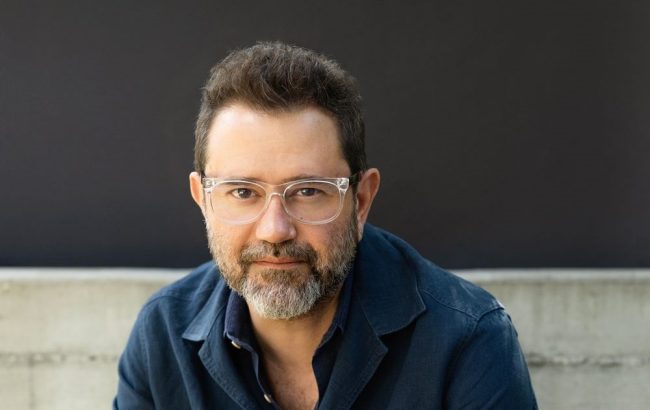
Major change is afoot at Film Independent, the Los Angeles nonprofit that supports indie filmmakers. Not merely a restructuring of departments over the coming years or a revamping of its centerpiece offering, the four-decades-old Spirit Awards, but something more expansive, place-based, and integrated.Since the tragic passing of Josh Welsh, a beloved figure in the indie community who served as Film Independent’s president for 12 years, many felt a leadership vacuum at a time when the L.A. film industry was in severe crisis, from productions rapidly departing the city to studio mergers. Juan Devis, appointed the new president in April, now envisions Film Independent to become something akin to a nonprofit studio, and equally, a pivotal cultural institution in Los Angeles, to be considered in the same breath as LACMA, the guilds, or the Academy Museum. A day after announcing John Early and Kate Berlant as the new hosts of the Spirit Awards, Devis, in his first public interview since his appointment, spoke to IndieWire about his all-encompassing vision and gave exclusives on the latest promotions following a significant restructuring.Devis’ office sits in the same corner of Film Independent’s headquarters in Miracle Mile as Welsh’s, and though it shares a similar calm, shaped by majestic 270-degree, ninth-story views of the Hollywood Hills to South L.A., Devis has made it bespoke with mementos from his childhood. His father’s paintings circa 1979 hang on the back wall. In Bogotá, Colombia, where he grew up, his father was a painter, his mother a social worker, and Devis a Star Wars buff. Gleefully showing me miniature slides of scenes he recreated from the franchise’s toys he owned or borrowed, Devis reminisced about how, as an eight-year-old, he’d direct his family to reenact the movie from a script he recorded on a vintage audio cassette. He cast his father as Darth Vader, his sister as Princess Leia (before the revelations of “The Empire Strikes Back”), and himself, of course, as Lucas Skywalker.This obsession with film would lead Devis to major in it at Emerson College in Boston, return to Colombia to shoot his thesis, and find himself working in Los Angeles for New Regency on the Warner Bros. lot, driving up and down Barham Blvd and taking meetings at the Peninsula. He didn’t connect with the glamour of it all, and was eager to reconcile his “indie kid” notion of film with what he was seeing in L.A. In the early 9’0s, that meant the race uprising, the Northridge earthquake, O.J. Simpson, and studios eager to replicate the success of Robert Rodriguez’s “El Mariachi.” Devis would spend 15 years at PBS, connecting, in his words, “storytelling with placemaking” and pioneering interactive documentaries, while serving on the boards of nonprofits like Arts for LA and as a California Arts Council member. When he got the phone call about his potential interest in becoming president of Film Independent, he saw a deeply “civic” role for storytelling that Devis felt was missing in the turbulent media landscape.Prior to accepting, Devis did his homework. He spoke to board members whom he is friends with, looked at their social media, and asked about the branding and positioning of the Spirit Awards (which he has never attended) vis-à-vis all the other “amazing programs supporting independent filmmaking both locally and globally.”Devis said he ran a collaborative workshop with staff leadership, asking them to break down everything they do. Film Independent does everything from development, funding, and production to distribution, education, and celebration, but these activities weren’t quite talking to each other. Juan Devis, Adam Fowler, Denise Gutches, John Lang, Steve Kang at the Film Independent Forum in September 26Alexander Nguyen For instance, the organization provides more than two dozen grants and donor-named fellowships across many scopes and areas. The #FiPresents folks offer an array of programming, including live reads such as the recent “Secretary” led by Jane Schoenbrun, suggesting the org’s expertise in exhibition. Numerous labs, from the Screenwriting, Fiction Producing, and Episodic Labs to robust international initiatives such as Global Media Makers, reach far to find underrepresented artists, taking them through development and mentorship. Fast Track is a four-day finance market that connects the film teams to funders. And the annual Forum and the triennial Sloan Summit convene folks from all aspects of the industry, making them key events on the nonprofit’s calendar.“I realized that Film Independent actually supports the entire life cycle of independent makers,” said Devis, “but they don’t see their programs and activities in that way. [Everything] is very siloed. So I started to really litigate that. For example, the [Sundance 2026 feature] ‘Union County’ found two-thirds of its funding through Fast Track. Project Involve’s shorts have turned into features and shows. Yet we don’t see ourselves as holding value in that regard. We simply create the conditions for these [films] to happen, and they go off on their own.”His solution? “If we are able to accordion out these [activities], to start to look at a vision of an interconnected organization that is supporting the entire life cycle, to look at how we can actually serve the filmmaker intentionally in each of these areas, then we are creating a different proposition. That is one of the main shifts we are doing right now. It’s looking at ourselves much more as a potential nonprofit studio.”Becoming something akin to a nonprofit studio is a huge cultural and institutional shift, so surely there must be resistance, since the staff has been functioning efficiently in their silos. Devis suggested that, generally, everyone is on board. “Staff needs to understand that we need to operate in a different way. As I talk to independent filmmakers, they [already] need the support in these areas, and they’re not getting it. It is a shift away from the [individual] lab mentality to the [full] life cycle. It is a shift in the culture of how we see the value we provide to the filmmakers, to our partners, and to the ecosystem in general.”The Humana Foundation grant is a pilot program to operationalize this shift. Five shorts will be selected from a submissions call, and each will receive $100,000 to develop stories about seniors’ contributions to society. Devis said, “We could have easily said, ‘Why don’t we create a lab to develop intergenerational stories about aging?’” But the goal is for Film Independent “to produce these shorts and other films down the line, identify director-producer teams, develop the IP, and figure out how to distribute it.” That’s how Devis positions the proposal to funders.In the competitive landscape of similar organizations like Sundance, the American Film Institute, or Gotham Institute, Devis argues Film Independent is singular in its goal of becoming like a nonprofit studio. Maybe ITVS, he suggests, but that is tied to documentary making and distribution via PBS. “Our landscape is completely open.”In this regard, IndieWire can exclusively reveal a series of promotions resulting from the three-to-five year restructuring strategy Devis has initiated.Kate Walker D’Angelo, previously senior director of Development, has been upped to executive vice president of Strategy and Institutional Advancement, which Devis said is a crucial top-level position, in part because of all the work Film Independent is doing with the government right now, and how it will continue to collaborate on the OTIS College Report on the Creative Economy with the goal of ultimately influencing policy. Walker D’Angelo will continue to lead Philanthropic Fundraising and Partnerships, with new responsibilities including oversight of Community and Membership, and Marketing and Communications.Returning to the idea of “life cycle,” Devis also applies it longitudinally. Proud of Film Independent’s Youth Program for middle and high schoolers, Devis said, “Youth are such an integral part of the industry because that’s where filmmaking begins.” Devis wants to propel an integration not just across the vertical — i.e., from development and financing to producing, distribution, exhibition and celebration — but also across filmmakers’ lives. They already host labs for emerging filmmakers, which for many is around age 27 or 28. “We are helping these filmmakers enter the ecosystem. So it doesn’t make sense to me to separate our youth lab programs from what we used to call artist development.”One implication of this shift is a greater emphasis on curation. “Can we identify projects that are ready to be moved to other areas, those which need packaging, additional funding?” Devis asked rhetorically. To this end, another major move will combine what were previously siloed as “artist development” programs and labs, “international” programs, “education” initiatives, and “youth” programs into one department headed by Angela Lee, who has been promoted to vice president of Creative Development and Production.This is a remarkable integration, given how unique (and relatively less publicized) Film Independent’s international programs have been. Initiatives like the Global Media Makers (GMM) Residency are funded by a State Department grant (e.g., the 2026 Residency, which concluded in October, invited nine filmmakers from Malaysia, plus folks from other Asian countries). Devis acknowledged that “we are very lucky to have this grant. It is very unusual. But those things are very volatile, right? I have to think about the sustainability of these programs. I have been in the nonprofit sector for a very long time. The worry is when you rely on one source to keep you going.” Ego Nwodim at the 2026 Film Independent Spirit Awards held at the Hollywood Palladium on February 15, 2026 in Los Angeles, CaliforniaMichael Buckner/Variety The big question: Where do the Spirit Awards fit into this grand reconfiguration?Devis is very excited and optimistic about this prospect, since for him, the annual event, which will enter its 41st year in 2027, is “the best place to tell our story. I don’t want to separate the Spirit Awards from Film Independent. They are the head of the sphere of so many things we do, and they should be a reflection of our values, programs, intentions, and aspirations.”“And they should not be just an awards show.”In their first move from the legendary beach tent in Santa Monica to the Hollywood Palladium about a mile away from where the Oscars are held, the 2026 Spirit Awards show garnered tepid to more harshly critical reviews, not just because of the venue. Devis is aware of the reception, even though he hadn’t yet been appointed president. The problem, he said, is that the Spirit Awards ended up being “just another stop” on the “Lazy Susan” that is the “exhausting” awards circuit, losing everything that made them unique.“I think we need to return to when [the Spirit Awards] were a party, a true celebration. This involves a healthy dose of disruption. I actually think we shouldn’t fight the fact that we’re at the Palladium. We’re in the heart of Hollywood. The film and TV business in L.A. and in California has taken a very big hit. We need to celebrate our resilience in the place it all began. Everybody was very sad we moved from the beach and that people could bike to get there. Luckily enough, I never went to any of those and don’t have that reference. But I can imagine what this party could be at the Palladium.”Here, Devis spoke with the pride of being an Angeleno of more than three decades. “One of the first things is to embrace the idea of LA. I truly believe independent films are small businesses. We [the Spirit Awards] are the small business of the ecosystem, right? We’re in the neighborhood where the cool restaurant just opened up, with the bookstore, the bodega, and the Armenian-owned [enterprise]. That’s job creation. That’s entrepreneurship. That’s community building.”Devis has already begun implementing this vision for the Film Independent Spirit Awards. “One of the first things I did when I got the job was to call the city and say we want to close Sunset Boulevard. We want to have fans, and the city be a part of the celebration. Then, I invited Roman Coppola to be a fresh editorial voice, and it has been a super fun journey. I also think John [Early] and Kate [Berlant] are just the perfect hosts of the moment. We want to do something spectacular, even if it’s not perfect, right? We want to ‘undust’ ourselves from expectations we shouldn’t hold, that we should be a ‘proper’ awards show. What made the Spirit Awards shine is the opposite,” bringing up the example of the 2020 segment featuring Gay Men’s Choir of Los Angeles from Jordan Firstman that ended in an obsessed crescendo to queer icon Laura Dern. Rose Byrne, winner of the Best Lead Performance award for ‘If I Had Legs I’d Kick You,’ at the 2026 Film Independent Spirit Awards held at the Hollywood Palladium on February 15, 2026, in Los Angeles, California.JC Olivera/Variety Earlier this summer, fresh off the news of Film Independent’s biggest grant ever — $2.55 million from the Perenchio Foundation — the organization announced two new nomination categories: Best International First Feature, which Devis said reflects his commitment to capture the immense breadth of international cinema, and a new Digital Creator Award as a part of its Emerging Filmmaker Grants. “New formats and platforms extend the definition of “independent,” he said, claiming that the sensation of “Obsession” was just coincidental to the announcement of this award.Moreover, the Berlin Film Festival was added to the list of qualifying festivals, and the Robert Redford Environmental Vision Award was announced in June to recognize a narrative film or TV work engaging with environmental issues in an innovative way. Not announced yet because he’s still pondering it, Devis also wants to celebrate below-the-line workers at the Awards, since they are pivotal to L.A.’s film ecosystem.In fact, Los Angeles is the true cornerstone of Devis’ overarching vision, connecting, it would seem, his past to the organization’s future and fueling his dreams to foster integrated life cycles for local and global filmmakers across their life spans.The way to do that? Here, Devis thumped his desk with his knuckles, speaking with excitement and pride.“I want Film Independent to become a really important cultural institution for the city. Going back to this idea of small businesses, creatives, and the economy it generates, [we need to] celebrate who we are. MOCA celebrates contemporary artists. LACMA has a potpourri of things. So does Lucas. The Academy Museum does their thing. We need to move away from seeing ourselves as a trade organization and claim our space as a cultural institution.”Big, bright dreams. Devis’ repositioning of the nonprofit to function as a studio, along with the major restructuring and promotions, forms the basis for drawing a line from a shift in management strategy to a stake in cultural and institutional influence. The LA Film Festival may not come back, as some still hope it does, but Film Independent already has the Forum, the Changemaker Awards, youth screenings, prestige screenings, live reads, filmmaker conversations, and, of course, the centerpiece Spirit Awards. Devis said they are exploring how to bring these different live events under one tent, so to speak.To that end, another major promotion involves appointing Rachel Bleemer and Shawn Davis (the longtime Spirit Awards EP) as joint vice presidents of editorial and cultural experiences. Devis said they’ll be brilliant because they complement each other, and also signals a plan to reestablish their former partnership with LACMA.Finally, Valecia Phillips will lead Film Independent’s finance and operations department, even as Devis foreshadows a “digital ecosystem and innovation department” to leverage their existing streaming service, Vision Media, with potentially an app and a digital marketplace for the public. The goal is to hire somebody by 2027 Q1.Indie film as a category is famous for supposedly dying multiple deaths, with folks clutching pearls or taking to the soapbox with each new cycle of systemic change. Devis, as a Film Independent newcomer, wants to armor it with generative life cycles — entire movies, entire careers — while embedding the force of his staff, partners, and stakeholders in the cultural ecosystem of Los Angeles. His vision makes for a compelling case study of how to adapt, lead, and reposition during a prolonged industry crisis.Thursday, November 19, would have been the late Josh Welsh’s 64th birthday. One can imagine Welsh, remembered fondly for his hobby as a guitarist in his band Meatyard, signing off and even stringing along to Devis’ tunes.
Film Independent’s New President Wants to Build an L.A. Powerhouse — and Shake Up the Spirit Awards
Full Article
Original Source
Read the full article at Indiewire →KhanList aggregates and links to publicly available news content. We do not host full articles from third-party sources. Always verify important information with original sources.