
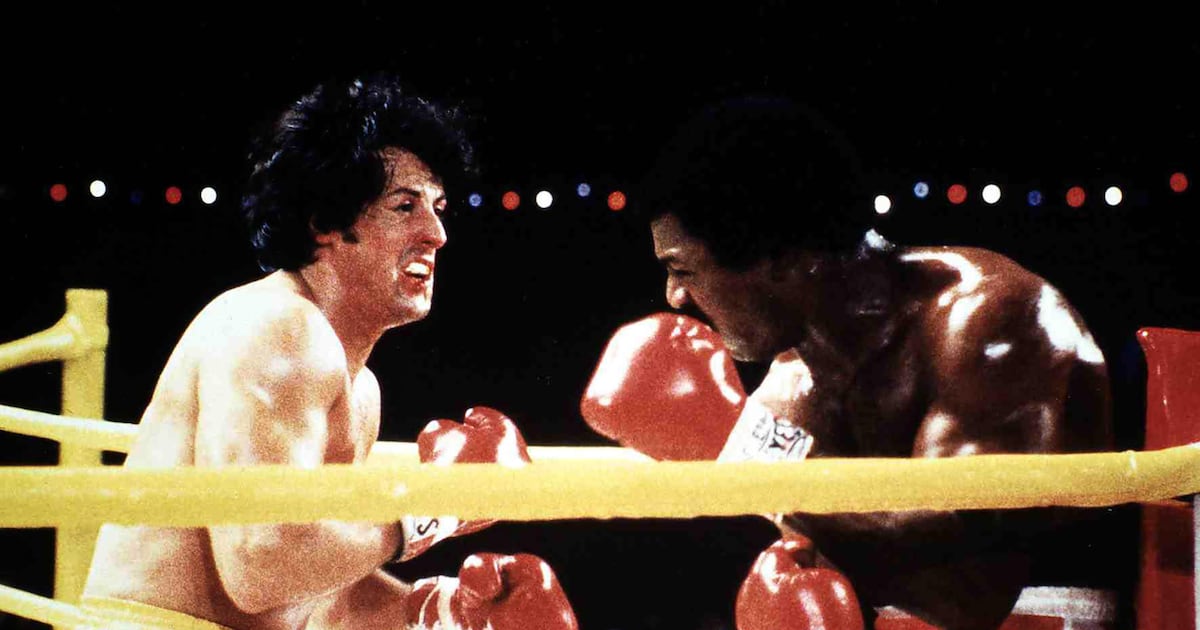
By 1974, Garrett Brown had invented a camera contraption that would revolutionise how action in television, movies and sports was filmed. He just needed to piece together a showreel to convince people about the merits of a device the world later came to know and appreciate as Steadicam. He drove around Philadelphia one day, filming his future wife Ellen on the move so directors might marvel at his new technology. Happening upon the 72 steps leading to the city’s Museum of Art, he decided to capture her clambering to the top and running back down again.Just another clip on a tape labelled “Thirty Impossible Shots”, hopefully sent around to industry honchos, that caught the eye of John Avildsen. Preparing to direct a feature about a palooka named Rocky Balboa, Avildsen hired Brown and his fancy camera and decided his own protagonist should replicate the breathless climb to the museum. When Sylvester Stallone eventually took that route, so little used then there was grass growing between the cracks, he thrust his arms triumphantly in the air in a scene that so quickly became part of popular culture the stones would be known forevermore as The Rocky Steps.Brown’s story, and those of just about everybody associated with the production of this beloved classic, are documented in Mike Sielski’s wonderful new book Going the Distance – Stallone, Philly, and the Story of Rocky. Published to coincide with the 50th anniversary of its release, this is a forensic deep dive into the time, the place and the characters involved in a movie that turned The Rocky Steps into the city’s number one tourist attraction and led to the erection of a statue honouring a fictitious fighter, decades before Philadelphia afforded Joe Frazier a similar monument.“Philadelphia is to fighting what France is to sex,” wrote Jack Smith, one of many legendary columnists in the city’s history, “the place where a primal physical act is elevated to an art form and practised as a science.”READ MOREOpting to locate the story in his hardscrabble hometown was one of many canny moves by Stallone, and, as a long-time sportswriter with the Philadelphia Inquirer, Sielski is perfectly equipped to delve into the mythology surrounding the film and its star. Who knew Sly played polo in his privileged youth and went to college in Switzerland? Details that slightly diminish the Hollywood narrative of the mendicant actor with a wife and new baby who bravely turned down a sizeable sum of money to give up his chance to star in his own screenplay. The exact figure the studio dangled in front of him to walk away varies in his telling; most estimates put it around $250,000.The Rocky statue, which sits at the top of the museum steps, immortalised in the original film. Photograph: James Drake/Getty Images “Rocky: His whole life was a million to one shot,” declared the movie poster, an evocative tag line that might have just as easily applied to how this scrappy production ultimately transformed Stallone’s prospects. Having taken that huge personal financial gamble backing himself to play the star, he became an overnight success after years of toiling so deep in the wilderness he once made a porn film.If his own meteoric rise mirrored the underdog to greatness story depicted on screen, other vital contributors made similarly uplifting exits from relative obscurity. Bill Conti’s unforgettable score added so much, especially over the training and fight montages, but he only got the job because the first choices wanted too much money. His only other gigs that year were providing the music for two student films for free. Once audiences across the world were suitably inspired by Gonna Fly Now and he was nominated for an Oscar, Conti became a go-to guy in Hollywood for film and television themes for decades.Sielski unearths umpteen fascinating yarns surrounding the film. A young Susan Sarandon was deemed too hot for the role of Adrian. Actual heavyweight champion Ken Norton almost played Apollo Creed. Carl Weathers, the one-time NFL prospect who did, hated Stallone so much that their enmity caused some of the fight rehearsals to be laced with unscripted venom. He demolishes too the old canard that Sly trained so hard and well he had reached the level of a pro boxer. As if.Sylvester Stallone in a still from Rocky, 1976. Photograph: United Artists/Getty Images “Hey, get rid of that ending, and you’ve got yourself a brilliant movie,” advised the novelist Ray Bradbury after watching an early print.Wise counsel. The original finale had Rocky and Adrian walking down a corridor as Creed and his entourage celebrated in the ring. Deemed too defeatist for a post-Watergate United States desperately seeking a shot at redemption, they changed it to the star-crossed lovers reuniting in the chaos inside the ropes, Balboa’s face battered as he cries out her name. Those 15 rounds changed their lives forever and fired up the imaginations of watching millions, causing this shadowboxing kid in Cork to sneak into his mother’s kitchen, crack raw eggs into a glass and fail miserably to quaff them straight.Stallone as Rocky alongside his trainer Mickey Goldmill (played by Burgess Meredith). Photograph: United Artists/ Getty Images Days after the release, Irwin Winkler read Vincent Camby’s vicious takedown of the film in The New York Times while standing outside a cinema in Manhattan. Dismayed and genuinely concerned about the negative impact that Stallone being described as “an unconvincing actor imitating a lug” might have on the box office, he didn’t notice Peter Falk walk out of the showing and sidle up to him.“Forget the review,” said Falk. “Go inside the theatre and listen and look. Everyone is standing and cheering.”Columbo called it.
Fifty years of Rocky Balboa: ‘Philadelphia is to fighting what France is to sex’
Full Article
Original Source
Read the full article at Irishtimes →KhanList aggregates and links to publicly available news content. We do not host full articles from third-party sources. Always verify important information with original sources.