
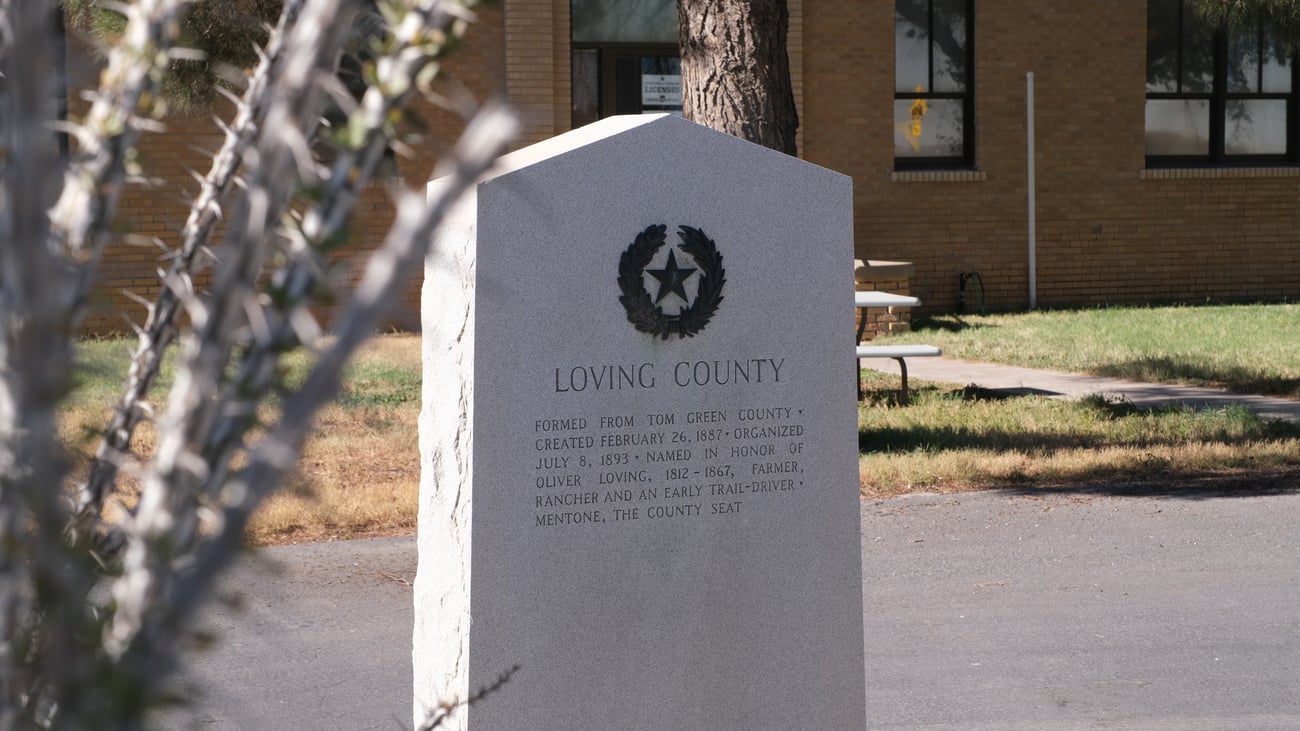
A justice of the peace, a sheriff and a constable say absolute immunity bars damages for a jailing the plaintiffs call voter intimidation.(CN) — Three voters from the least populated county in the U.S. asked the Fifth Circuit Tuesday to revive claims they were victims of an intimidation scheme conceived by local officials whom they characterized as rivals.Attorney Jason Davis, arguing for plaintiffs Matthew Jones, Ysidro Renteria and William L. Jones Carr, recounted that Justice of the Peace Amber King summoned them to a sham juror qualification proceeding in May 2022. There, after swearing they were county residents, King declared them in contempt and ordered them arrested. Constable Brandon Jones and deputies of Sheriff Chris Busse handcuffed them and took them to the Winkler County Jail, where they were held for about five hours. Loving County recorded a population of 64 in the 2020 Census.“The conduct that’s at issue in this case is astonishingly egregious,” Davis told the panel, which included Chief U.S. Circuit Judge Jennifer Walker Elrod and U.S. Circuit Judges Priscilla Richman and Irma Ramirez. Davis said King conspired with the county sheriff and constable to plan the arrests, then drafted contempt orders before anyone appeared and used false pretenses to lure the plaintiffs to a judicial proceeding where no case was called.Elrod stopped him to ask whether the appeal is about secret meetings or what King did once the prospective jurors were sworn. Drafting an order, she said, is not proof of a scheme.“I’m not sure that’s the smoking gun that you wish it to be because a lot of judges do things ahead of time so that if the facts prove it out, they’re anticipating certain things might happen,” said Elrod, a George W. Bush appointee.Davis answered that this was not preparation. He said King is accused of admitting she had decided to arrest the three at least a day before they were summoned, texted that morning saying “it might get wild today” and later could not offer an explanation other than voter intimidation. He relied on Harper v. Merckle, a 1981 Fifth Circuit case finding no immunity where a judge used the office as an offensive weapon and no party had invoked the court. He conceded a prior panel’s holding that the qualification proceeding was a judicial act is law of the case but said a footnote left the conspiracy claim and the contempt-order immunity open.Davis argued the officers cannot hide behind a valid order if they helped obtain it. The constable, a cousin of two of the plaintiffs, told King he wanted them arrested for aggravated perjury — his wife later testified he said so before the hearing.“When the judge uses the judicial office as an offensive weapon to vindicate personal objectives, and it appears that no party has invoked the judicial machinery for any purpose, then it’s not a judicial act,” Davis said. “That’s exactly what we had here.”For the defendants, Daniela Peinado Welsh said the legal question is narrow: “whether a judicial order of contempt is a judicial function.”Contempt, she argued, is a normal judicial act, and claims of malice, premeditation or a bribe do not defeat immunity. She said other remedies ran: King lost reelection, the orders were vacated on mandamus, and the Judicial Conduct Commission publicly reprimanded King. She argued advance decision-making could still be judicial.“If the court is not only rendering an opinion about the order but the decision-making process in advance of that order, we would definitely submit that that decision-making process is a judicial function,” she said.Elrod asked whether a meeting with political allies to gin up a fake proceeding would be judicial. Welsh said a social meeting outside any case would not be. She said that decision is not what the briefs present and the claims against the officers are conclusory.The sheriff, she said, was not in the room, while the shared belief that the plaintiffs were not residents after a 2021 residency law was an error of judgment, which is what immunity protects.Judge Ramirez, a Joe Biden appointee, asked about the complaint’s conspiracy count and whether a plot away from a legal proceeding falls outside a judge’s function. Welsh pointed to circuit precedent that a bribe or advance agreement on an outcome does not strip immunity from a judicial act.In rebuttal, Davis said the complaint is specific, not conclusory, and the civil rights statute’s damages are the point.“If anything, allowing them to be held responsible will create a deterrent for judges to get together with people before court to orchestrate a conspiracy, a scheme to arrest their political rivals,” he said. “That is good public policy.”Richman, the final panelist, is also a George W. Bush appointee. The panel did not indicate when it would rule.Subscribe to our free newslettersOur weekly newsletter Closing Arguments offers the latest about ongoing trials, major litigation and rulings in courthouses around the U.S. and the world, while the monthly Under the Lights dishes the legal dirt from Hollywood, sports, Big Tech and the arts.Additional Reads
Fifth Circuit considers immunity for Texas officials who jailed rivals
Full Article
Original Source
Read the full article at Courthousenews →KhanList aggregates and links to publicly available news content. We do not host full articles from third-party sources. Always verify important information with original sources.