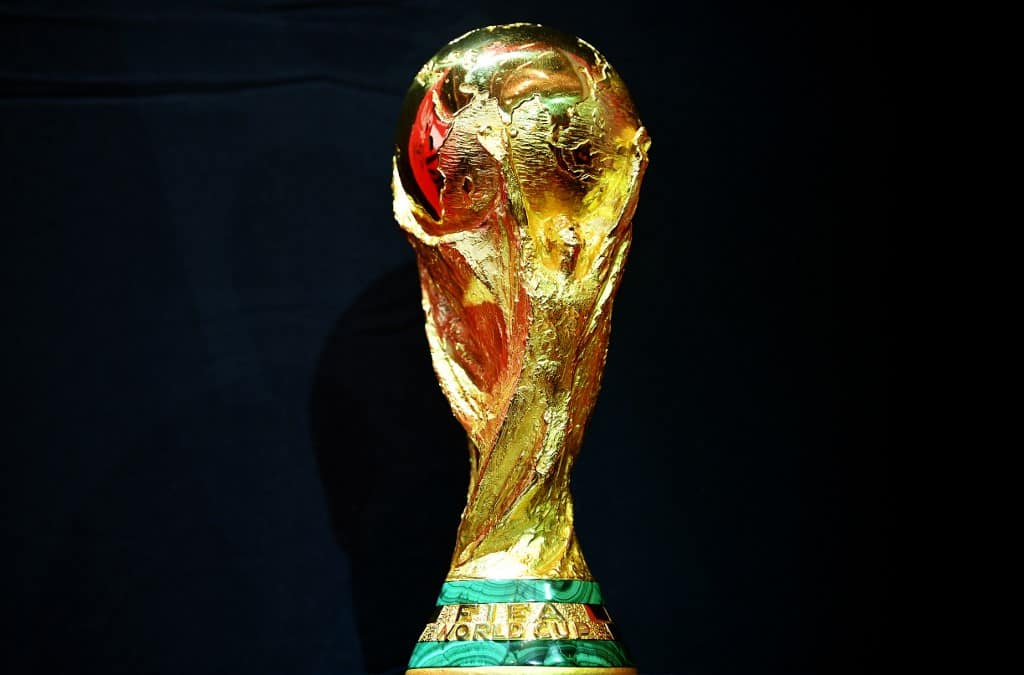
Costa Rica’s football federation has aligned itself with regional pushback against FIFA’s plan to bring private investors into the ownership of its commercial operations, a proposal that carries an offer of roughly $40 million for Fedefútbol and a deadline of September 19 to accept it. In a statement issued Wednesday afternoon from Proyecto Gol, Fedefútbol said it supported the position taken by Concacaf, the regional confederation to which Costa Rica belongs, and reiterated that a matter of this nature should be handled through the appropriate governance processes and bodies. The federation added that it trusted all decisions would be adopted with good governance, sound process and in the best interest of the sport. The letter FIFA President Gianni Infantino sent to member associations setting out the proposal has reached Fedefútbol, but the federation has not yet evaluated it. Its executive committee, led by Osael Maroto, must analyse the document before Costa Rica takes a formal position. The plan Infantino announced on Tuesday centres on a new subsidiary called FIFA Forward Enterprise, which would consolidate FIFA’s commercial rights — broadcasting, sponsorship, ticketing and licensing — together with the operational side of staging its competitions, including the men’s World Cup and the Club World Cup. FIFA said the entity carries an initial equity valuation of about $20 billion, prepared by J.P. Morgan, and that it intends to raise up to $4.2 billion later this year by selling minority, non-controlling stakes of up to 20 percent to what it described as carefully selected long-term investors. FIFA said it would keep sole control of the subsidiary through majority representation on its board, and sole authority over football governance, competitions, the international match calendar and the rules of the game. The money is the mechanism by which Infantino hopes to win over the 211 member associations who must approve the project. Under a new FIFA Fast-Forward Programme, each association would receive roughly $20 million in immediate, exceptional funding for special projects. On top of that, each would receive $20 million through the existing FIFA Forward development programme for the 2027 to 2030 cycle — a figure currently budgeted at $8 million — rising to $22 million for 2031 to 2034 and $24 million for 2035 to 2038. FIFA says the arrangement would lift total football development funding beyond $10 billion. For Fedefútbol, the near-term difference amounts to about $40 million, or roughly ₡18.2 billion at the Central Bank reference rate, against a development allocation that has been running at a fraction of that. The prospective anchor investor is Thrive Eternal, a vehicle launched by Joshua Kushner, whose brother Jared Kushner is a son-in-law of and envoy to United States President Donald Trump. J.P. Morgan is structuring the transaction and is expected to assemble a wider pool of international investors alongside Thrive. Reporting on the leaked plan indicated Infantino was positioned to become commissioner of the new entity once his expected next presidential term ends in 2031; FIFA has denied that this was discussed. The reaction from within football’s own governance structures has been unusually blunt. Concacaf said it learned of the matter through media reports and a subsequent press release rather than through consultation, and that it was deeply concerned by the lack of due process. It said it shared the disappointment of many in the region that a proposal of this level of detail had been designed and made public before any discussion with the relevant governance bodies and stakeholders. Concacaf president Victor Montagliani is one of FIFA’s vice presidents. The Asian Football Confederation issued a similarly critical statement. UEFA said the plan crossed a line football’s governing institutions should never cross, that the soul and governance of the game were not assets to trade, and that the World Cup was not FIFA’s to sell. The English Football Association raised concerns over governance and transparency, and the European Union’s sport commissioner, Glenn Micallef, posted a three-word objection telling FIFA to keep its hands off the game. Infantino defended the project in a video message on Wednesday, describing it as an opportunity rather than an obligation, a proposal and an offer, and the beginning of a consultation process. For Costa Rican readers the calculation has an added edge. The Tricolor did not reach the tournament whose commercial future is now being auctioned. Costa Rica was eliminated from qualifying for the 2026 World Cup in November 2025 after a scoreless draw with Honduras in San José left the team third in its group with seven points, missing out on both a direct place and an intercontinental playoff berth in a cycle that had offered Concacaf its most generous allocation ever. A federation without World Cup revenue depends more heavily on FIFA development transfers, which sharpens the appeal of an offer that would more than double them.It also sits against a governance history that has not fully closed. Eduardo Li, who led Fedefútbol from 2007, was among the officials detained in the Zurich raid of May 2015 that exposed the corruption case known as FIFAGate. He was extradited to the United States that December and in 2016 pleaded guilty in federal court in Brooklyn to three of fourteen counts, covering racketeering conspiracy and wire fraud. Prosecutors accused him of soliciting more than $600,000 in bribes in exchange for broadcast rights to national team matches between 2007 and 2015. Li admitted a $500,000 bribe connected to the transmission rights for Costa Rica’s World Cup qualifying matches, of which he kept $300,000; a separate $500,000 bribe tied to a national team kit deal with an American brand, of which $230,000 reached him through intermediaries in Panama; a further payment relating to the arrangement of friendly matches; and the misappropriation, using false invoices, of $90,000 FIFA had sent for the Under-17 Women’s World Cup Costa Rica hosted in 2014. He agreed to forfeit $668,000. FIFA’s ethics committee banned him from football for life in 2017, and he returned to Costa Rica in December 2018 after time in United States custody and house arrest. That case has resurfaced this month. On July 13, Li filed an extraordinary petition in the Eastern District of New York seeking to vacate his conviction and recover more than $683,000, arguing through his lawyer that the conduct he admitted to does not constitute a federal crime under subsequent United States Supreme Court rulings on the reach of foreign commercial bribery statutes. The filing follows the dismissal in December 2025 of charges against a former Fox executive convicted in the same broader case. Federal prosecutors are due to respond in August. None of that bears on the merits of the current proposal. It is, however, the frame through which a Fedefútbol decision on a multimillion-dollar offer from Zurich will be read at home, because the memory of a federation president trading his office for private payments is not distant history in Costa Rican football. What happens next runs on two clocks. Member associations have until September 19 to signal acceptance. The project itself requires approval from the 38-member FIFA Council, which FIFA says will receive the plans shortly, and from a majority of the 211 member associations, with the decisive vote expected at the FIFA Congress in Morocco next March — the same gathering at which Infantino, now 56, is expected to be re-elected unopposed to a fourth and final term running to 2031. Fedefútbol’s executive committee will decide before then whether Costa Rica votes with its confederation or with the cheque.
FIFA’s Plan to Sell World Cup Stakes Lands on Costa Rica’s Desk
Full Article
Original Source
Read the full article at Ticotimes →KhanList aggregates and links to publicly available news content. We do not host full articles from third-party sources. Always verify important information with original sources.