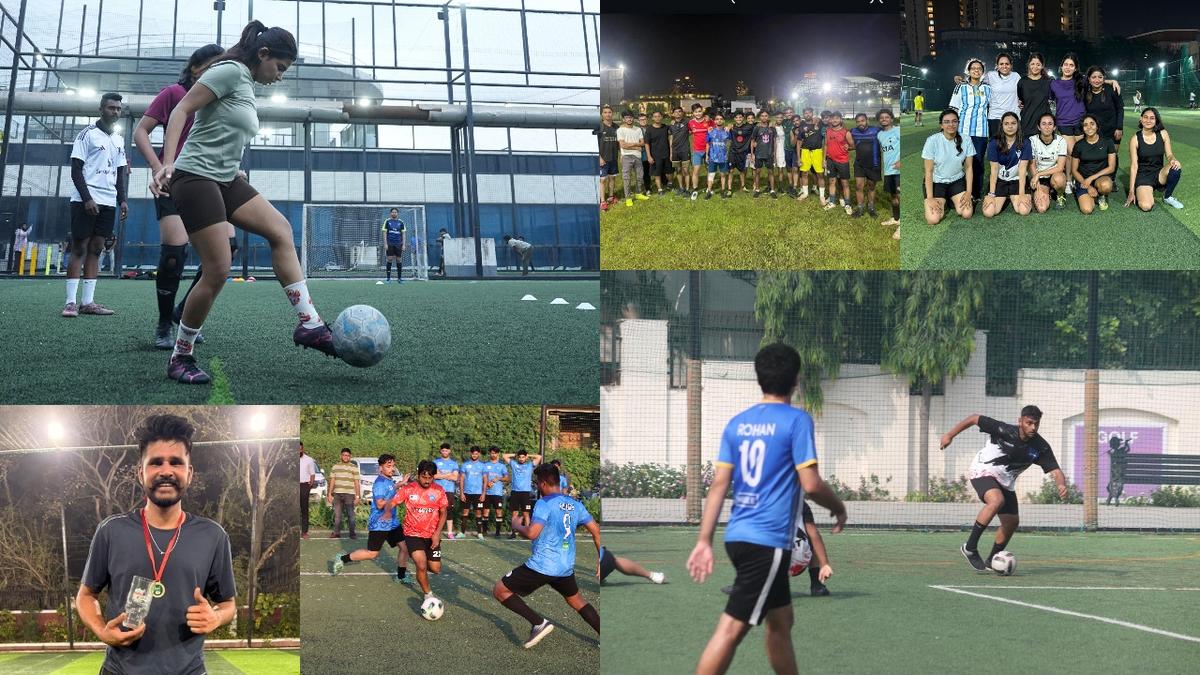
For as long as she can remember, football has been a constant in Noor Rana’s life. Growing up in Delhi alongside her football-crazy elder brother, she never saw the sport as just another spectacle of hero worship, unlike cricket. Football was a shared passion that brought the siblings together at home and on the school playground, defining much of their childhood.As an adult, even as she found her professional calling in aviation, Noor missed the adrenaline rush of kicking the ball. Like most youngsters who struggle to actively pursue sports after school life, football took a back seat in her life, too. Yet, her connection with the game never disappeared. “It’s the closest feeling to the thrill I get from flying an aircraft,” says the 26-year-old flight instructor.Finding her way back to the pitch as an adult became a way for Noor to reclaim a part of herself. Her association with Humans of Football (HOF), a community-driven network that brings together enthusiasts of the game, has given her not only a platform to continue playing but also an opportunity to help create the spaces she once needed. Noor Rana (bottom row, second from right) at a women’s-only game organised by Humans of Football in Delhi. | Photo Credit: Humans of Football On days when turbulent weather conditions keep flight operations grounded, Noor looks forward to hitting the pitch for a practice session. “You don’t have to be a football fan to play the game. All you need is a pair of shoes and the will to show up on the field,” she says.As a part of HOF, Noor oversees the operation of its women’s wing, encouraging more people to enrol, play, and pursue their own football journeys.A space for women to playA non-profit co-founded by Noor’s brother Dev Rana, along with his friends, HOF organises football games for men and women at professional pitches in 16 Indian cities. Anybody above the age of 18 can book a venue or join a game.Set up in 2022 through WhatsApp groups, the community has nearly 60,000 members, comprising mostly Gen Z and millennials. “Our goal is to make football accessible and get as many people in the country to play the game,” says Maulik Parmar, one of HOF’s co-founders. Courtesy Humans of Football HOF has access to 155 turfs across India, where an average of 6,800 members play football every month. These pick-up games are coordinated through nearly 350 WhatsApp groups, organised by region, city or neighbourhood. HOF publishes weekly schedules of pick-up games at professional venues, complete with teams, referees, and scoreboards.Members can book a slot at a venue of their choice for between ₹120 and ₹500 per game, depending on the location. “It is usually difficult for an individual player to rent a football ground, which can cost anywhere from ₹2,000 to ₹12,000 per hour, and assemble a team of 11 players. HOF takes care of all the logistics, allowing players to simply pay their share and focus on playing. We see between 1,700 and 2,000 players on the field every week,” says Parmar. These pick-up games are held weekly, with most taking place on Sundays. Courtesy Humans of Football Regular players also get access to individual statistics, recorded footage on HOF’s Youtube channel and an opportunity to avail training through professional coaches.For women players, the network has focused its efforts on running dedicated academies in Mumbai, Bengaluru and Gurugram, where around 300 women, almost all working professionals or students, learn to play. Noor says these academies have helped create a sense of community that was missing when she was growing up.Noor is not the only one who feels this way. Says Sanchita Bala, 27, an HR professional from Bengaluru, “I had never played football. As a woman, I never had a community or space to play. Even when we are interested, there are no coaches or team members to train with.” When she joined HOF’s Bengaluru chapter five years ago, Bala was often the only woman at pick-up games, and had to play alongside men. Via WhatsApp, HOF publishes weekly schedules of pick-up games at professional venues, complete with teams, referees, and scoreboards. Bala took the initiative to organise demo sessions for women where participants learnt from a professional coach and played for free. Soon, the number of women players increased, and when the academy started in 2025, nearly 30 enrolled. “Once we started playing with each other and got familiar with the structure, we began to enjoy football. When there are mixed games now, we are confident to play alongside men,” she says. The women-only games are held every Sunday and have a turnout of 80-90 women in a month. Courtesy Humans of Football Creating an ecosystemHOF emerged from the chronic shortage of infrastructure for football enthusiasts. Even in sprawling metropolitan centres such as Delhi NCR, Mumbai and Bengaluru, the scarcity of quality playing spaces has stunted the sport’s commercial growth, leaving it trailing far behind cricket.Every FIFA World Cup season, as conversations inevitably turn to India’s absence from football’s biggest stage, Parmar remains optimistic. He believes that initiatives like HOF can spark a broader conversation about the need for quality sporting infrastructure and grassroots investment, laying the foundation for an ecosystem that nurtures talent and shapes the future of Indian football. Courtesy Humans of Football For the naysayers who dismiss the state of women’s football in India, Noor offers a quiet but persistent reminder through the WhatsApp groups: Indian women have been playing the game for decades. Her messages often end with little-known facts about the Indian women’s national football team, nicknamed the ‘Blue Tigresses’, who finished runners-up at the 1980 AFC Women’s Championship — years before the women’s game began receiving mainstream attention in the country.In the meantime, Noor takes pride in the fact that the football pitch that forged an unbreakable bond between the siblings has grown into a community where thousands of men and women have rediscovered a forgotten part of themselves. “All it takes is one evening, one city and one turf at a time,” she says with a smile.The writer is an independent journalist and researcher based in Mumbai.
FIFA World Cup | How a young WhatsApp community in India is helping adults rediscover football
Full Article
Original Source
Read the full article at Thehindu →KhanList aggregates and links to publicly available news content. We do not host full articles from third-party sources. Always verify important information with original sources.