
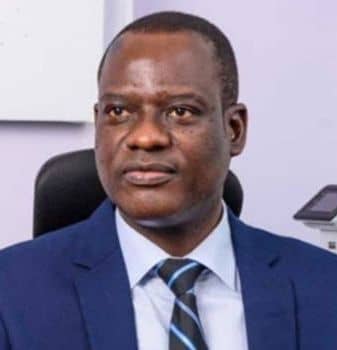
Targets single-digit inflation by end of 2027, budget ready December•Okays East, West super grids to raise transmission capacity to 19,000MW Moves to fortify airports against Ebola, other pathogens•Approves N594.49bn for eight road projects nationwide•Makinde: Tinubu, APC mortgaging Nigeria’s future Deji Elumoye and Chuks Okocha in Abuja The federal government yesterday defended its proposed $21.7 billion external borrowing plan, insisting that the funds would finance productive investments in infrastructure and other critical sectors to stimulate economic growth, strengthen national productivity and improve living standards. The Minister of Finance and Coordinating Minister of the Economy, Taiwo Oyedele, said the proposed financing should be assessed based on the assets to be created and the economic returns expected, rather than simply as an addition to the country’s debt burden. Oyedele spoke after the Federal Executive Council (FEC) meeting presided over by President Bola Tinubu at the State House, Abuja, amid criticism of the borrowing plan by former Vice President, Atiku Abubakar, as well as the presidential candidate of the Nigeria Democratic Congress (NDC) in the 2027 election, Peter Obi. Oyedele maintained that the proposal was a financing plan and did not mean the federal government had already borrowed the money or would necessarily draw down the entire amount. “Altogether, if you convert the euro amount and add it to the dollar amount, it will come up to $21.7 billion. First and foremost, this is a plan. It doesn’t mean that we have borrowed. It doesn’t even mean that we borrow all of it. So it’s a plan. The average lifespan of the projects under this plan is five years. This qualifies as investment. This is investment, not borrowing,” Oyedele pointed out. The proposed financing comprises $20.52 billion and €1.045 billion for projects and programmes covering transportation, security, healthcare, agriculture, energy, digital infrastructure, education and social protection. The government said transportation infrastructure accounts for approximately $10.6 billion, including major projects such as the Sokoto-Badagry and Lagos-Calabar highways and the Kano-Kaduna rail project. Oyedele said the government was pursuing financing from multilateral and bilateral development partners, alongside other sources, to implement the projects.Besides, about $7.9 billion is expected from multilateral and bilateral partners, with the World Bank among the major institutions providing support. Oyedele said a $5 billion World Bank component would attract concessional financing at an average interest rate of about 2.1 per cent, while some social-sector loans would carry interest rates of around 2 per cent. He said the government was prioritising favourable financing terms to reduce borrowing costs and ensure that the projects delivered lasting economic benefits. Government Targets Single-digit Inflation Rate The minister also disclosed that the federal government was targeting single-digit inflation by the end of 2027, as it intensifies efforts to stabilise prices and sustain economic growth. He said inflation had declined to 14.63 per cent in September from 20.98 per cent in the corresponding period of the previous year, after peaking at about 34 per cent. According to him, FEC resolved to intensify efforts to bring down prices, particularly food prices, while sustaining investments in infrastructure, human capital development and job creation. Oyedele disclosed that Nigeria’s foreign reserves had risen above $55 billion, the highest level in 18 years, while net reserves had increased to more than $45 billion from less than $1 billion three years ago. He put economic growth at 4.43 per cent in the second quarter, compared with 2.74 per cent in May 2023.The minister added that the tax-to-GDP ratio had risen from about seven per cent in 2023 to 12.5 per cent by the end of 2025, while the debt-service-to-revenue ratio had declined from 97 per cent to below 60 per cent. Oyedele also defended the removal of petrol subsidy, arguing that the previous arrangement placed an unsustainable burden on public finances and constrained the government’s ability to invest in infrastructure and essential services. He said Nigeria had increased petrol prices about 3,050 times in 50 years without resolving the underlying subsidy problem, adding that the government had introduced interventions to cushion the impact of economic reforms on vulnerable Nigerians. According to him, more than 10 million households had received over N600 billion in cash transfers, while the Nigerian Education Loan Fund had disbursed N372.6 billion to more than 1.5 million students. He added that more than 800,000 micro, small and medium-sized enterprises had benefited from subsidised loans at single-digit interest rates.The minister further said low-income earners making up to N100,000 monthly were exempt from personal income tax, while businesses with annual turnover of up to N100 million were exempt from corporate income tax, value-added tax and withholding tax under the relevant tax reforms. He also disclosed that the Nigerian capital market had grown from about N30 trillion to more than N160 trillion, expressing optimism about the naira’s outlook on the strength of improved foreign reserves and other economic fundamentals. Uzoka-Anite: 2027 Budget Ready by December The federal government also said it was working towards presenting the 2027 budget before the end of the year to allow the National Assembly sufficient time to consider the proposed fiscal framework ahead of the next financial year. The Minister of State for Budget, Doris Uzoka-Anite, disclosed this while briefing journalists after the FEC meeting. “We are working on the 2027 budget, and our intention is to present it before the end of the year,” she said. Further details of the proposed budget, including its overall size, revenue projections, deficit estimates and allocations to key sectors, are expected to emerge as preparations progress. FG Begins Procurement for East, West Super Grids Similarly, the federal government has approved the commencement of procurement for the proposed East and West Super Grids as part of efforts to expand electricity transmission capacity from about 5,000 megawatts to 19,000MW within two years.The Minister of Power, Joseph Tegbe, who disclosed this after the FEC meeting, said the projects would strengthen the national grid and enable more electricity to be transmitted to consumers. He said the government had also approved three major interventions to reinforce transmission infrastructure around Abuja and Lagos, while accelerating efforts to clear more than 300 containers of electricity equipment stranded at the nation’s ports.The first approval covers the construction of a 33kV double-circuit underground and overhead line linked to the Katampe Transmission Substation, which serves the North-Central region. The second involves the design, manufacture and supply of three 300MVA, 330/132/33kV power transformers for the Ikeja West Transmission Substation, a critical facility supplying the Lagos axis. The third project entails the reconstruction and upgrade of the 35.6-kilometre Itumola-Mapasin-Shagamu 132kV single-circuit transmission line to a double-circuit line to accommodate rising electricity demand along the Lagos-Shagamu corridor. Tegbe said the projects formed part of the government’s broader strategy to improve transmission infrastructure, stabilise electricity supply and maximise the use of existing power-sector assets. He disclosed that the ministry had commenced a nationwide technical audit of electricity infrastructure, dividing the country into three major energy zones: Lagos and its surrounding industrial corridor; the Abuja-Kaduna-Kano axis; and the Enugu-Onitsha-Benin axis. According to him, the audit, which began four weeks ago, would identify ageing and weak infrastructure requiring replacement or rehabilitation to improve the reliability of the national grid. The minister also restated that the government had paid N1.23 trillion out of the N3.3 trillion owed to gas suppliers and other stakeholders, adding that the outstanding liabilities had contributed to difficulties in ensuring adequate gas supply to power generation companies. He said the government was working to improve the operational efficiency of the Transmission Company of Nigeria (TCN) and the Nigerian Independent System Operator (NISO) particularly in coordinating grid management and infrastructure development. Tegbe explained that separating system operations from transmission infrastructure management was intended to improve efficiency, response times and coordination across the electricity network. He added that the government was reviewing options for greater private-sector participation in electricity asset management to improve performance and ensure better utilisation of existing infrastructure. On the super grids, Tegbe said the projects would strengthen transmission links across the northern and southern parts of the country, connecting Sokoto through Abuja and other locations to parts of the South. He said Tinubu had approved the commencement of the procurement process, describing the initiative as a significant step towards building a more resilient electricity network capable of supporting future demand. Tegbe also announced that construction had commenced on a new National Control Centre (NCC) in Osogbo to replace the existing facility, which he said was built 64 years ago. The new centre is expected to strengthen the monitoring and management of the national grid.He further disclosed that the government was energising completed transmission substations in Kano, Katsina, Bauchi and Gombe, among other locations, to bring idle infrastructure into service. The minister said the government was also expanding access to electricity through solar mini-grids, particularly in institutions and locations facing transmission constraints. According to him, at least 14 federal universities had received installed and energised solar mini-grids, with capacities ranging from one megawatt to five megawatts. Another 11 universities were being supported through the Tertiary Education Trust Fund, bringing the number of institutions covered by the programme to nearly 30. He stated that five teaching hospitals were also benefiting from solar power installations being implemented in collaboration with the Federal Ministry of Health.On the backlog of electricity equipment stranded at the ports, Tegbe described the situation as unacceptable, saying some containers had reportedly remained uncleared for between 14 and 20 years. He said the president had directed the ministry to work with the Nigerian Ports Authority (NPA) and the Nigeria Customs Service (NCS) to clear more than 300 containers containing electricity equipment. Tegbe attributed the prolonged delay to the failure of previous administrations to settle outstanding charges and complete the necessary clearance processes. FEC Approves N45.8bn Disease Surveillance System In the same vein, FEC has approved N45.8 billion for a biosecurity and disease surveillance system at five international airports to strengthen Nigeria’s capacity to detect Ebola and other dangerous pathogens at its borders. The Coordinating Minister of Health and Social Welfare, Prof. Ali Pate, disclosed this after the meeting, saying the project would be implemented under a 20-year public-private partnership concession awarded to BioHealth Consortium following the council’s approval of its full business case.Pate described the initiative as a major investment in Nigeria’s health and economic security, warning that infectious disease outbreaks could disrupt economic activities and threaten public safety. “Over the last two weeks, I think you realise the significance of enhancing biosecurity at our points of entry. Since COVID, we have known that there are significant vulnerabilities in terms of public health threats crossing borders and the need for coordinated, technology-driven systems for early warning, detection and response to emerging infectious disease threats,” he stressed. The surveillance system will be deployed at the Murtala Muhammed International Airport, Lagos; Nnamdi Azikiwe International Airport, Abuja; Mallam Aminu Kano International Airport, Kano; Port Harcourt International Airport; and Akanu Ibiam International Airport, Enugu. According to Pate, more than 18 million passengers pass through Nigeria’s airports annually, making effective surveillance at points of entry critical to national health security. Under the concession arrangement, the private-sector partner will design, finance, build, operate and maintain the facilities throughout the concession period, while the federal government will provide policy, institutional and regulatory oversight. The assets will revert to the federal government at the end of the concession in line with the agreement reviewed and endorsed by the Infrastructure Concession Regulatory Commission (ICRC). He said the project will incorporate wastewater surveillance to detect pathogens associated with aircraft, air and surface sampling equipment, and technologies for monitoring cargo and baggage. It will also establish a National Surveillance Operations Centre to coordinate real-time monitoring, integrate data, track incidents and support rapid responses to suspected outbreaks. The facilities will include modern laboratories for rapid diagnostics at points of entry, with their operations integrated with those of the Nigeria Centre for Disease Control and Prevention, Port Health Services, the Nigeria Customs Service (BCS), the Nigeria Immigration Service (NIS) and the National Agency for Food and Drug Administration and Control (NAFDAC). Pate said the project was partly informed by lessons from Nigeria’s recent response to the Ebola threat. He disclosed that Nigeria had maintained surveillance and containment measures before confirming an imported Ebola case in October. The patient had recovered after receiving treatment in Nigeria and was continuing to improve in her home country, he added. The minister, however, warned that the threat remained, given the continued spread of Ebola in the Democratic Republic of Congo and the possibility of other infectious diseases entering Nigeria. Umahi: Eight Road Projects Worth N594.49bn Get Nod FEC has also approved eight road projects worth N594.49 billion across the country, while Nigeria and four other West African countries are pursuing financing from the African Development Bank (AfDB) for their respective sections of the proposed 1,028-kilometre Lagos-Abidjan highway.The Minister of Works, Dave Umahi, disclosed this after the meeting, saying the approved projects had contract sums ranging from N11.33 billion to N209 billion, alongside remedial works on deteriorated sections of the East-West Road. He listed the projects to include the 18-kilometre Amaseri Road, from Ishagu to Otakot on the Enugu Expressway, awarded at N20.257 billion.The council also approved N11.33 billion for the third phase of the Umuahia-Bende-Afikpo Road in Abia State, with about five kilometres remaining under the federal government’s scope. Umahi explained that the project had previously been funded under the NNPC tax-credit scheme, but work stalled after the funding arrangement was discontinued. The project was subsequently rescoped, while the Abia State Government undertook to construct the remaining 43 kilometres, he said.In Kogi State, the council approved N160 billion for the reconstruction of the 95-kilometre E2K-Okey-Ampa-Otopa Road. It also approved N209 billion for the 81.1-kilometre Ado-Ekiti-Ijan-Ilumoba-Ikole Road in Ekiti State, including a bridge. The contract was awarded to CBC. Other approvals include N28.218 billion for the 17-kilometre Sokoto-Illela Road, Route A1, awarded to Kespeko Global Limited, and N62 billion for a 30-kilometre road linking Adamawa and Taraba states, with five bridges. The latter contract was awarded to WeChina Nigeria Limited. The council further approved N89.2 billion for the 47-kilometre Bichi Ring Road, including a flyover, and N14.486 billion for the eight-kilometre Dikko-Maje link road connecting to the Suleja-Minna Road. The respective contractors are Lara Lake and MW Resources Limited. On the East-West Road, Umahi said the council considered remedial works on sections that had deteriorated partly because the road was constructed years ago and now lies below flood level. He said ministers from Nigeria, Benin Republic, Togo, Ghana and Côte d’Ivoire would meet on Friday to discuss financing arrangements for the regional highway, with him chairing the meeting. Under the proposed arrangement, the AfDB would provide funding to participating countries to develop their respective sections of the transnational corridor, although the financing remains subject to the outcome of the discussions and the bank’s arrangements. Nigeria’s section, stretching from Tincan Island in Lagos to the Seme border with Benin Republic, covers 79 kilometres. The other sections comprise 89 kilometres in Togo, 576 kilometres in Ghana, 155 kilometres in Côte d’Ivoire and 128 kilometres in Benin Republic. Makinde: Tinubu, APC Mortgaging Nigeria’s Future Meanwhile, the Makinde-Daura Presidential Campaign Organisation has condemned the continued resort to foreign borrowing by Tinubu, cautioning that he’s deliberately mortgaging the sovereignty and future of the nation. In a statement by the Director Strategic Communications, Richard Ihediuwa, the group vehemently rejected the latest loan 80 days to a crucial election that it said will ultimately remove him from office in May, 2027. ‘’We are deeply concerned that these loans are repeatedly justified under the omnibus of funding infrastructure, critical projects and budget deficits, yet Nigerians cannot point to commensurate projects or has this successive borrowing been able to adequately fund Tinubu’s three overlapping budget cycles, raising the question as to where monies have gone. ‘’This malignant debt cancer and insatiable appetite for foreign loans have reached alarming proportions that every well-meaning Nigerian should fear for the nation’s future as Tinubu’s government relentlessly accumulates domestic and external debts with neither commensurate development, transparent utilisation nor a credible repayment plan,’’ the campaign office said. Ihediuwa said that this new request has reinforced the fear that Tinubu is burying Nigeria by installment. ‘’In June 2023, President Tinubu secured a $750 million World Bank loan under the Power Sector Recovery Performance programme to improve electricity supply nationwide. Ironically, Nigerians continue to endure crippling darkness, to the extent that the Aso Rock Villa is powered by a solar plant. ‘’That same month, another $500 million was borrowed for institutional strengthening and women’s empowerment. Where is the money, how many women have benefited, and where is the impact? ‘’In July 2023, the President secured another $800 million for Conditional Cash Transfers, followed by a further $700 million in September.‘’In June 2024 President Tinubu borrowed $2.25 Billion for “Reforms for Economic Stabilization to Enable Transformation and Accelerating Stabilisation and Resilient Growth”. Today, the economy is not only atrophied, it is also neither transformed nor stabilised. ‘’In 2025, President Tinubu borrowed another $1.57 billion for healthcare, education and human-capital development, alongside another $500 million from the African Development Bank later that year. ‘’In 2025, the Senate approved an extensive borrowing plan involving $21.19 billion, €4 billion and ¥15 billion. Included was $3 billion earmarked for the Eastern Railway Corridor linking Port Harcourt to Maiduguri. Yet the corridor remains a question mark for Nigerians awaiting tangible progress as it remains as moribund as ever. ‘’In April 2026, the Senate approved $6 billion for modernizing our ports alongside another $1.5 billion for early-childhood development and household prosperity. What a bitter irony of a beautiful caption in Nigeria where millions of households struggle to afford food, while battling a devastating out-of-school-children crisis. And now comes another colossal borrowing request of $20.52 billion and €1.045 billion,’’ the group recalled. The Makinde/Daura campaign cautioned that Tinubu is steering Nigeria towards the fate of Egypt under Khedive Isma’il (1863-1880) whose dependence on foreign loans and extravagant spending drove Egypt into bankruptcy with devastating consequences on the sovereignty of that nation. He said that it was unfortunate that at his age, Tinubu is leaving a legacy of ‘debt and enslavement’ rather than productive investments, prosperity, and economic stability.
FG Defends $21.7bn Loan, Says Funds Meant for Productive Ventures
Full Article
Original Source
Read the full article at Thisdaylive →KhanList aggregates and links to publicly available news content. We do not host full articles from third-party sources. Always verify important information with original sources.