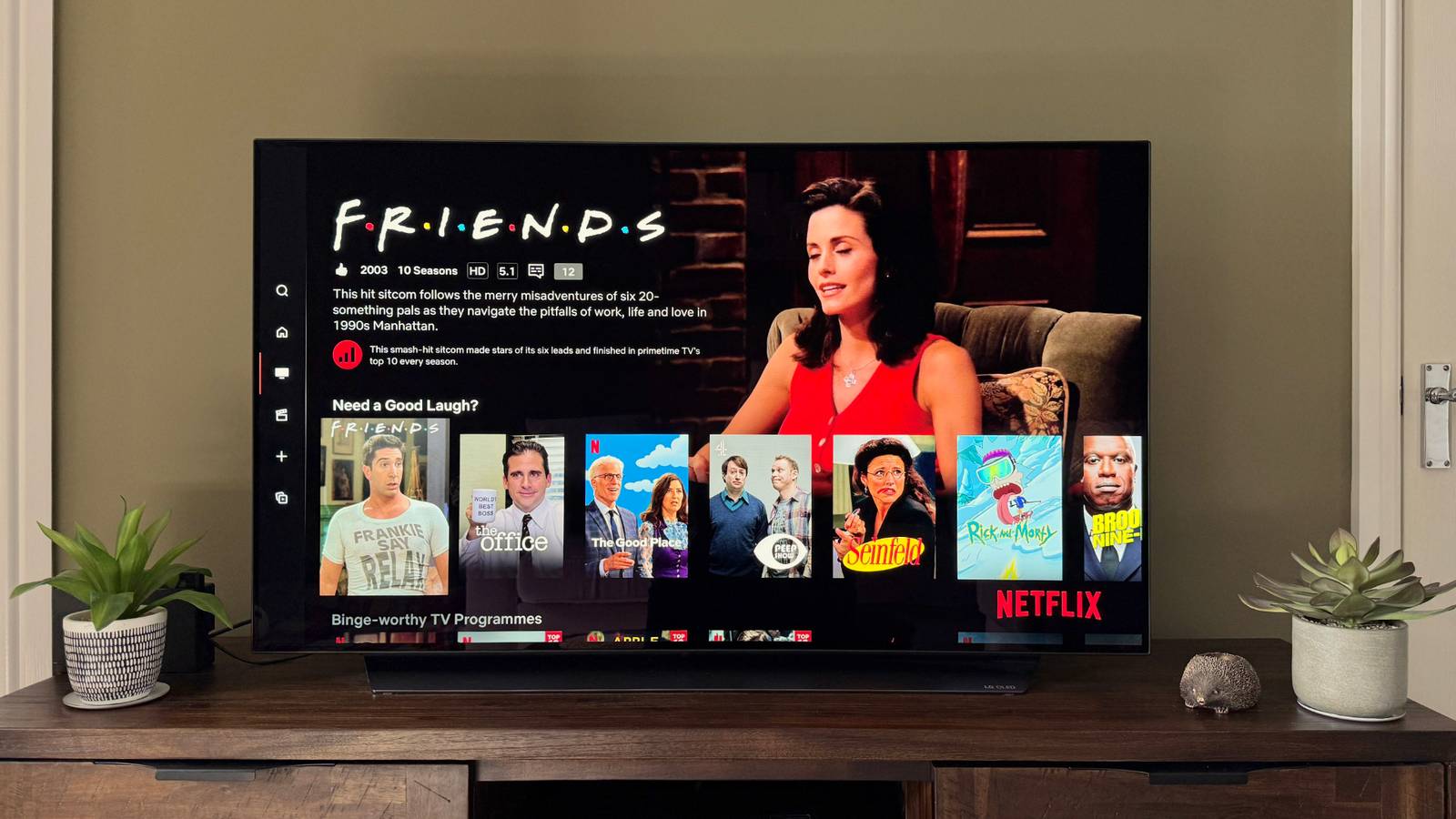
Published Aug 19, 2026, 9:30 AM EDT Aggy is a veteran writer and editor in the technology and gaming space. Having served as a Managing Editor for high-traffic digital publications, alongside being an editor and consultant for over a dozen sites. Aggy's published work spans a wide and respected array of tech and gaming outlets, including WePC, Screen Rant, How-To Geek, Android Police, PC Invasion, and Try Hard Guides. Beyond editorial work, Aggy's direct experience in the tech sphere extends to app development. Aggy has published two games under Tales and is always eager to learn and do more. He also likes working on computers and researching in his spare time. He knows about Windows, Linux, Audio, Video, and much more. Most people have a mental model of how the internet works that stops at the app level. That picture isn't wrong exactly, but it leaves out something doing the hardest part of the work across almost every one of those platforms. FFmpeg powers most of the digital media you interact with daily, and it has been around longer than most of today's streaming giants. What's great is that version 9.0 just released. Small teams build what major apps run on Billions of people stream movies, upload clips, jump on video calls, and queue up music every single day without ever thinking about what's actually doing the work underneath. Everyone has FFmpeg to thank for running the world. It's an open-source framework that runs the show behind almost every digital media experience on the planet. When you watch something on Netflix, scroll through YouTube, hop into a Discord call, or hit play on Spotify, you're touching code that's maintained by a relatively small group of volunteer developers. VLC, which has a reputation for playing literally any file you throw at it, owes that ability largely to FFmpeg's libavcodec library doing the decoding work under the hood. HandBrake, the popular video transcoder, is essentially a friendly interface sitting on top of FFmpeg's core functions. OBS Studio ships with FFmpeg's library binaries built right in to handle capture, output, and hardware-accelerated encoding. Even Nextcloud uses it in the background to generate video previews and thumbnails when you upload or browse files. The scale of all this is hard to wrap your head around. YouTube built its early transcoding pipeline on FFmpeg to deal with the enormous variety of formats people were uploading. Netflix uses it today to encode millions of titles for hundreds of millions of subscribers worldwide. It's critical infrastructure running at a scale that's hard to match anywhere else in software. Yet, it's mostly maintained by unpaid volunteers, which means some of the most valuable and profitable tech companies on earth are leaning on something nobody's actually paying to keep running. The new update makes video processing much faster GPUs now handle the heavy work instead of your processor Credit: Jasin Boland/Netflix FFmpeg 9.0 shifts heavy multimedia workloads off the CPU and onto the GPU wherever possible. One of the first things you'll notice is built-in support for animated WebP files. Older versions of FFmpeg had to lean on external libraries like libwebp to handle them, which was clunky and inefficient. That dependency is now gone. FFmpeg 9.0 can pull apart an animated WebP file directly, break it into individual frames, and hand those frames off to its internal decoder without any outside help. While this can work for Linux, for anyone editing video on Apple hardware, the cool part is hardware-accelerated decoding for Apple ProRes RAW through VideoToolbox. Now those decode operations get handed off to Apple's media engine chips. On Apple Silicon specifically, this is even better because the CPU and GPU share the same memory pool, so there's no need to shuffle pixel data between them at all. The biggest theme running through FFmpeg 9.0, though, is Vulkan. The new v360_vulkan filter moves 360-degree and spherical video processing entirely onto the GPU, which matters a lot when you're working with 8K immersive content that used to grind CPUs to a halt. When you pair this with other Vulkan-based filters, decoded frames can stay in GPU memory from start to finish, never touching the CPU or crossing the PCIe bus. Beyond Vulkan, NVIDIA users get a new CUDA filter for rotating and transposing footage directly in video memory, and AMD hardware picks up frame-rate conversion and video quality tools through updated AMF support. FFmpeg matters way more than people realize Nothing else can actually replace it Credit: Amal Mathew via YouTube. Most people's experience with digital media starts and ends with an app. You tap play, the video loads, it looks great. The project doesn't ship a slick application you can download and click around in. What it actually puts out is source code and command-line tools, the kind of stuff where you're typing arcane strings of text into a terminal window and praying something happens. For anyone who isn't a developer, that world feels like a relic from a different era. Reddit threads and Stack Overflow are full of regular people trying to figure out the most basic conversion commands, which only reinforces the idea that FFmpeg is some obscure hobbyist tool instead of anything that matters at scale. The gap between a blinking command prompt and a beautifully designed streaming app is so wide that it's easy to assume FFmpeg is some minor footnote. Those commands are usually just a nice coat of paint slapped over FFmpeg doing all the real work underneath. When you're scrolling through TikTok, FFmpeg's libraries are running in the background, handling the transcoding of millions of videos every single day. People mix up being visible with being important, but they're not the same thing. The branded apps get the attention, the press coverage, and the billion-dollar valuations. But underneath all of that sits a complex open-source project kept alive by a relatively small group of volunteers and whatever grant funding happens to come through. What makes FFmpeg especially scary is that there's no real backup plan. There's no commercial alternative waiting in the wings that does everything it does. It runs on virtually every operating system and hardware configuration imaginable, and it has processed more media data than any other piece of software ever written. It even ended up helping NASA process imagery from the Perseverance rover on Mars. The apps on the surface can be replaced by a competitor, but nothing is touching the engine underneath them. This is a wild west of video encoding There's something uncomfortable about how this all adds up. The most widely used media processing software on the planet, touching billions of streams and uploads every day, runs on volunteer labor and occasional grants. That's not a knock on the project itself; it's just scary that if those volunteers quit, big companies would try to take over. Billion-dollar platforms depend on something nobody's actually paying to maintain, and that fragile setup probably deserves more attention than it gets.
FFmpeg 9.0 is here—and it quietly powers half the software you use
Full Article
Original Source
Read the full article at Howtogeek →KhanList aggregates and links to publicly available news content. We do not host full articles from third-party sources. Always verify important information with original sources.