
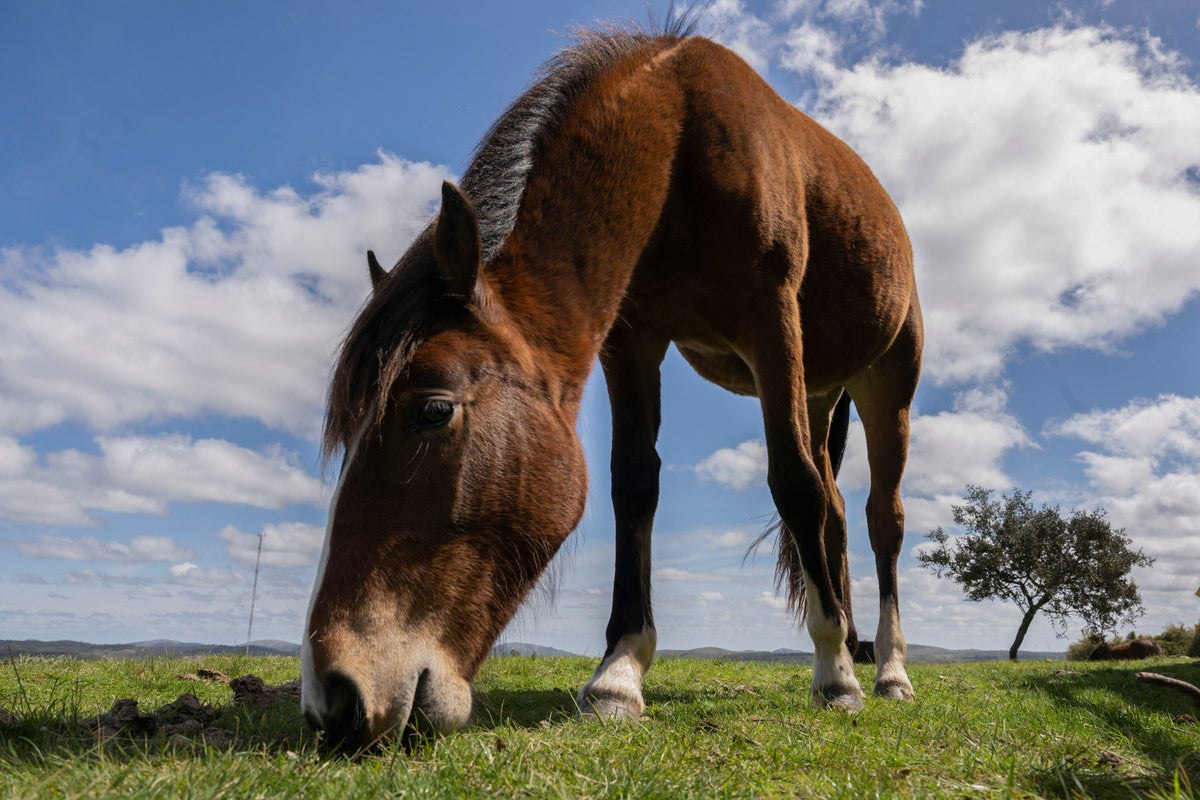
Utah agriculture officials launched an investigation into a feeding source after the death of three horses with several others falling ill. The state’s Department of Agriculture and Food initially received reports of sick horses on one southern Utah farm before getting additional reports this week of other impacted horses in the same area, as well as in Nevada and Arizona. The cause of the death of the horses remains unconfirmed, but the department is testing feed cubes sold at facilities in southern Utah.Laub’s Feeding and Cubing, which provides alfalfa hay cubes and bales, has issued a voluntary recall of its alfalfa hay cubes sold starting October 3.Inspectors have placed a hold on sales of the cubes and are collecting samples from the facility to submit to a U.S. Food and Drug Administration lab for testing.Three horses have died in Utah, prompting an investigation. Agriculture officials are testing feed cubes sold in the state’s southern region (AFP via Getty Images)Final test results are expected within the month. “We are actively investigating, but without test results, we are unable to officially confirm the cause and source of these recent horse deaths,” UDAF State Veterinarian Amanda Price said in a statement.“Out of an abundance of caution, we recommend that horse owners who have purchased hay cubes from Laub’s Feeding and Cubing after Oct. 3 not use the feed,” she said.The Independent’s requests for comment from Laub’s Feeding and Cubing was not immediately returned.Owners should monitor their horses for any signs of neurologic symptoms, which may include depression, colic or incoordination. “Treatment is difficult, but may be effective if given quickly after signs are first noticed,” the department said.Dozens of horse deaths in 2023 were tied to Clostridium botulinum bacteria found in alfalfa hay cubes. The bacteria releases a neurotoxin (CDC)In 2023, the FDA said the death of at least 20 horses in Louisiana had been linked to Clostridium botulinum, the bacteria that causes botulism. Botulism affects humans’ ability to breathe, swallow and speak, according to the Mayo Clinic.The bacteria, which releases a neurotoxin, was found in alfalfa hay cubes and also connected to similar horse deaths in New Mexico, Texas and Colorado.Equine botulism can be rapidly fatal if not treated quickly and aggressively with an antitoxin.Unfortunately, horses are more susceptible to botulism than many other species, University of California-Davis Veterinary Medicine noted.People can prevent equine botulism through properly storing and inspecting forage cubes. Owners should also look out for any decaying vegetation and animal carcasses, as rodents, birds and other animals might carry the toxin.
Feeding cubes under investigation after three horses die and more fall sick in Utah
Full Article
Original Source
Read the full article at Independent →KhanList aggregates and links to publicly available news content. We do not host full articles from third-party sources. Always verify important information with original sources.