
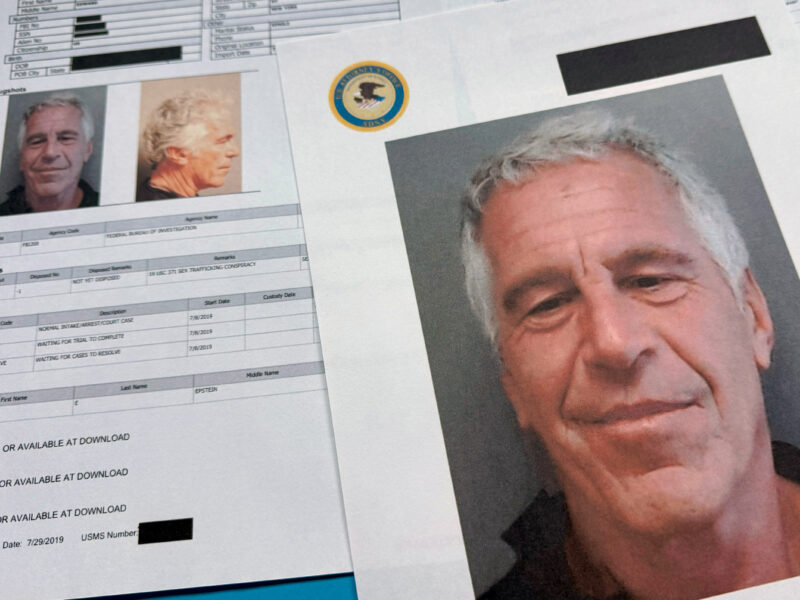
“The public has a right to know what the hell is going on in this case,” a federal judge said after receiving little clarity from the government.WASHINGTON (CN) — A federal judge on Thursday grilled the Justice Department for dragging its feet in turning over further documents mandated by Congress under the bipartisan Epstein Files Transparency Act, warning the government against forcing his hand to start contempt proceedings.Senior U.S. District Judge Emmet Sullivan ordered the Justice Department into court to explain its apparent refusal to provide justifications for certain names being redacted in published documents, the lack of handwritten FBI interview notes and its failure to meet a deadline to publish redactions and their justification in the Federal Register.On April 27, independent journalist Katie Phang filed the lawsuit and asserted the Justice Department was in blatant violation of the Epstein Act, which required an extensive production of documents related to the Justice Department and the FBI’s investigation into Jeffrey Epstein and Ghislaine Maxwell by Dec. 19, 2025.She asserted the government intentionally withheld troves of documents related to President Donald Trump and his connection with Epstein, the late financier convicted of sex trafficking.On June 25, Sullivan ruled the Justice Department had effectively conceded it was in violation of the Epstein Act, granting a preliminary injunction to Phang and ordering the government come prepared to explain its conduct by Thursday’s hearing.The Bill Clinton appointee previously reviewed an initial production of documents by the government in a hearing closed to the public and to Phang, which he did not find adequate to show the government had complied with its statutory obligations.Justice Department attorney Andrew Block provided a second binder of documents at the start of Thursday’s hearing that he suggested was more substantive than the initial production, which Sullivan parsed over rather than close the courtroom.The judge said he had considered scheduling a sealed hearing to directly question the government, but instead opted to review the provided documents later and open his courtroom doors due to the significant public interest.“The public has a right to know what the hell is going on in this case,” Sullivan said. “The victims have a right to know and the court has a right to know.”Block struggled to provide any details in response to the judge’s questions about the government’s justification for the redactions made in published documents, or provide any timeline for publishing in the Federal Register — much to Sullivan’s frustration.According to Block, many of the FBI interview notes had been deemed “duplicative” and thus did not need to be published again, but could not provide further details as to how that determination was made.The judge reminded Block that he was there as a representative of the Justice Department and that he knew what questions would come up in advance, suggesting Block should consider calling whoever could provide specific answers.Block maintained that, because the case was still at a preliminary injunction stage, the government should be provided the “presumption of regularity” — a legal doctrine affording the executive branch the assumption it has acted in good faith, which has fallen out of favor under the Trump administration. He argued the government was working to comply with his order, but suggested Sullivan could clarify what was required in an additional order.Sullivan said his initial order and its deadlines still stand, asking whether the government wanted him to issue another that says, “I really mean it this time?”Emily Gilman, of the Public Integrity Project and representing Phang, argued the government was dragging its feet in an effort to avoid complying with the Epstein Act and the court’s order, suggesting Sullivan at least order an explanation on the FBI interview notes and their duplicity.After a lengthy recess, Sullivan asked Phang’s team to provide a proposed order regarding the FBI notes and the required redaction justifications to the Federal Register. He added he would pursue a sealed review of the FBI notes and a declaration from the Justice Department regarding its compliance.He then recounted the last time he — or any judge in D.C. federal court — held Justice Department attorneys in contempt of court, emphasizing his desire to not go back down that road again.In the 2008 corruption trial against former Alaska Senator Ted Stevens, Sullivan held three senior government prosecutors in contempt for prosecutorial misconduct after they failed to provide exculpatory evidence to the defense. He described how an FBI whistleblower revealed the existence of over 30 documents that should have been shared, which he described as “alarming.”While the attorneys ultimately provided the information and purged the contempt, Sullivan noted that stain was on their permanent record and advised the government to keep that in mind.“I don’t want to do it, but I will do it to ensure justice is fairly administered,” Sullivan said. “That’s not a threat, that’s a promise.”Chief U.S. District Judge James Boasberg found probable cause for contempt in a case last year regarding the Trump administration’s sudden deportation of over 200 Venezuelan men to a Salvadoran prison in the middle of an emergency hearing.There, Boasberg similarly struggled to get a straight answer from the Justice Department, but the D.C. Circuit ultimately blocked him from any contempt proceedings.Subscribe to our free newslettersOur weekly newsletter Closing Arguments offers the latest about ongoing trials, major litigation and rulings in courthouses around the U.S. and the world, while the monthly Under the Lights dishes the legal dirt from Hollywood, sports, Big Tech and the arts.Additional Reads
Feds struggle to explain redactions in Epstein files compliance case
Full Article
Original Source
Read the full article at Courthousenews →KhanList aggregates and links to publicly available news content. We do not host full articles from third-party sources. Always verify important information with original sources.