
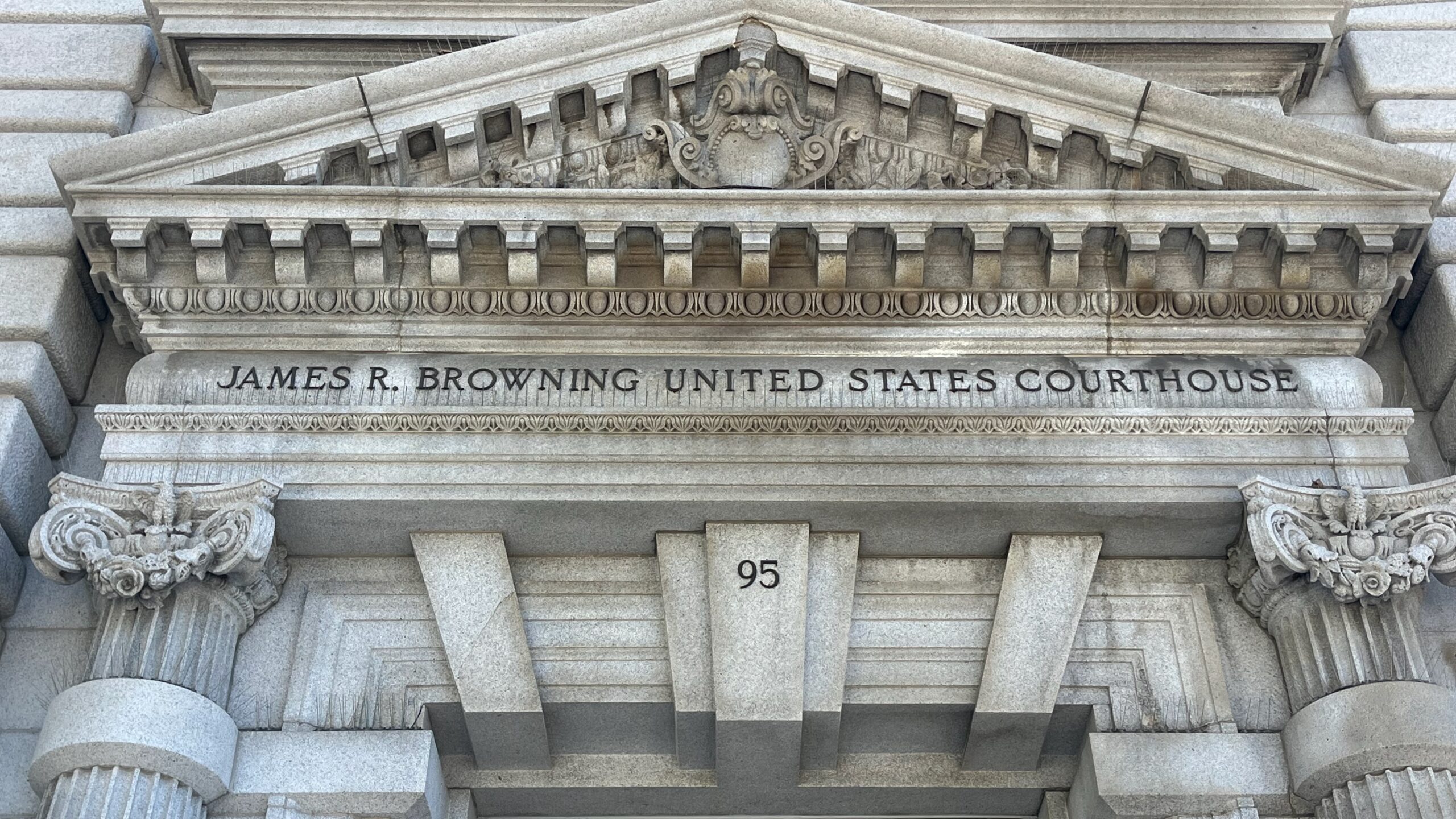
The fired U.S. attorney argued Trump lacks the authority to fire court-appointed attorneys.(CN) — The Trump administration on Friday told a Ninth Circuit panel that the president acted within his authority when he fired Roger Rogoff less than an hour after he was sworn in as U.S. attorney for the Western District of Washington this past summer.“We’re here this morning on a basic question, which is whether a court-appointed United States attorney, like any other United States attorney, can be removed by the president,” said Mark Freeman, a Justice Department attorney. “And the district court’s answer to that question was no. Now, as a constitutional matter, that conclusion is impossible to reconcile with Supreme Court jurisprudence about the president’s removal authority and control over executive power.”The last Senate-confirmed U.S. attorney for the district resigned in 2023. This past January, the U.S. District Court for the Western District of Washington announced it intended to appoint an attorney to serve until that vacancy was filled unless the Trump administration did so by February.On July 15, the court appointed Rogoff and swore him in that same day. Less than an hour later, the Deputy Director of Personnel sent an email informing Rogoff that Trump ordered his removal from office.Rogoff then sued Trump, the Executive Office, the Department of Justice and then-Acting Attorney General Todd Blanche.The lower court reinstated Rogoff this month, with U.S. District Judge Stanley Bastian finding it was “in the public interest that the law be followed and Mr. Rogoff take the office to which he has already taken the oath of office.”The Barack Obama appointee also concluded the president cannot unilaterally fire a U.S. attorney appointed by the district court.Four days after Bastian’s order, the Ninth Circuit temporarily paused the reinstatement so it could consider the appeal.Before a three-judge panel Friday, the Trump administration argued that while Rogoff was validly appointed, no law bars the president from removing him.“If Congress actually wrote the statute that my friend thinks it wrote, that you can appoint an attorney and then no one may remove him, we think that would be unconstitutional,” Freeman said.The crux of the case turns on how the U.S. Code section governing attorney appointments is interpreted. Section 541(c) states U.S. attorneys are “subject to removal by the president.” The Trump administration argued that power came without limitations, but Rogoff argued the section applies specifically to U.S. attorneys appointed by the president rather than those appointed by the court.Rogoff also argued the controlling text is the portion of the code that governs court appointments, 546, which says Rogoff must serve until a Senate-confirmed replacement assumes the office.“This is supposed to function as a stopgap to incentivize a president who has opted for the 546 route to get a nomination before the Senate,” said Rogoff’s attorney Donald Verrilli with Munger, Tolles & Olson. “It is supposed to act as a protection of the Senate’s advise and consent power, a constitutional power that the Supreme Court has repeatedly said is of critical importance in the operation of the separation of powers.”Rogoff argued concluding otherwise would dismantle Congress’ regime.U.S. Circuit Judge Jay Bybee questioned whether Rogoff had the same powers as an attorney appointed under 541, those appointed by the president and confirmed by the Senate.“Your contention is that he just can’t be removed under 541(c), even though he is identical in authority, power, and title,” the George W. Bush appointee clarified.Verrilli responded: “I think that is correct because if he can be removed by the president, then the statutory structure is basically unraveled. It’s important to understand from our perspective, 546 was an act of legislative grace.”Rogoff also took the opportunity to remind the panel that in 21 months of Trump’s presidency, there is only one confirmed U.S. attorney in the Ninth Circuit and three nominees.“While I won’t speculate about motives, certainly the timing suggests something,” Verrilli said.Plus, amid litigation over Rogoff’s firing, the Trump administration attempted to fill the purported vacancy.On Sept. 14, Trump nominated Simon Peter Serrano to the position and on Sept. 25, he signed a memorandum directing Charles Floyd, who’d been appointed as interim U.S. attorney by then-Attorney General Pam Bondi in October 2025 and designated him as first assistant this past February, to perform the functions and duties of U.S. attorney.But the Trump administration stood by its core argument.“No court until this district court had ever held that the president cannot remove a U.S. attorney who was appointed by a court,” Freeman said. “The existence of a presidential removal power does not somehow void or negate Section 546(d), the system is working just fine.”The panel, which also included U.S. Circuit Judge Jennifer Sung, a Joe Biden appointee, and U.S. Circuit Judge Richard Paez, a Bill Clinton appointee, did not indicate when it would rule.Subscribe to our free newslettersOur weekly newsletter Closing Arguments offers the latest about ongoing trials, major litigation and rulings in courthouses around the U.S. and the world, while the monthly Under the Lights dishes the legal dirt from Hollywood, sports, Big Tech and the arts.Additional Reads
Feds fight to keep US attorney fired
Full Article
Original Source
Read the full article at Courthousenews →KhanList aggregates and links to publicly available news content. We do not host full articles from third-party sources. Always verify important information with original sources.