
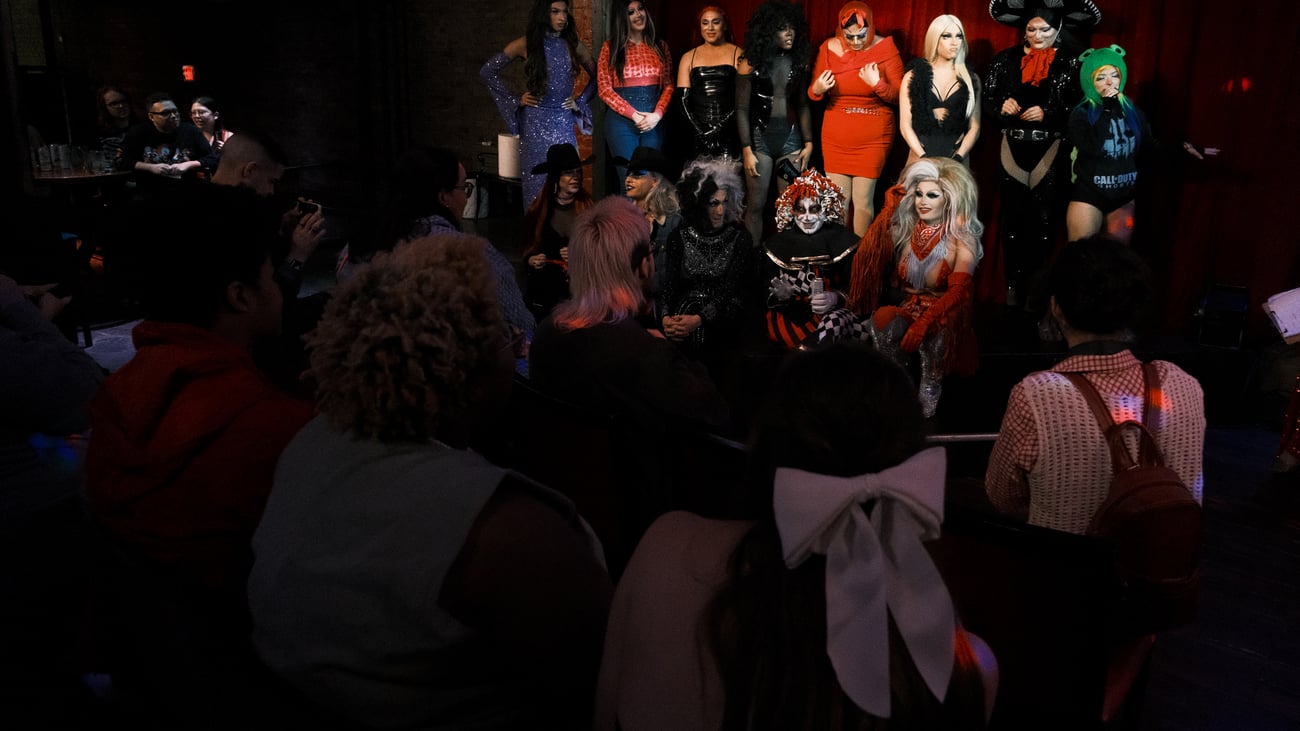
U.S. District Judge David Hittner issued his second ruling against a Texas law banning drag shows in environments where minors may be present.HOUSTON (CN) — A federal judge in Houston ruled Tuesday that Texas cannot enforce its drag show ban, the second such ruling from judges in the district.Senate Bill 12, passed in 2023, would ban “sexually oriented performance to be presented on the premises in the presence of an individual younger than 18 years of age” in Texas businesses.LGBTQ+ advocacy groups and drag performers sued the state after the bill’s passage, arguing the ban on “sexually oriented performance” was overly broad and thus an unconstitutional infringement on First Amendment rights.U.S. District Judge David Hittner, a Ronald Reagan appointee to the Southern District of Texas, previously sided with those groups in his first permanent injunction against the law in September 2023, but the Fifth Circuit overturned his ruling in late 2025 and allowed Texas Attorney General Ken Paxton to resume enforcing the law starting in March 2026.Now, in his second ruling in the case entered Tuesday, Hittner again blocked enforcement of S.B. 12, reiterating that the law is an unconstitutional restriction on First Amendment speech and protected activity.Citing the 2024 U.S. Supreme Court decision in Moody v. NetChoice and the two-part framework it laid out, Hittner ruled to block the state’s enforcement on two grounds: the definitions it relies on are overly broad, and the law is an unconstitutional form of both content and viewpoint discrimination.Hittner points to three terms the law relies on that are broadly defined in S.B. 12: “visual performances,” “nude” and “prurient interest in sex.”On the first definition, Hittner wrote that while S.B. 12 should only affect visual performances, a protected First Amendment activity, the definition of performance incorporated from the Texas Penal Code would mean that S.B. 12 could block all sorts of events with an audience, from sports games to art exhibitions.And on the latter two definitions, Hittner found them to be so broad that performers like Lady Gaga or Miley Cyrus could be blocked from performing under S.B. 12.Hittner wrote that “Just as many people criticized Elvis’s signature hip gyrations and were offended by his display of male sexuality, chastised Dolly Parton as a voluptuous sex symbol because of her big hair, flamboyant clothes and breast exposure, and shamed Miley Cyrus for ’twerking’ on stage during a live performance at the 2013 MTV Video Music Awards, there are ’erotic’ elements in countless popular performances that could be subject to both civil and criminal penalties under S.B. 12.”Hittner noted the Fifth Circuit did not overturn his prior finding that S.B. 12 improperly places content-based and viewpoint-based restrictions on First Amendment protected speech and activity. He also reaffirmed the overly broad definitions relied on for the law only further implicate it as content and viewpoint discrimination.“Even if S.B. 12 were somehow content-neutral (an argument the Attorney General has never advanced), it still prohibits huge swaths of constitutionally protected performances. Because the term ‘prurient interest in sex’ is open-ended, S.B. 12 can be used to cherry-pick particular aspects of performances that might be ‘in some sense erotic," Hittner wrote.“S.B. 12 applies to countless protected performances that might contain elements that are ‘in some sense erotic’ and meet either the law’s definition of’nude’ or ‘sexual conduct’ but are not obscene or obscene for minors and are thus constitutionally protected," Hittner continued. “These examples, or any combination of them, could all potentially trigger liability under S.B. 12 while still being constitutionally protected performances.”Hittner concluded his ruling by echoing a statement fellow U.S. District Judge Lee H. Rosenthal made in her decision blocking Texas A&M’s ban on drag shows on its campuses: “Finally, for those who find such activities as described in this case offensive, the solution is relatively simple … just don’t go.”The Texas chapter of the American Civil Liberties Union issued a statement Tuesday in support of the decision.“Drag has a rich history as a refuge of joy and liberation for countless Texans, and it’s not going anywhere," said Brian Klosterboer, senior staff attorney at the ACLU of Texas. “This law stifled free expression across our state and made people afraid to engage in or attend drag shows and other performances. But all Texans — no matter our gender or background — are guaranteed the right to free expression. We celebrate this victory and remain committed to stopping state officials from targeting LGBTQIA+ Texans and making our state less free and fair.”In a statement on X, Paxton said he would immediately appeal the decision.“This is a profoundly flawed decision that endangers our children and is an affront to Texas values," Paxton wrote.Subscribe to our free newslettersOur weekly newsletter Closing Arguments offers the latest about ongoing trials, major litigation and rulings in courthouses around the U.S. and the world, while the monthly Under the Lights dishes the legal dirt from Hollywood, sports, Big Tech and the arts.Additional Reads
Federal judge blocks Texas drag ban a second time
Full Article
Original Source
Read the full article at Courthousenews →KhanList aggregates and links to publicly available news content. We do not host full articles from third-party sources. Always verify important information with original sources.