
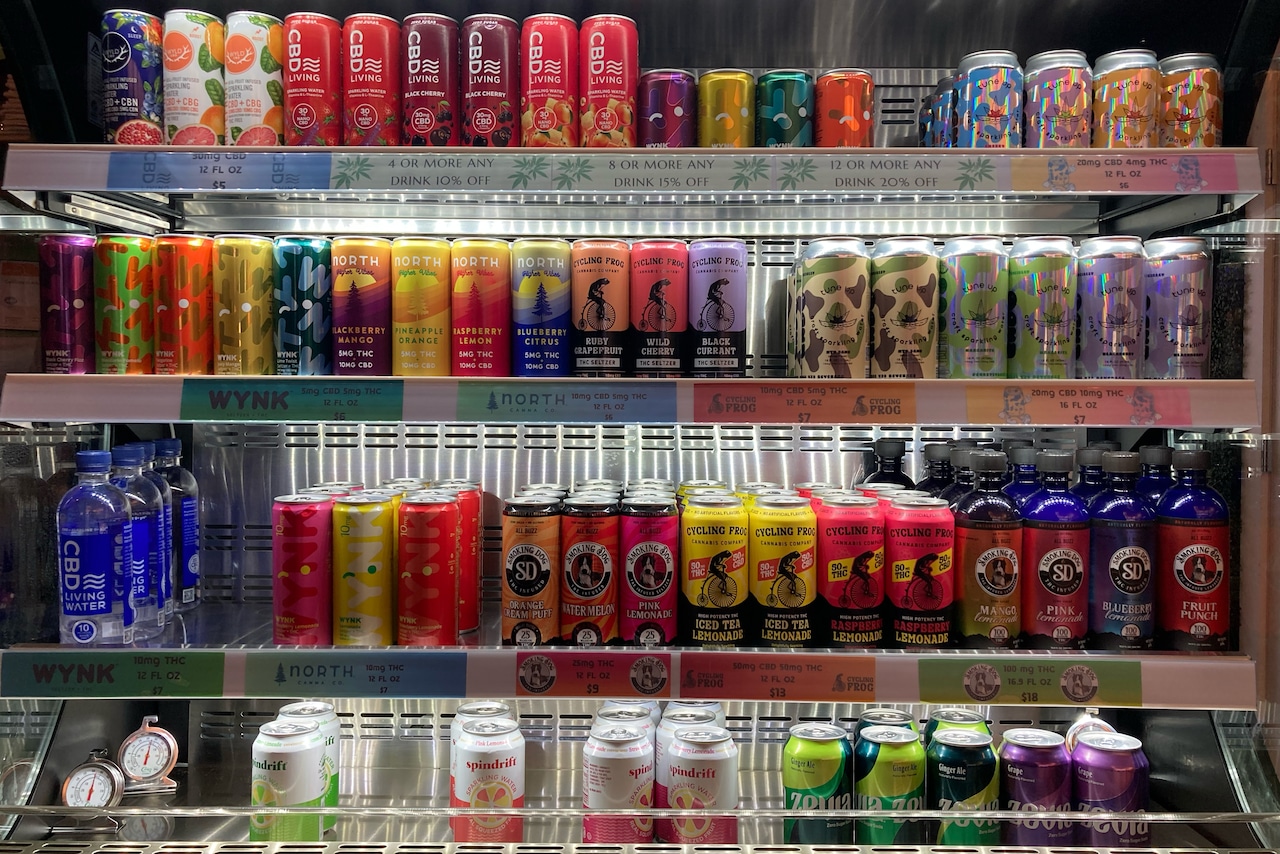
Ohio PoliticsA federal ban on most hemp-derived THC products would be pushed back until Dec. 11 under a stopgap government spending bill passed Tuesday by the U.S. House of Representatives.Kurt Bresswein | For lehighvalleylive.comBy Mary Frances McGowan, cleveland.comWASHINGTON, D.C. — A federal ban on most hemp-derived THC products would be pushed back until Dec. 11 under a stopgap government spending bill passed Tuesday by the U.S. House of Representatives.The continuing resolution, which also averts a government shutdown, postpones enforcement of new federal restrictions on certain hemp products, including intoxicating beverages and gummies. The Senate approved the continuing resolution last month. The measure now heads to President Donald Trump’s desk.The federal restrictions were originally set to take effect Nov. 12, 2026. Last November, a provision tucked into the federal budget closed a legal loophole that inadvertently legalized intoxicating hemp products by legally defining hemp as cannabis containing no more than 0.3% delta-9 THC by dry weight. The change was intended to allow non-intoxicating uses of hemp, such as industrial products and CBD supplements. But producers soon realized they could legally sell products with intoxicating effects as long as they kept delta-9 THC levels under 0.3%.That led to the proliferation of hemp-derived THC products, including edibles, vapes, beverages and more, which mimic marijuana’s effects but aren’t regulated like marijuana.In December 2025, Ohio lawmakers passed Senate Bill 56, which aligned Ohio law with the new federal regulations broadly prohibiting intoxicating hemp products. However, Gov. Mike DeWine vetoed a grace period included in the bill that would have allowed for the sale of the products through the end of the year. His veto meant the ban went into effect when the bill became effective in March.As it stands, the ban is on hold for certain plaintiffs who have challenged SB 56. A federal judge has blocked enforcement of the law for 10 specific companies, allowing them to sell hemp-derived THC drinks and products while a legal challenge proceeds. Tom Haren, an attorney and chair of the Cannabis Law Practice Group at Frantz Ward, said the federal delay could matter most to those plaintiffs, but it does not necessarily affect businesses that are not part of the case.“For those named plaintiffs, the extension might be relevant to the extent their arguments are, ‘hey, Ohio’s definition of hemp is different than the federal law,’ and so that is the basis, you know, at least as they allege, for some of the relief that they’re seeking,” Haren said.“But it does not necessarily affect people who are making or selling intoxicating hemp products who are not plaintiffs in those cases.”Hemp industry groups and allies welcomed the delay, saying it gives Congress more time to develop a federal regulatory framework they argue would protect consumers while preserving access to regulated hemp products.“The December 11 extension is an important start,” John R. Gordon, co-founder of the American Alternative Care Policy Network, said in a statement. “But if Congress is unable to develop and enact a comprehensive federal regulatory framework by that date, an additional, longer delay will be necessary to ensure continued patient access to the products many rely upon as part of their wellness regimens until a legislative solution is in place.”Haren said there are several possible outcomes at the federal level, though a compromise on hemp-infused beverages that allows them to be sold and regulated like alcohol may be among the more realistic optionsAnother possibility, Haren said, is that Congress keeps the broader prohibition on intoxicating hemp products but raises the limit on THC per serving from 0.4 milligrams to 2 or 3 milligrams. That would allow low-dose hemp products to remain on the market under federal law, an approach he said the Trump administration has repeatedly called for this year.MORE BY MARY FRANCES MCGOWANCongress also could continue delaying the deadline, Haren said, leaving uncertainty in place for businesses, regulators and consumers.“The unfortunate answer is, it’s a giant mess. It’s probably going to continue to be a giant mess until we see how these cases ultimately play out, and then whether we get any certainty at the federal level through Congress.”Last month, Ohio Attorney General Andy Wilson was among 35 attorneys general and chief legal officers who signed a letter urging Congress to reject any effort to delay, repeal, suspend or weaken the new federal definition of hemp. The attorneys general noted that several states, including Ohio, have already begun changing their laws to align with the federal changes.Mary Frances McGowan is a statehouse reporter for Cleveland.com covering politics and policy with a focus on heath policy, abortion and reproductive health policy, LGBTQ issues, cannabis policy and Cuyahoga...
Federal hemp product crackdown delayed into December by U.S. budget extension bill
Full Article
Original Source
Read the full article at Cleveland →KhanList aggregates and links to publicly available news content. We do not host full articles from third-party sources. Always verify important information with original sources.