
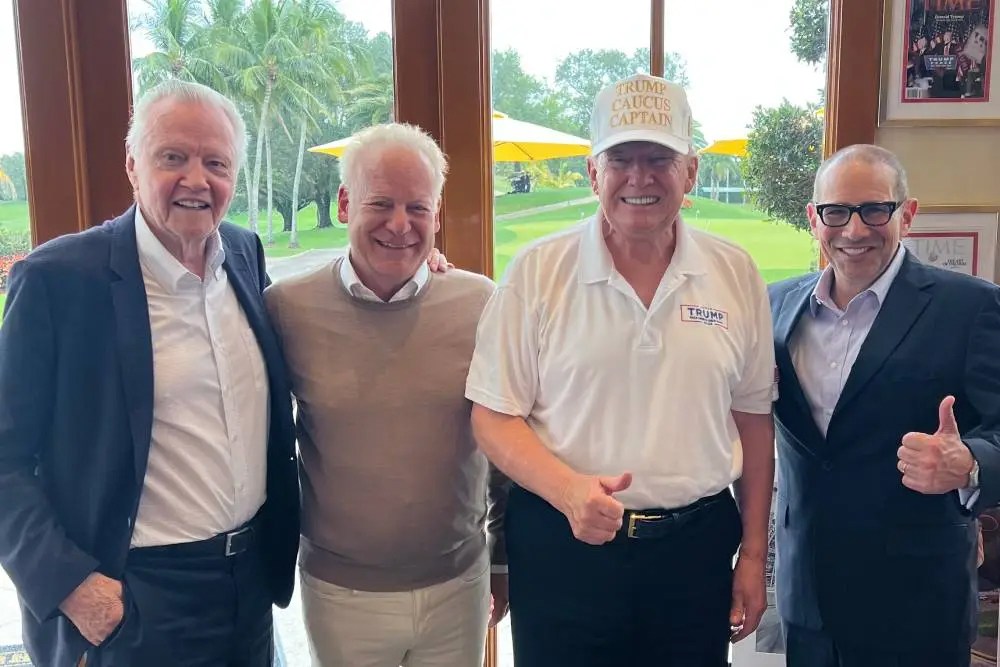
In the wake of a blue wave in Congress, the drivers of the federal film and TV tax credit took the stage at AFM to express their determination about getting the bill passed during a lame duck session on Capitol Hill. Sitting on today’s panel were SP Media Boss Steven Paul, and SP Media COO Scott Karol, the special advisors to Donald Trump’s Hollywood ambassador Jon Voight; as well as the MPA SVP of Federal Government Affairs, Josh Rogin. Rogin explained that the money which this bill would yield runs out on Dec. 11. If the bill doesn’t get passed. “We need to get this done while Donald Trump is in office,” Rogin emphasized, “He gives us the opportunity that we may not have at other times.” “We have to get this accomplished before the end of the year,” said Paul, “So, that we can start planning for 2027.” Watch on Deadline If the bill, which reportedly has 50 co-sponsors, is passed in December, it will take effect on Jan. 1. “If this doesn’t happen in December, then when will it take effect? Many films will be impacted,” said Karol, “At the end of the day, this is a jobs bill.” Rogin mentioned that the language of the bill could change: “We don’t want it to have a cap.” He also added that “Incoming speaker Jefferies and majority leader Schumer support this (bill), but we need them to make this a priority. It’s an opportunity that we can’t miss. We need them to put their back into it. It can’t just be a Republican ask, or a Democratic Ask. A Democratic takeover isn’t bad for the prognosis of this bill.” Rogin pointed out that 39% of the American film industry shoots stateside, down from 60% years ago. As previously reported, the federal film and TV tax incentive starts at 20% for all labor spent on a film production. There are four 5% upticks of which a production can only take advantage of two: a 5% uptick for a movie that qualifies as an independent production (meaning it’s not made by a publicly traded company), 5% for shooting 30% production days in a FEMA declared disaster zone (which will help productions here in California areas impacted by fires) or rural zones. There’s a 5% uptick for shooting in multiple jurisdictions, and there’s a 5% credit if you’re a U.S. company bringing production back into the U.S. after previously shooting abroad. Note the proposed credit is on a production’s federal income tax. The Federal film and TV tax incentive will set the floor upon which states can build their own. “It’s not a rebate” said Karol. “The producer who incurs the expense, gets the deduction.” “You’re going to see a roar come into the industry like you’ve never seen before,” exclaimed Paul about once the tax credit is approved, “You’ll see investors, funds and banks come back to this industry and I predict everyone will be want to be part of the entertainment business again.”
Federal Film & TV Tax Credit Champ Steven Paul Tells AFM, “We Have To Get This Accomplished Before The End Of The Year”
Full Article
Original Source
Read the full article at Deadline →KhanList aggregates and links to publicly available news content. We do not host full articles from third-party sources. Always verify important information with original sources.