
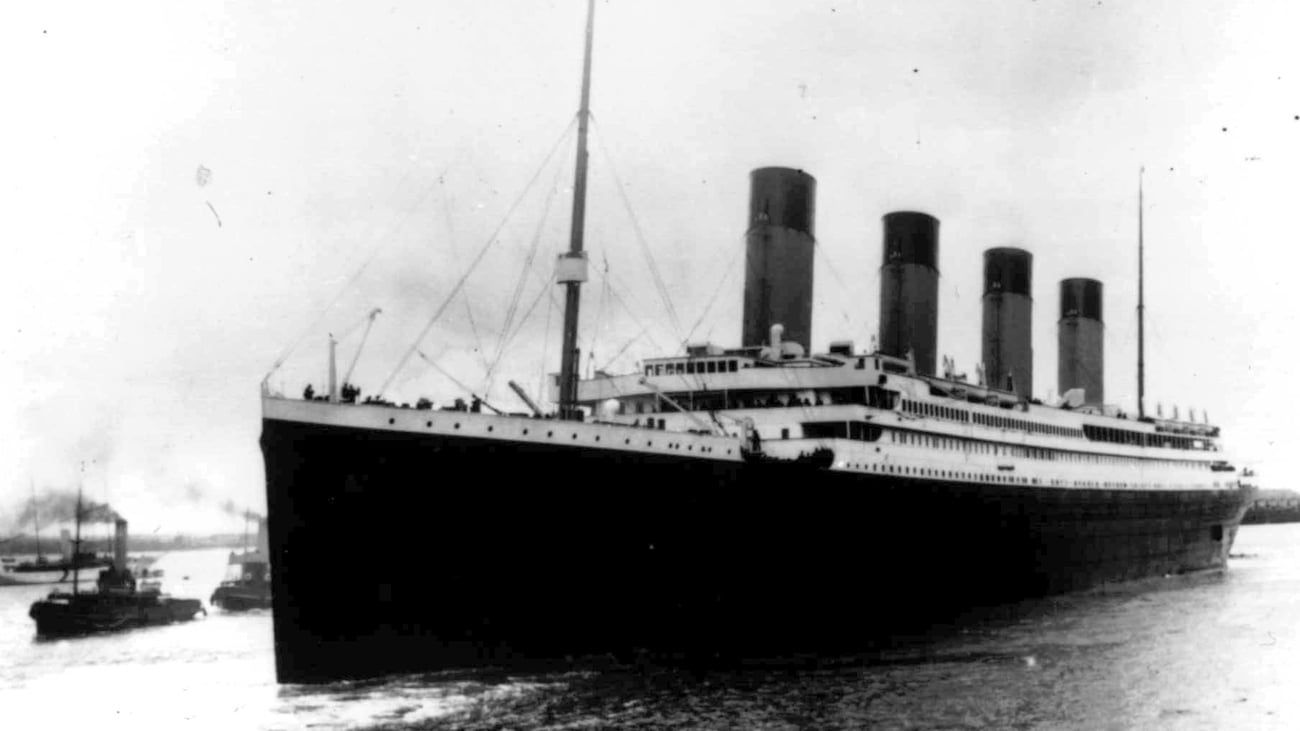
R.M.S. Titanic Inc., the salvor-in-possession of over 5,500 artifacts, argued it needed to auction a collection of 361 artifacts to afford to keep unearthing and preserving remnants from what remains one of the largest maritime disasters in history.NORFOLK, Va. (CN) — A Virginia-based federal judge halted the custodian of thousands of Titanic artifacts from auctioning off over 360 items Monday, ruling the sale breaches the conditions of their salvor-in-possession status.It’s been nearly 115 years since the British White Star Line’s luxury passenger ship struck an iceberg on its maiden voyage, killing an estimated 1,500 passengers. Now, R.M.S. Titanic Inc., the custodian of many of the ship’s and passengers’ possessions, seeks to sell a fraction of the collection to purportedly fund future preservation efforts.Senior U.S. District Judge Rebecca Beach Smith temporarily blocked the effort, ruling she needed more information before determining whether the company breached the covenants and conditions the court set when it awarded title to the Titanic artifacts in 2011. R.M.S. Titanic Inc. and its predecessor, Titanic Venture LP, have held exclusive salvaging rights since 1994. The company salvaged artifacts on expeditions between 1987 and 2004.A corporate takeover in 2000 led R.M.S. Titanic Inc. to seek to sell its collection, but the lower court and the Fourth Circuit rejected the effort, holding the company’s salvage award depends on compliance with certain terms.The terms, negotiated between the company, the National Oceanic and Atmospheric Administration and the State Department, aim to ensure the artifacts’ preservation consistent with international U.S. historical preservation standards.The company filed a periodic report under seal in March, notifying the court of its intention to sell parts of the collection through its predecessor, Titanic Venture LP, which undertook a salvage expedition in collaboration with the French government in 1987. The company argues the court lacks jurisdiction over the collection, known as the French Collection, which arose from a salvor-in-possession agreement between the French government and Titanic Venture LP. The company claims the sale is needed to mitigate financial difficulties to ensure the continued conservation of the remaining collections.“For nearly 40 years, R.M.S. Titanic, Inc. has served as the responsible steward of this historically important artifact collection,” attorney Brian Wainger of Kaleo Legal, representing the company, said in a statement. “The company recovered these artifacts at great peril, stabilized them for posterity, and conserved and exhibited them for decades, while presenting them to tens of millions of people around the world."Smith agreed with the government, which submitted an amicus curiae brief arguing the company voluntarily subjected the French collection to the terms of the American collection throughout the lengthy litigation and has thus waived any jurisdiction objection.“Given the foregoing recitation of the provenance and intervening proceedings in this court over the past twenty years, the court, at this juncture, does not explore an expanded theory of its original jurisdiction, in rem or otherwise, empowering the court to generally adjudicate title in the French Collection,” the George H.W. Bush appointee said. “Rather, for the immediate purpose of considering RMST’s alleged material default under the covenants and conditions, and for effectuating the United States’ recommended means of response and remediation, the court agrees, at this juncture, with the United States that ’the covenants and conditions impose enforceable restrictions on RMST with respect to the French Collection artifacts that prohibit RMST’s intended sale.”Smith noted the public’s interest in keeping the collection whole.“The court notes, at a threshold level, the many letters it has received from persons and organizations across this country and Europe in unanimous and eloquent opposition to the auction,” Smith said. “Both the historic importance and the international interests in the preservation of the Titanic Collections is clear.”Paul Johnston, former chair of the Advisory Council on Underwater Archaeology and current curator emeritus for maritime history at the Smithsonian, welcomed the ruling.“People want to see this material, and enjoy the material and learn from the artifacts,” Johnston said in an interview. “But that can’t happen if wealthy people buy them and put them into their personal collection.”Smith’s ruling orders the company to provide an update and thorough inventory of its artifacts. Johnston, who testified during R.M.S. Titanic Inc.’s previous attempts to sell parts of its collection, said this requirement is vital to the preservation community. According to Johnston, there is concern the company has neglected its responsibility to preserve certain artifacts it doesn’t use in its numerous exhibits worldwide. Under Smith’s directive, the company must list the artifacts’ condition.“I’d like to know how many artifacts haven’t been conserved? How many might be sitting in buckets of water or allowed to desiccate, allowed to dry out, because they’re not flashy enough to put in one of the traveling exhibits,” Johnston said. “So hopefully, this inventory will shed light on something that we don’t really have any light on.”R.M.S. Titanic Inc. hosts permanent exhibitions in Las Vegas and Orlando, along with traveling exhibitions in Cleveland, Portland, Poland, Germany and the Czech Republic. Among its more than 5,500 artifacts are an alligator skin handbag owned by a 63-year-old third-class passenger and a small cherub statue placed near the grand staircase.Johnston noted reputable museums, such as the National Museum of American History, do not showcase artifacts recovered for monetary purposes. R.M.S. Titanic Inc. currently has permission to recover artifacts only from outside the ship itself, which remains a tomb for over 1,000 people.“This wreck has more lasting power and more public interest than any other shipwreck, and really basically any other ship in human history,” Johnston said. “And I think the more light we can shed on the realities of the wreck without robbing the grave site of these artifacts is really important and valuable.”Representatives from the government and NOAA did not respond to a request for comment.“As the jurisdictional and property issues addressed by the court in the current opinion have far-reaching implications, the company will review it carefully and decide on next steps,” Wainger said.Subscribe to our free newslettersOur weekly newsletter Closing Arguments offers the latest about ongoing trials, major litigation and rulings in courthouses around the U.S. and the world, while the monthly Under the Lights dishes the legal dirt from Hollywood, sports, Big Tech and the arts.Additional Reads
Federal court halts sale of Titanic artifacts for now
Full Article
Original Source
Read the full article at Courthousenews →KhanList aggregates and links to publicly available news content. We do not host full articles from third-party sources. Always verify important information with original sources.