
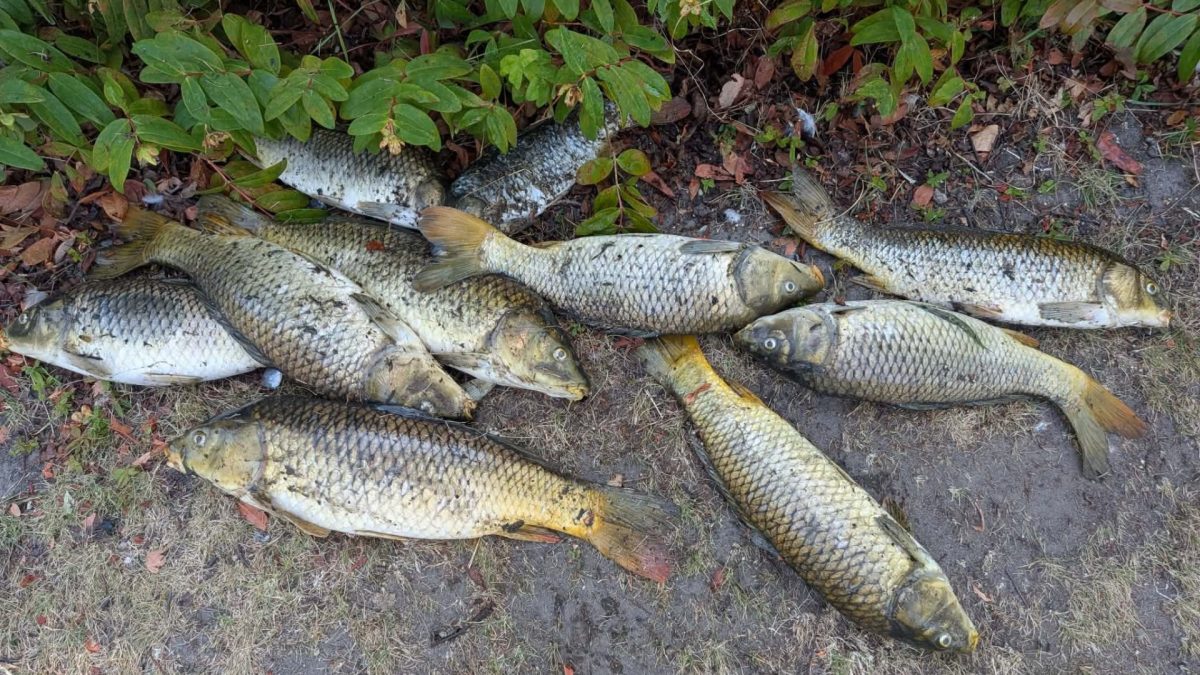
For the best part of 200 years, anglers have made the pilgrimage to the idyllic banks of Amwell Magna Fishery on the River Lea in search of the wild brown trout which navigate its clear waters. In recent weeks, however, members of the fly-fishing club – the oldest of its kind in the UK – have set down their rods as thousands of anglers and conservationists battle to help a fish population struggling for survival in rivers across the country after weeks of drought. Feargal Sharkey, the singer and environmentalist who is also chairman of Amwell Magna, said the Hertfordshire club had shut its river bank – once fished by Izaak Walton, the world-renowned 17th-century author of The Compleat Angler – since June after water temperatures rose to levels which pose a mortal threat to fish such as trout and salmon. Shorts Fish ‘entering the death zone’ The former punk rocker turned rivers campaigner, who is a lifelong fly-fisher, told The i Paper: “Once the water temperature gets anywhere near 18°C, trout and salmon start getting very stressed. Once it gets to over 20°C, you start entering the death zone. “The fish have now gone into survival mode. It has been the same story for fishing clubs up and down the country. Pretty much every river across East Anglia and southern England has shut down for fishing at some point over the last six weeks.” Angling is widely recognised as one of Britain’s oldest pastimes with written records of recreational fishing dating back more than 500 years. However, it’s facing an unprecedented threat. While Amwell Magna has so far been successful in conserving its fish by leaving them alone, the story elsewhere is less consoling as water and flow levels drop in multiple rivers and fish struggle for oxygen in increasingly overheated and congested habitats. Figures provided by the Environment Agency (EA) show there have been 15 “fish death incidents” – claiming thousands of fish at a time – so far this year linked to the hot weather, the majority of them in the south east and East Anglia. A height marker at a ford on the depleted River Redlake in Shropshire (Photo: Mike Kemp/Getty) More than 3,000 fish are estimated to have died along a stretch of the River Wensum in Norwich last week after already depleted oxygen levels were reduced further by contaminants being flushed into the water by brief but heavy rainfall. Mark Owen, head of fisheries at the Angling Trust, said: “As water temperatures rise and river levels fall, dissolved oxygen levels can drop significantly and, in severe cases, become so low that fish will die.” At the same time, dozens of fish “rescues”, whereby fish trapped in isolated pools or poorly oxygenated water are moved elsewhere, have been carried out by the EA and conservationists. In Essex last week, some 4,000 fish were moved from a lake near Southend, while more than 1,000 brown trout and wild salmon have been moved as part of 38 rescues in the West Midlands. Closed fisheries pay price for safeguarding stocks Dwindling rivers and stressed fish stocks have been punishing for businesses and communities hit hardest by Britain’s hottest-ever summer, which has seen temperatures peak at 38°C. Numerous fishing lakes for species such as carp have either reduced the number of “pegs” or fishing spots available or closed altogether until their waters can be replenished. Low water levels are seen at Tittesworth Reservoir in North Staffordshire (Photo: Loannis Alexopoulos/Getty) Stone Private Angling, which runs 11 sites in Staffordshire, closed two of its lakes indefinitely last week after water levels dropped below safe levels. Simon Williams, the club’s secretary, said: “The water level has dropped to the point where it’s not fair on the fish. We’re just praying for rain at the moment.” While clubs and naturalists agree temporary closures can be necessary for fish welfare, it is not without economic cost. According to one study, recreational freshwater angling remains one of Britain’s most popular hobbies with about a million regular participants and a contribution of nearly £2bn to the UK economy. The Moorhen Trout Fishery, near Warnford in Hampshire, said it had closed for fishing until September after it saw temperatures in its lake reach 37°C, forcing it to remove all its fish to a safer location. Co-owner Michelle Green said: “The closure does have a profound impact on our business. We can now only realistically operate for around nine and a half months of the year, and the increasingly hot summers are resulting in significant lost revenue.” A ‘No Fishing’ sign in the dried up Falmer Pond in Falmer, East Sussex (Photo: Glyn Kirk/AFP) In the Norfolk village of Great Massingham, which is home to a fishing pond with carp thought to be the descendants of fish introduced by medieval monks 900 years ago, the situation has become particularly critical. The death of more than 100 of the fish in the Scotsman’s Pit after water temperatures reached 28°C has prompted the community to launch an emergency £10,000 online crowdfunding campaign to pay for the pond – named after a visiting whisky tycoon – to be dredged to restore healthy water levels. ‘A cocktail of death’ The current difficulties sit alongside a longer-term picture of Britain’s river system struggling to cope with a devil’s brew of pressures ranging from pollution and abstraction by water companies through to loss of habitat and the effects of climate change. Peter Curtis, chairman of the Wiltshire Fishery Association, whose members are based on five chalk streams above Salisbury, said: “There is a bigger picture here which is you might look at our chalk streams and think the water is crystal clear and everything is healthy. But it isn’t, in fact the river is on its knees from over extraction. “We have data which shows that in the last ten years there has been an 80 per cent reduction in fly life on the rivers we monitor. We are presiding over the decline of our rivers.” Sadly, it is not just the drought conditions preying on the minds of the guardians of the nation’s rivers and fisheries. The eventual end of the best part of two months of parched weather in the shape of significant rainfall would bring with it a high risk of fresh calamity for aquatic life. As already happened in Norwich last week, sudden high-volume downpours will wash accumulated toxins – ranging from pesticides and fertilisers on agricultural land, through to chemical-heavy dust on roads – straight off the hard-baked ground and into rivers. As Sharkey put it: “What is keeping me and others awake now is that once the drought ends it may well do so in a deluge which will sweep an almighty poisonous cocktail of sludge off roads and fields into the rivers. “It’ll be chemicals leaching out of tarmac, oil, petrol, diesel, rubber particles – all the detritus that’s been gathering for the last weeks will be washed into every river.” He added: “The danger is that if the heat doesn’t get the fish, then that cocktail of death probably will.”
Feargal Sharkey: Fish are facing a summer of death in UK’s poisoned rivers
Full Article
Original Source
Read the full article at Inews →KhanList aggregates and links to publicly available news content. We do not host full articles from third-party sources. Always verify important information with original sources.