
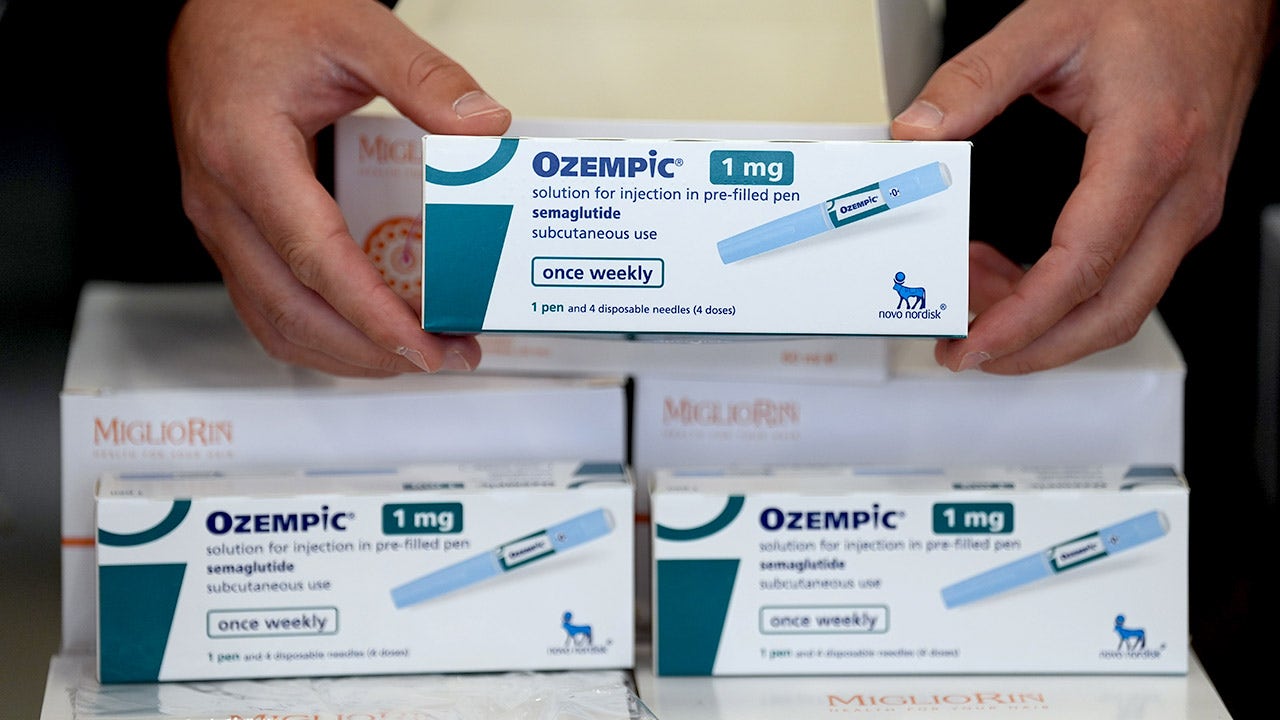
The Food and Drug Administration has warned that those who take popular weight-loss drugs carry a small risk of developing a side effect that could lead to permanent vision loss. The agency has instructed all GLP-1 drugmakers to affix new warning labels to their products, which treat obesity, diabetes and several other medical conditions. The FDA's advisory applies to a dozen pill-based and injectable drugs, including Ozempic and Wegovy.The eye condition, non-arteritic anterior ischemic optic neuropathy, can cause significant vision loss. The condition, which has been reported in patients taking all GLP-1 drugs, occurs when blood flow to the optic nerve is reduced, though its underlying cause remains unclear, according to the FDA. FDA scientists began investigating in 2024 after a study found that some patients taking semaglutide, the active ingredient in Novo Nordisk’s Ozempic, experienced this type of vision loss. The FDA reviewed 126 clinical trials with 134,253 patients. A package of Ozempic held by a customs officer in Hamburg, Germany, on April 17, 2025. (Marcus Brandt/picture alliance via Getty Images / Getty Images)MAN CLAIMS HE WENT BLIND AFTER TAKING OZEMPIC, SHARES WARNING FOR OTHER USERSThe meta-analysis found that roughly six cases of the eye condition occurred per 100,000 patients taking GLP-1 drugs over a one-year period, compared with fewer than four cases among patients receiving a placebo or other glucose-lowering medications.Patients taking GLP-1 drugs had a roughly 68% higher rate of developing the eye condition, though the FDA cautioned that the findings do not establish a causal link.Risk factors for the condition include diabetes, high blood pressure and sleep apnea, which are also common among patients prescribed GLP-1 drugs.The FDA acknowledged that this overlap made it difficult to determine whether the medications themselves were responsible for the increased incidence of vision loss. Wegovy injection pens arranged in Waterbury, Vermont, on Monday, April 28, 2025. (Shelby Knowles/Bloomberg via Getty Images / Getty Images)DOCTORS REVEAL HIDDEN DANGER FOR SOME OZEMPIC, WEGOVY USERS WITH BRAIN DISORDERSOf the roughly 78,000 patients included in the studies reviewed by the FDA, just 10 experienced vision loss, representing approximately 0.01% of participants.Non-arteritic anterior ischemic optic neuropathy is a rare condition that can cause permanent vision loss, with no proven treatment to reverse the damage. A woman injecting a syringe of weight-loss medication into her stomach. (David Petrus Ibars/Getty Images / Getty Images)CLICK HERE TO DOWNLOAD THE FOX NEWS APPThe condition is most common in adults over 50, who often experience sudden, painless vision loss in one eye upon waking. Symptoms include blurred vision, distorted color perception and blind spots.However, research has found that approximately 43% of patients with significant vision impairment experience some spontaneous improvement, though visual field defects often persist.
FDA orders new warning labels on Ozempic, Wegovy over rare risk of permanent vision loss
Full Article
Original Source
Read the full article at Foxbusiness →KhanList aggregates and links to publicly available news content. We do not host full articles from third-party sources. Always verify important information with original sources.