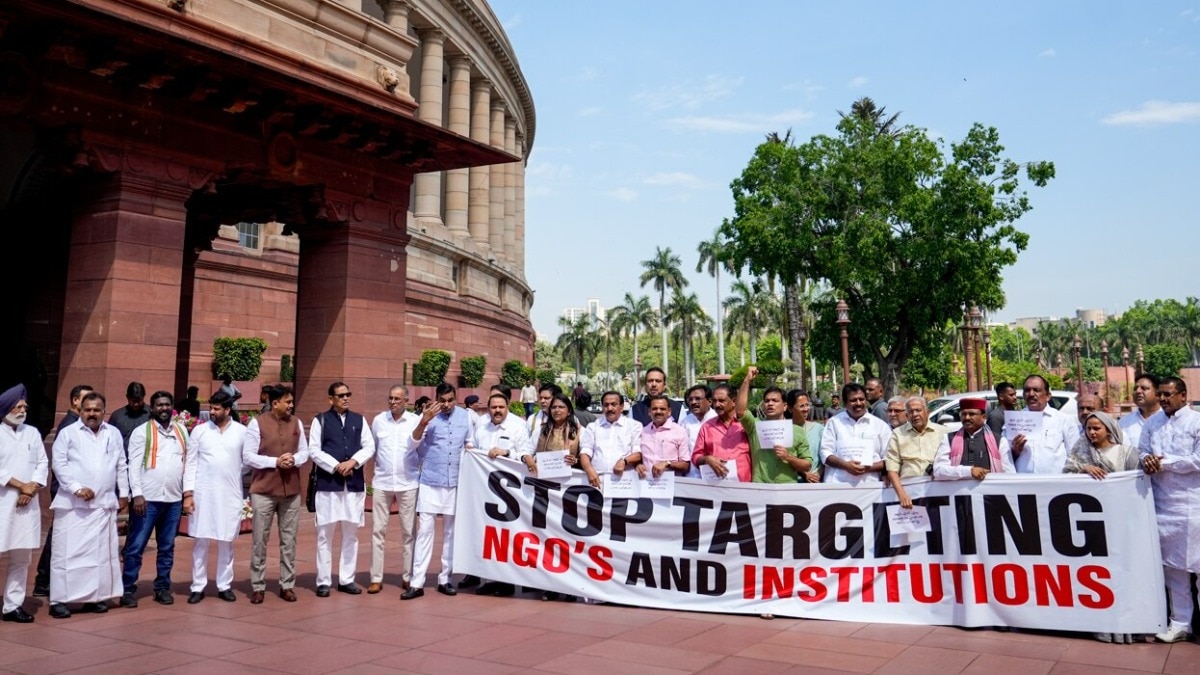
The FCRA Amendment Bill, 2026 proposes a Designated Authority, tighter renewals and wider disclosure rules for organisations receiving foreign funds. The proposals have triggered opposition protests and concern among NGOs over executive control of assets created through overseas contributions.Government claims amendments enhance transparency and accountability. (PTI Image)The Foreign Contribution (Regulation) Amendment Bill, 2026 has emerged as one of the most debated legislation in the ongoing Monsoon Session of Parliament.With the government describing it as a step towards greater transparency in foreign funding, while opposition parties, NGOs and several civil society organisations argue that it gives the Centre sweeping powers over organisations receiving overseas donations.The Bill seeks to amend the Foreign Contribution (Regulation) Act (FCRA), which governs how non-governmental organisations (NGOs), charitable trusts, religious institutions and associations receive and utilise foreign contributions in India.Here's a closer look at what the Bill proposes, why it has sparked controversy and what it could mean for organisations that receive foreign funding. WHAT IS THE FCRA?The Foreign Contribution (Regulation) Act (FCRA), 2010 regulates foreign donations received by NGOs, trusts, societies, educational institutions and religious organisations.Any organisation seeking to receive money from foreign sources must first obtain an FCRA registration from the Ministry of Home Affairs (MHA). The registration must be renewed every five years, failing which the organisation cannot legally receive foreign contributions. According to the data cited in the Bill's background, India had 14,449 active FCRA registrations as of July 15, 2026. At the same time, 22,498 registrations had been cancelled and another 15,212 had expired. Between 2019 and 2022, organisations with FCRA registrations received foreign contributions worth Rs 55,741 crore.WHAT ARE THE KEY CHANGES PROPOSED?One of the biggest changes proposed in the Bill is the creation of a "Designated Authority" appointed by the Central Government.According to the draft Bill, this authority would be empowered to take over the management of foreign contributions and assets created using foreign contributions when an organisation's FCRA registration is cancelled, surrendered or ceases because it is not renewed.The Bill also proposes a minimum utilisation threshold for renewal. Organisations that have received or utilised less than Rs 10 lakh in foreign contributions during the previous two financial years may not be eligible for renewal of their FCRA registration.Other proposals highlighted in the Bill include restrictions on transferring foreign contributions to other organisations, timelines for receiving and utilising approved foreign funds, and additional disclosure requirements under the accompanying FCRA Amendment Rules, 2026. These rules require organisations to specify the purposes for which foreign contributions will be used, the states where projects will be implemented, and details relating to their activities, websites and social media presence.WHY HAS FCRA BILL SPARKED CONTROVERSY?The proposed powers of the Designated Authority have become the biggest point of contention.Several NGOs, churches and civil society organisations have expressed concern that assets created over many years using foreign contributions could come under the authority's control if an organisation loses or fails to renew its FCRA registration. These concerns have been particularly vocal in Kerala, where several Christian organisations run schools, hospitals and welfare institutions that have historically received foreign funding.The Bill was introduced in the Lok Sabha on March 25, 2026 and was expected to be taken up for passage on April 2. However, it was deferred following protests by opposition parties and is now expected to be considered during the ongoing Monsoon Session.WHAT IS THE GOVERNMENT'S STAND?The government has defended the proposed amendments, saying they are aimed at improving transparency and accountability in the use of foreign contributions.While introducing the Bill, Minister of State for Home Affairs Nityanand Rai said its objective was to make the use of foreign contributions "more transparent and accountable." He also said organisations working in line with India's sovereignty and integrity would not face unnecessary hurdles, while action would be taken against those acting against the law or national interest.Union Minister Kiren Rijiju has also sought to reassure organisations raising concerns, saying genuine institutions working for the country's welfare would not be disturbed and that the government would address misunderstandings surrounding the Bill. According to the document, the Ministry of Home Affairs has maintained that the amendments are intended to address operational gaps in the existing law and strengthen accountability in foreign funding.WHY IS THE OPPOSITION OBJECTING?Opposition parties have argued that the proposed amendments hand excessive powers to the executive and could adversely affect the functioning of NGOs and charitable organisations.The document notes that several opposition leaders described the Bill as overly restrictive and raised concerns over the proposed management of assets and the extent of executive control. Some lawmakers also questioned whether sufficient legal safeguards had been built into the legislation before a Designated Authority could assume control over assets created using foreign contributions.According to the draft, Parliament's research body PRS India has also flagged questions regarding the proposed minimum spending threshold for renewal and whether adequate safeguards exist before the Designated Authority exercises its powers.The FCRA Amendment Bill is expected to be taken up during the Monsoon Session of Parliament.If passed, it would introduce significant changes to how organisations receiving foreign contributions are regulated, particularly in relation to renewal of FCRA registrations, utilisation of foreign funds and the management of assets created using overseas contributions.The accompanying FCRA Amendment Rules, 2026 have already been notified and are in force, meaning some of the new disclosure requirements are already applicable, while Parliament's decision on the Bill will determine whether the wider proposed changes become law.- EndsPublished On: Aug 3, 2026 15:03 IST
FCRA Bill explained: The proposed changes, the controversy and what they mean
Full Article
Original Source
Read the full article at Indiatoday →KhanList aggregates and links to publicly available news content. We do not host full articles from third-party sources. Always verify important information with original sources.